



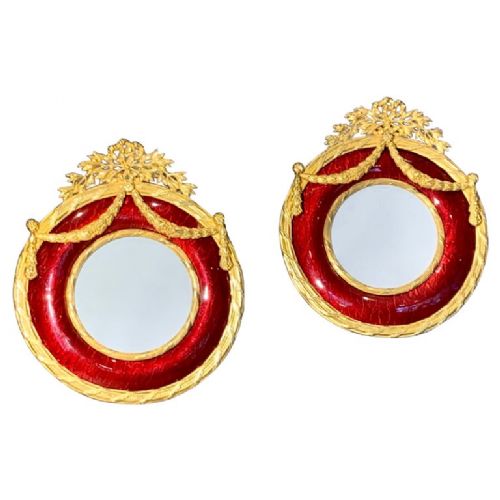
French Ormolu Photo Frame
A french ormolu photo frame brings aristocratic 19th-century elegance to a desk or mantelpiece through heavy gilt metalwork and rich decorative detail.
French Ormolu Photo Frame
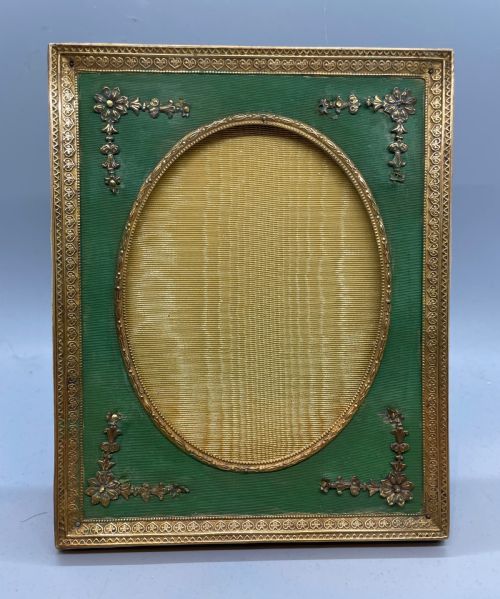
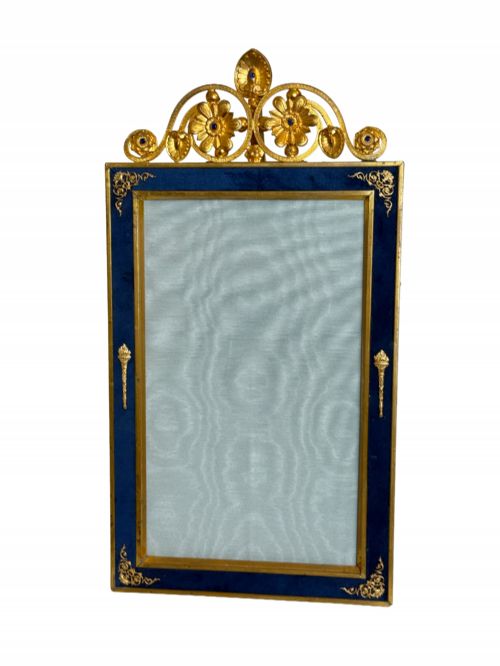
A french ormolu photo frame is a decorative accessory designed to display portraits, utilising cast metal mounts and easel backs. These pieces span the Victorian era, the late 19th century, and the early 20th century, emerging in various revivalist aesthetic movements.
The version most commonly met on this page is the late 19th-century French ormolu photo frame, frequently dated around eighteen eighty. These items display distinctive historical revival styles such as Louis XVI, Rococo, and Empire.
Makers and workshops produced picture frames, double photo frames, and table mirrors utilising similar cast bronze and gilt techniques. Surviving examples often incorporate glass fronts, fabric linings, and standing struts for tabletop display.
Assessing Quality and Execution
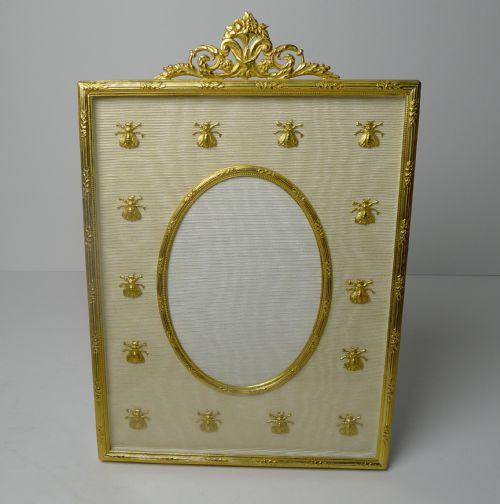
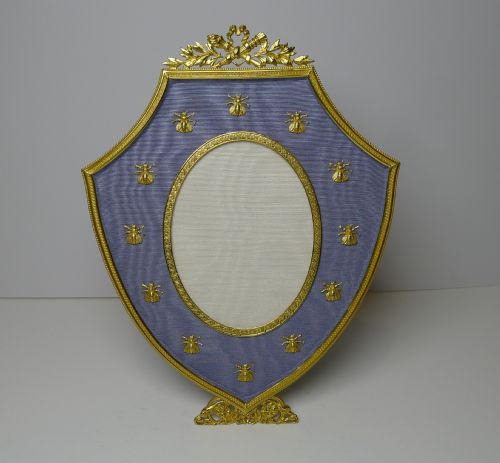
The distinction between standard production and superior craftsmanship lies in the crispness of the bronze casting and the depth of the chased details. Finer frames exhibit sharply defined motifs, such as cherubs, scrolling foliage, and Napoleonic bees, rather than soft or blurred edges.
Weight and rigidity indicate superior construction, as thick gilt bronze provides stability for heavy glass and easel backs. The integration of secondary materials, including intact champleve enamel panels and original silk velvet linings, elevates the standing of an individual piece.
Look closely for tiny cast bees buzzing across the metalwork, a Napoleonic favourite found hiding on late 19th-century frames.
Boin Taburet·F.Bienvue
The French Ormolu Photo Frame Glossary
- Ormolu
- Gilt bronze produced by applying a finely ground high-carat gold mercury amalgam to a bronze object, or through modern electrogilding. This finish gives the metal its rich, golden lustre.
- Champleve enamel
- An enamelling technique where troughs or cells are carved into the surface of the metal and filled with vitreous enamel paste before firing. It creates vibrant coloured patterns across the frame mounts.
- Paste stones
- Faceted glass or crystal cut and set to imitate precious gems within the metal mountings. They add sparkle and colour to the decorative border.
- Louis XVI Revival
- A decorative style popular in the 19th century that reinterprets classical symmetry, ribbons, swags, and neoclassical architectural motifs. It defines many French frames of this period.
- Empire Style
- A 19th-century design movement drawing on ancient Roman, Greek, and Egyptian military motifs like Napoleonic bees, laurel wreaths, and bold symmetry.
French Ormolu Photo Frame: Frequently Asked Questions
How do I date a french ormolu photo frame?
Dating relies on stylistic clues, mounting techniques, and material combinations seen across Victorian and late 19th-century examples. Elements like specific revival motifs and backboard construction help narrow the decade of production.
Evidence from past and current listings points to active periods spanning from eighteen forty through the Edwardian era around nineteen ten.
What is the difference between ormolu and gilt brass?
Ormolu specifically denotes gilded bronze, whereas brass is a copper and zinc alloy with a naturally brighter yellow tone. Both materials received gold surface treatments to achieve a uniform finish.
Listings differentiate between gilt bronze, ormolu, and brass according to the underlying metal composition used by the 19th-century workshop.
Were these frames made only for photographs?
While intended for portrait photography as the medium developed in the 19th century, similar cast mounts were applied to table mirrors and miniatures. The apertures accommodated paper photographs protected beneath glazed panels.
Several surviving objects function interchangeably as picture frames or small tabletop mirrors framed in matching gilt metal.
How should I clean an antique gilt bronze frame?
Dusting gently with a soft, dry cloth is generally sufficient to maintain the surface without disturbing the delicate gilt layer or enamel insets. Liquid cleaners and abrasive polishes must be avoided to protect the historic finish.
Preserving the original patina ensures the piece retains its authentic appearance and material integrity over time.