



French Bronze Photo Frame
A french bronze photo frame brings domestic portraiture into the realm of high ornament, offering heavy cast metalwork designed to command a mantelpiece or vanity.
French Bronze Photo Frame
A french bronze photo frame is a desktop accessory cast during the nineteenth and early twentieth centuries, spanning periods from Victorian and Edwardian eras to specific decades like 1880, 1890, 1900, and 1910. These pieces function as decorative picture frames, table mirrors, and vanity sets, often holding family portraits behind original glass plates.
The most common formats on this page are single, double, and triple photograph frames, alongside larger variants measuring up to nineteen inches. They emerge from diverse design movements including Louis XVI Revival, French Empire, French Rococo Revival, French Beaux-Arts, and French Chateau styles.
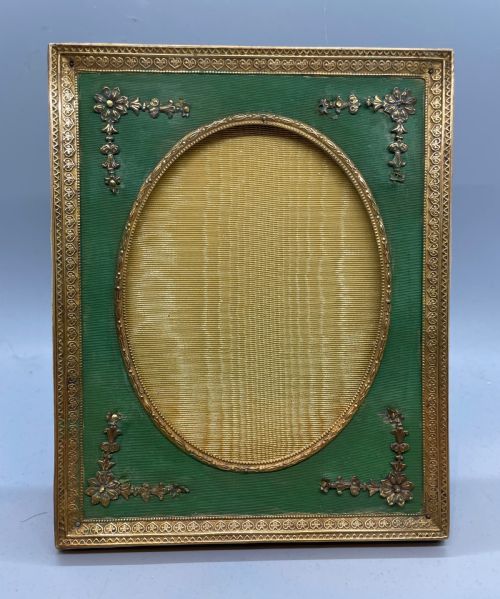
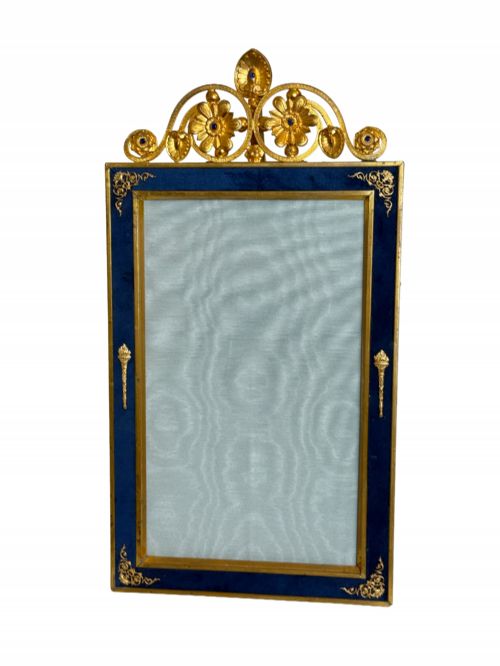
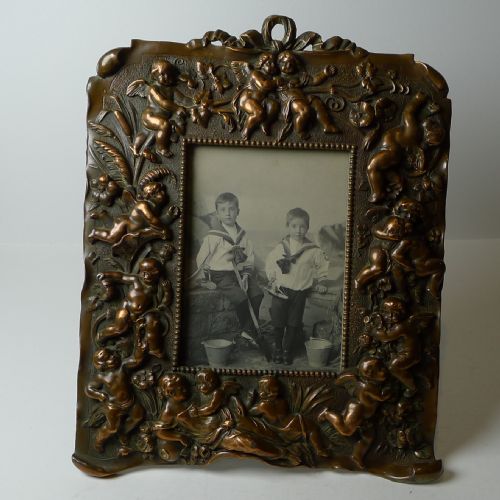
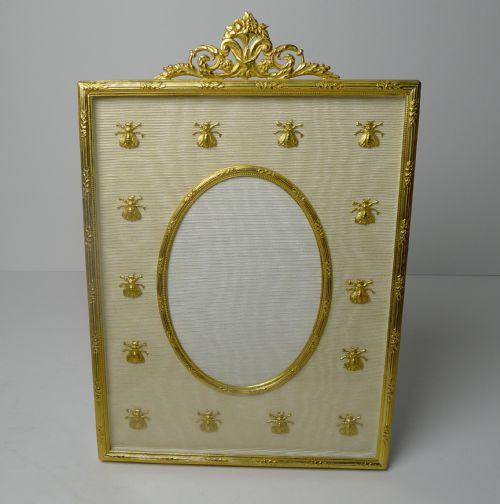
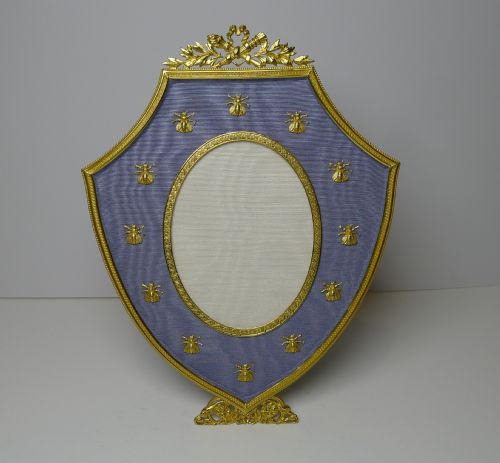
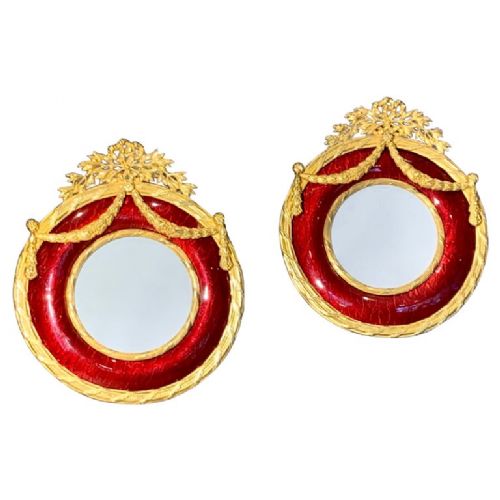
Makers and designers ornamented these objects with distinct motifs such as cherubs, Napoleonic bees, and blue, red, or green enamel trims. Many incorporate functional elements like two-way stands and silk or fabric linings supporting the rear easel backs.
Materials and Construction
Foundry workers cast these items using gilt bronze, ormolu, and gilded bronze, frequently mounting the heavy metal components over brass substructures and fabric or silk backers. The manufacturing process relied on detailed casting techniques that allowed for intricate relief work, such as scrolling foliage and sculptural cherubs.
Surface embellishments include champleve enamel work, Limoges enamel inserts, and inset paste stones or mother-of-pearl details. Glazed viewing windows are protected by original glass panes held within engraved slips.
Several frames feature industrious Napoleonic bees crawling up the bronze borders, bringing a touch of imperial determination to the family mantelpiece.
Assessing Quality and Execution
Quality rests upon the crispness of the bronze casting and the depth of the mercury gilding or ormolu finish. Superior examples display sharply defined relief ornament, where chased details remain clean rather than softened by worn moulds.
The integration of secondary materials dictates overall merit. Pieces incorporating finely fired champleve or Limoges enamel panels, genuine paste stones, or complex multi-aperture frames command greater attention than plain cast variants.
Boin Taburet·F. Bienvue
The French Bronze Photo Frame Glossary
- Ormolu
- Gilded bronze produced by applying a mercury and gold amalgam to a bronze base and heating it to vaporise the mercury. This technique creates a rich, lasting surface finish found on many nineteenth-century pieces.
- Champleve enamel
- A technique where troughs or cells are hollowed out of the metal surface and filled with vitreous enamel powder before being fired. It creates vibrant coloured patterns across the bronze border.
- Paste stone
- Faceted glass cut and polished to imitate gemstones like amethyst. These stones are frequently set directly into the metal mount for added sparkle.
- Limoges enamel
- Painted enamel plaques produced in the French city of Limoges, often inserted into the crest or base of a mirror or frame. These miniature paintings display fine polychrome detail.
- Easel back
- A hinged prop attached to the rear of the frame allowing it to stand upright on a table. Early examples often retain their original silk or velvet coverings.
French Bronze Photo Frame: Frequently Asked Questions
What periods do these frames come from?
The pieces originate primarily from the late nineteenth and early twentieth centuries, spanning the Victorian era through to the Edwardian period. Specific production dates cluster around 1880, 1890, 1900, and 1910.
Design influences span French Empire, Louis XVI Revival, and Rococo styles, reflecting the historicism popular in French workshops during those decades.
How were these frames used originally?
Owners placed them on boudoir dressing tables, mantelpieces, and writing desks to display cherished family portraits and miniature photographs. They often formed part of matching vanity sets alongside hand mirrors.
The inclusion of easel backs allowed them to stand securely on horizontal surfaces, while two-way designs offered flexibility in portrait or landscape orientation.
How do I care for gilt bronze?
Maintain the metalwork by dusting gently with a soft, dry cloth to prevent accumulation in the cast recesses. Avoid chemical polishes, as abrasive cleaners will strip the delicate ormolu or gilt surface.
Protect enamel panels and inset paste stones from moisture and direct sunlight to preserve their colour and setting over time.
How are single and multiple frames distinguished?
Single frames feature one central aperture for a single photograph, whereas double and triple frames incorporate two or three connected viewing windows within a unified bronze casting. Triple formats sometimes fold using hinges to stand across a surface.
Larger configurations often showcase more elaborate crests, such as groupings of cherubs or Napoleonic bees at the top.