



Art Glass Centerpiece
An art glass centerpiece brings fluid form and colour to a table, uniting decorative glass and metal mountings from the Victorian era onward.
Art Glass Centerpiece
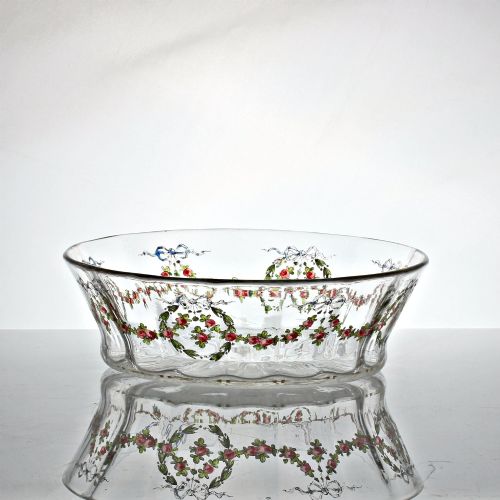
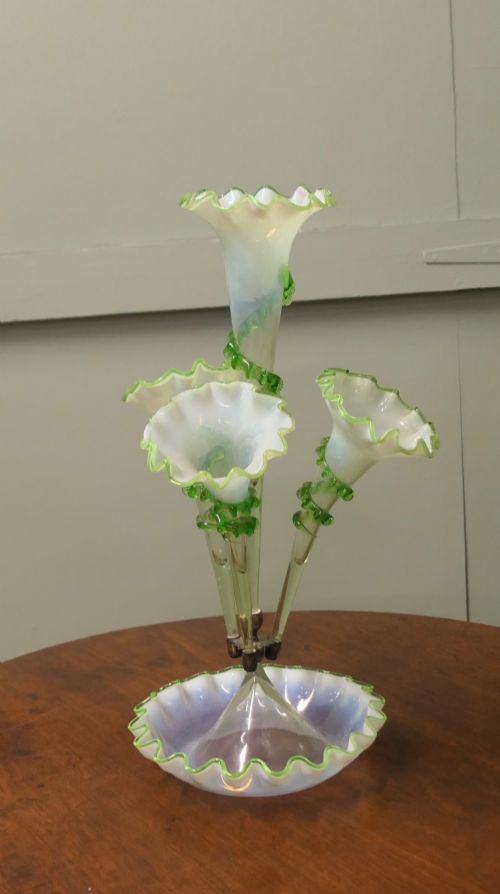
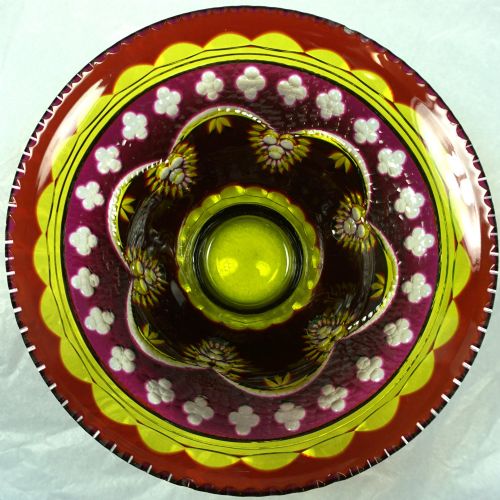
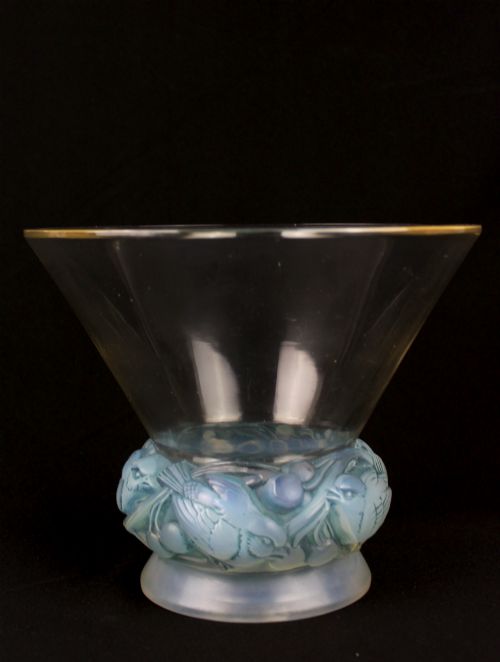
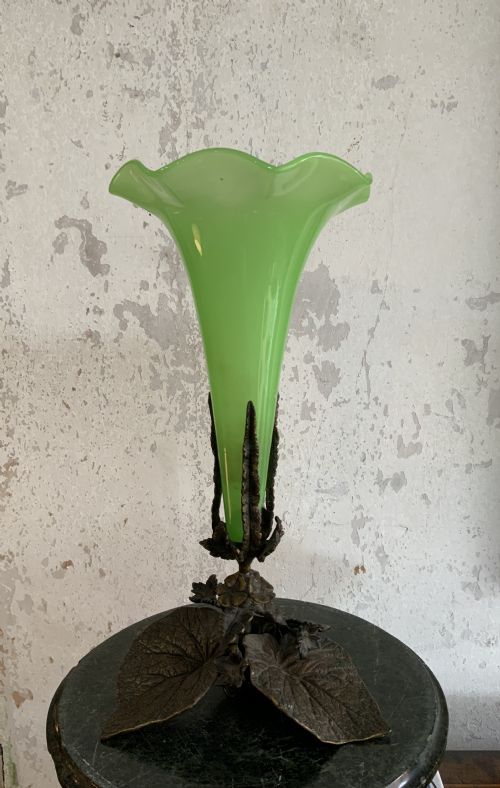
An art glass centerpiece encompasses decorative bowls, epergnes, and footed vessels designed to hold flowers or stand alone as table ornaments. These pieces bridge utilitarian tableware and sculptural display, often combining blown or moulded glass with metal mounts.
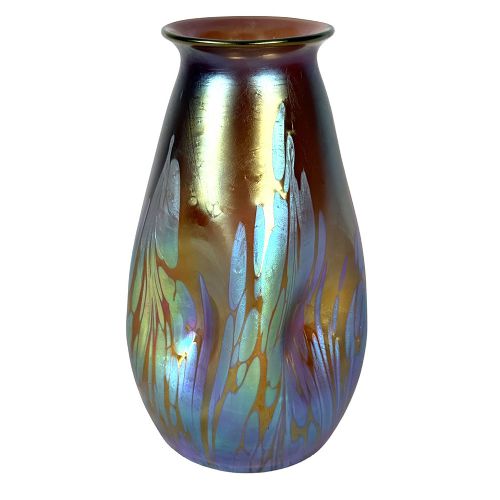
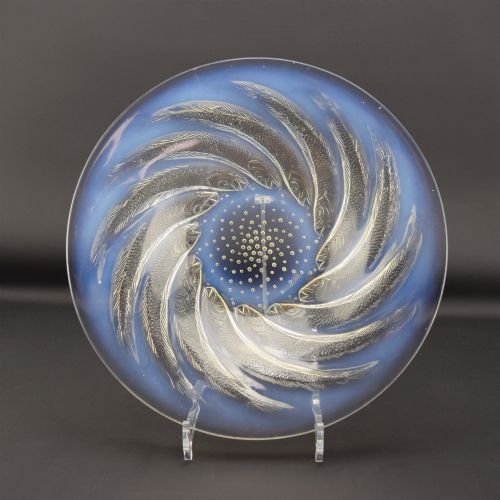
The selection ranges from early iridescent Art Nouveau vessels to geometric Art Deco chargers and heavy crystal bowls. Examples span periods from the nineteenth century through the 1930s, reflecting changing tastes in domestic decoration.
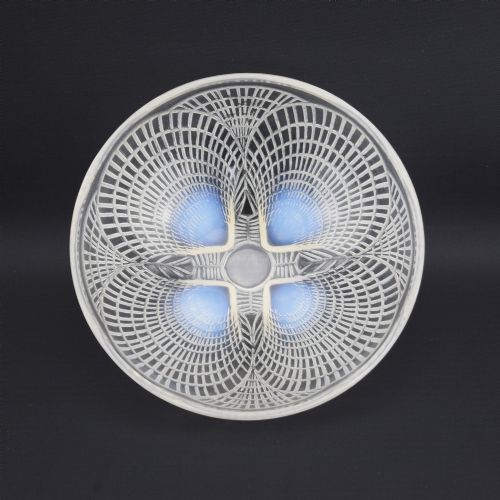
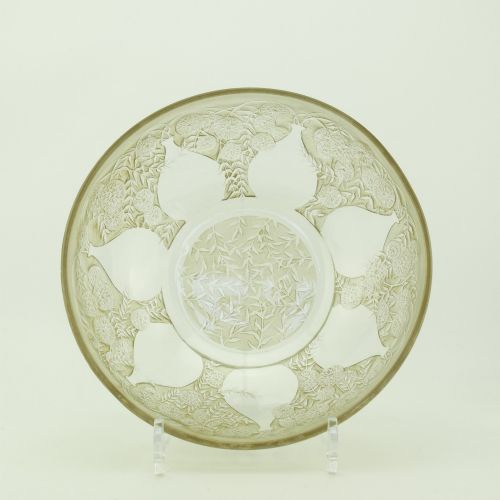
Moulded opalescent glass and overlaid crystal dominate the later periods, while iridescent surfaces and metal epergne frames characterise the earlier decades. Buyers encounter both standalone glass bowls and complex multi-trumpet table garnitures.
Materials and production
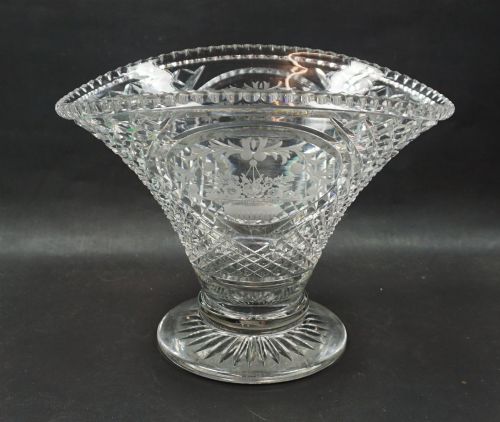
Makers utilised blown glass, mould-blown techniques, and heavy lead crystal to achieve depth of colour and structural weight. Acid-etching, cutting, and engraving added surface texture to clear and coloured bodies alike.
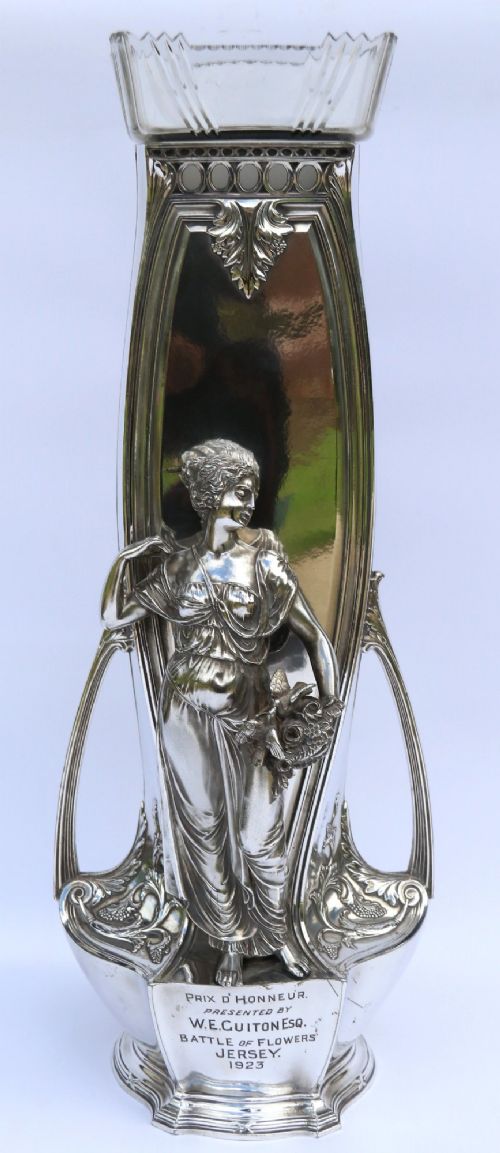
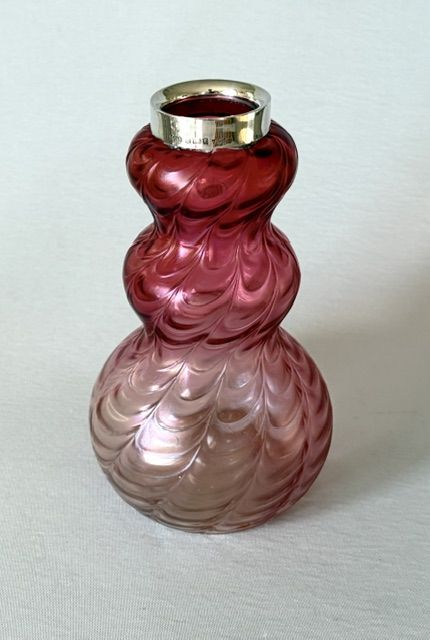
Silver plating and bronze mounts provided structural support and decorative contrast, particularly on epergnes and framed bowls. Iridescent effects were achieved through metallic vapour treatments applied while the glass was hot.
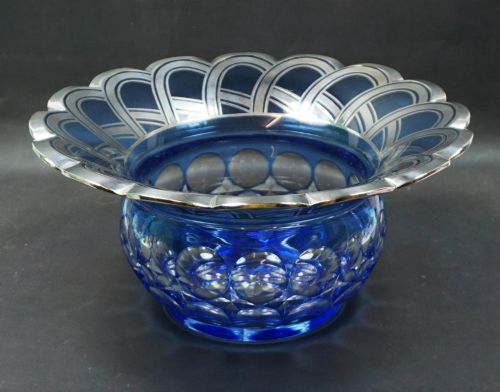
Cased glass constructions combined layers of different coloured metals within the vessel wall, allowing craftsmen to cut back through outer layers to reveal contrasting hues beneath.
Art Glass Centerpiece Retail Price Guide 2026
Typical asking prices for art glass centerpiece among the pieces listed under this phrase on Sellingantiques today, from the lower quarter to the upper quarter. They describe what is for sale here now, not the wider market.
Some Victorian epergnes feature removable trumpets so diners could peer across the table without botanical interference.
Assessing quality
Quality rests upon the depth of the glass medium, the crispness of moulded or cut details, and the integrity of any metal mounts. Heavier vessels with well-defined relief work represent superior execution.
The complexity of the glass chemistry, such as multi-layered cased colours or controlled iridescence, distinguishes standard production from exceptional studio and factory output. Original signatures or registry marks add certainty to attribution.
Walsh Walsh·Webb·Kralik·René Lalique·Val St Lambert·Loetz·WMF·Graystan·St Louis glassworks·Stuart·Jobling
The Art Glass Centerpiece Glossary
- Epergne
- A centrepiece stand with multiple branching trumpets or baskets for holding flowers and fruit. These multi-part table decorations often combine coloured glass with silver-plated frames.
- Iridescent glass
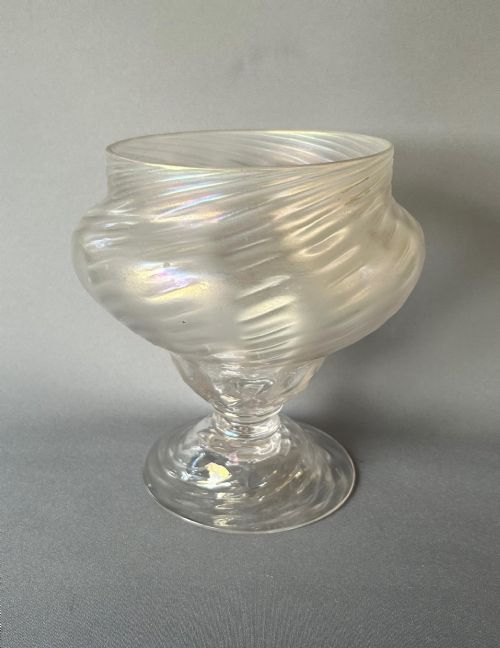
- Glass treated with metallic salts to produce a shimmering, rainbow-like surface sheen. This technique was widely utilised by Art Nouveau makers.
- Opalescent glass
- Milky glass that appears blueish in transmitted light and warm amber or yellowish in reflected light. It forms the basis of many moulded vessels from the early twentieth century.
- Cased glass
- Glass composed of two or more distinct layers of different colours fused together during blowing. Craftsmen often cut away portions of the outer layer to expose the contrasting colour underneath.
- Silver plate
- A base metal substrate coated with a thin layer of silver used for mounts and frames. This material provided structural stability for delicate glass bowls.
Art Glass Centerpiece: Frequently Asked Questions
What is an epergne used for?
An epergne served as a grand table centrepiece for displaying fruit, sweetmeats, or cut flowers during formal dining.
The branching trumpets held individual blooms while the central bowl accommodated larger arrangements or food items.
How do I clean antique art glass?
Clean antique glass gently using lukewarm water and mild soap, avoiding harsh abrasives or soaking pieces with metal mounts.
Silver-plated sections require specialised polishing cloths kept well away from the glass surface to prevent chemical damage.
What distinguishes Art Nouveau from Art Deco glass?
Art Nouveau glass relies on organic forms, flowing lines, and iridescent finishes that mimic natural phenomena.
Art Deco pieces favour geometric symmetry, stylised floral motifs, and heavy moulded or cased glass construction.
Are signature marks necessary for value?
Signatures provide definitive attribution to specific makers and designers, but many fine period pieces rely on distinct stylistic traits.
Unsigned works from established glasshouses often exhibit equal craftsmanship and distinct decorative qualities.