

Art Deco Walnut Nightstands
Art deco walnut nightstands combine geometric symmetry with striking timber grains to anchor a bedroom with period character.
Art Deco Walnut Nightstands
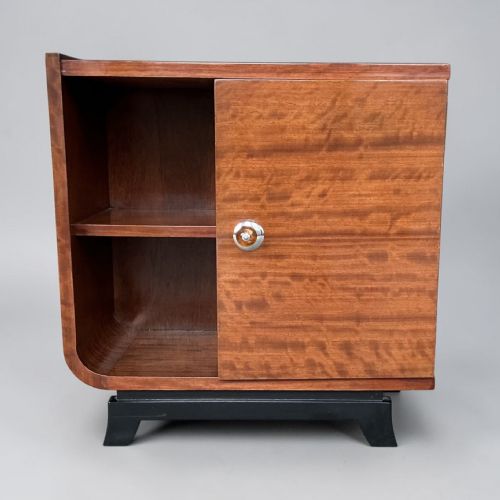
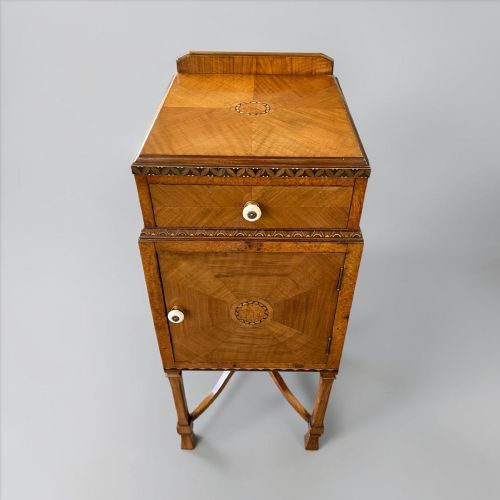
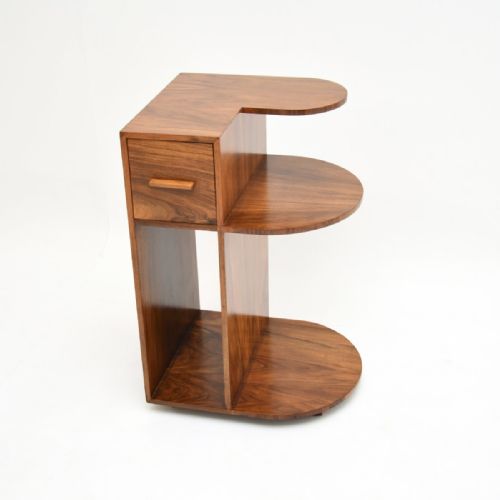
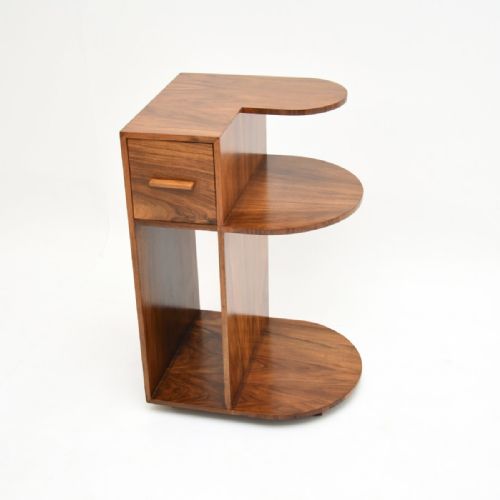
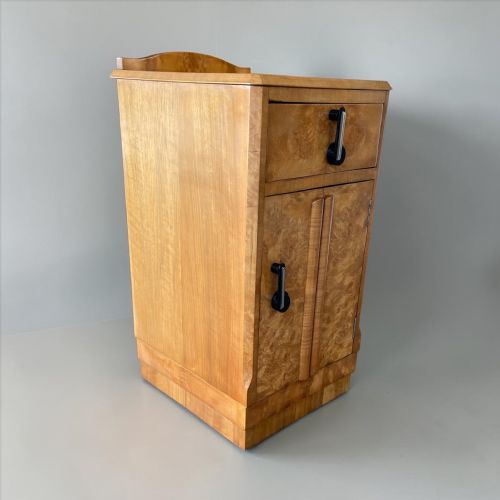
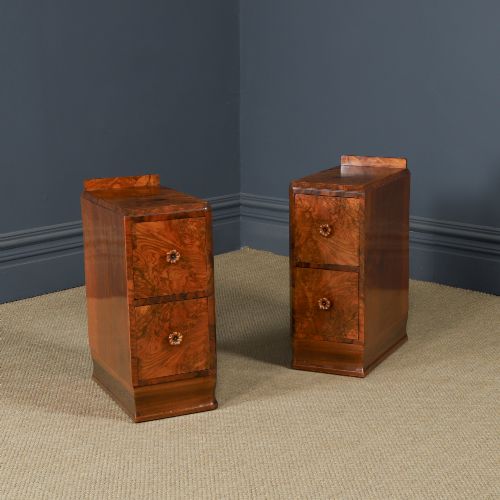
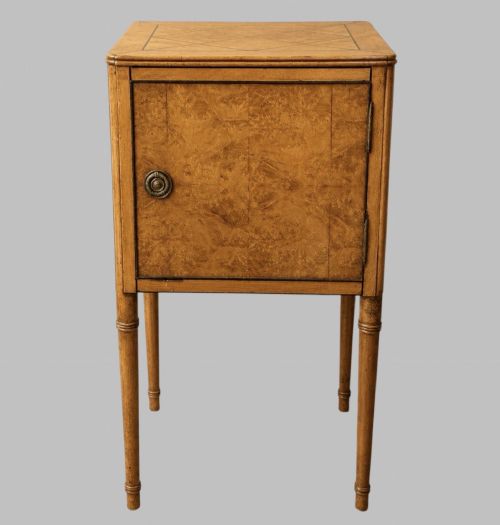
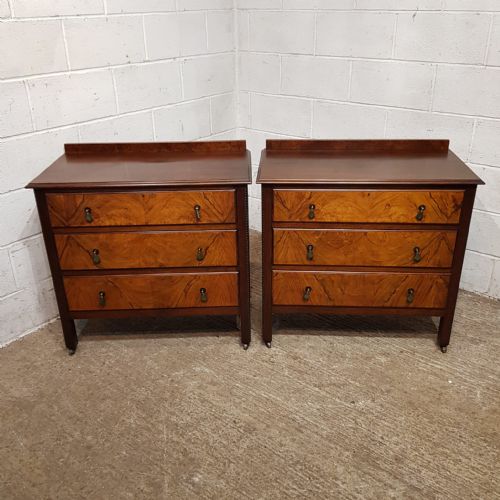
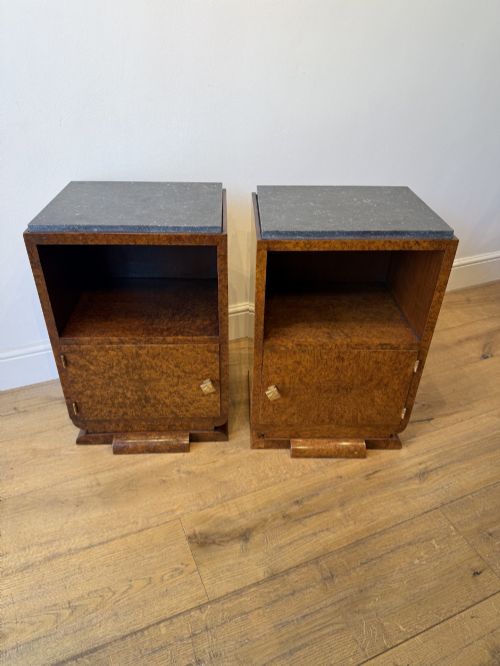
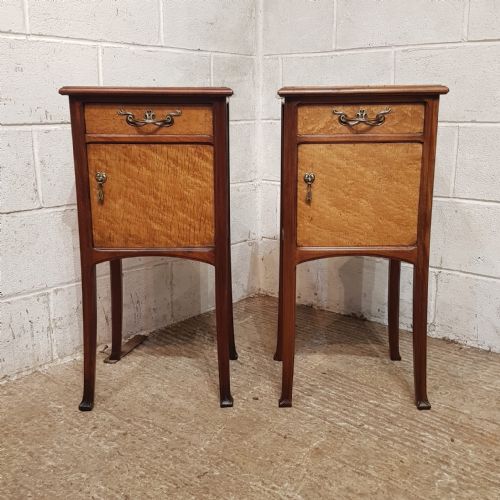
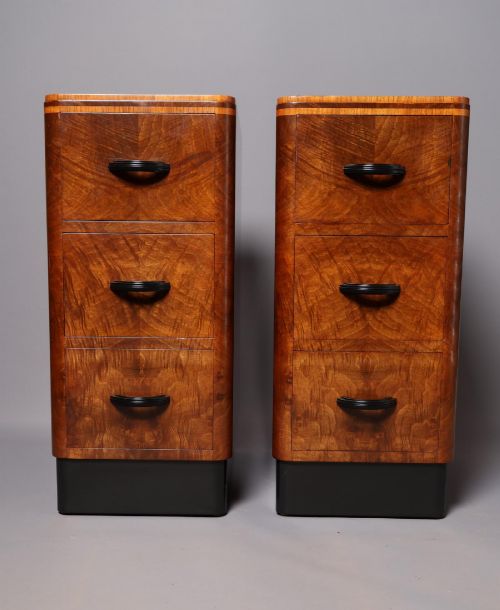
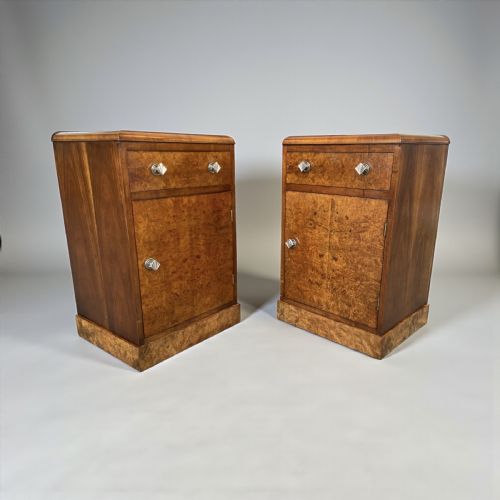
Art deco walnut nightstands encompass bedside cabinets, chests, and tables produced primarily during the 1920s, 1930s, and 1940s. These pieces function as compact bedroom storage units, often featuring enclosed cupboards, open display areas, or stacked drawers.
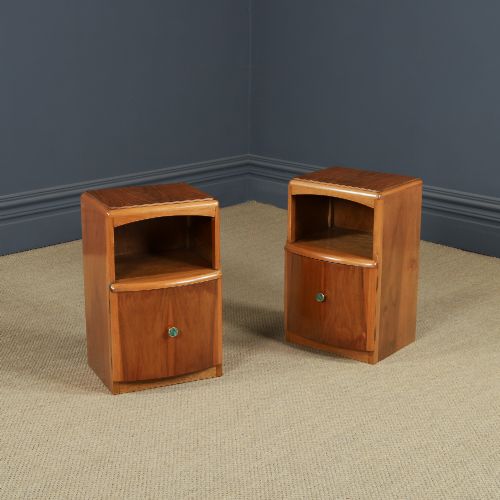
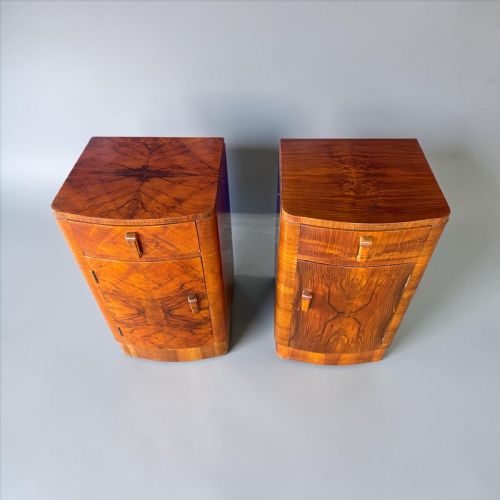
Buyers searching for art deco walnut nightstands will frequently encounter matching pairs originating from English, French, and Italian workshops. The designs range from streamlined geometric forms to drum-shaped cabinets and headboards with integrated bedside tables.
The aesthetic relies heavily on the distinct grain patterns of the wood, which provides a rich visual texture that defines the period style. Pieces take the form of bedside chests, lamp tables, and side cabinets intended to sit neatly beside a bed.
Assessing craftsmanship and finish
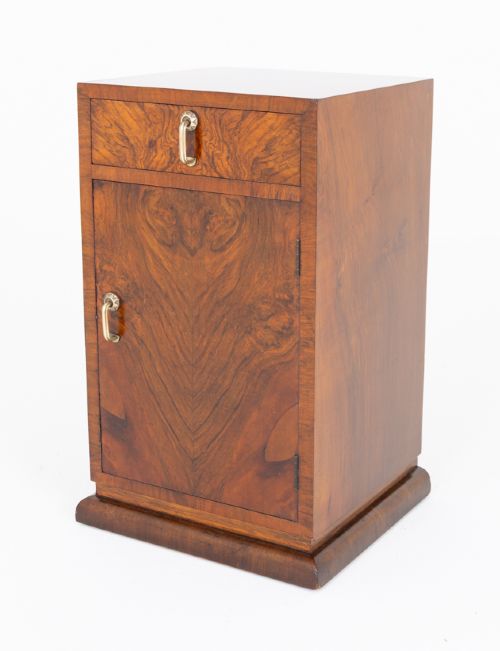
Quality rests upon the selection and bookmatching of the veneer, where top-tier examples display mirror-image grain alignments across symmetrical doors and drawers. Superior pieces also show careful attention to internal construction, using solid secondary woods for drawer linings rather than modern sheet materials.
The integration of hardware, such as original brass or chrome pulls, contributes to the overall integrity of the piece. Refinement in the shaping of curved fronts, such as bow-fronted cabinets or drum structures, marks the distinction between standard production and higher-grade atelier work.
Some nightstands even arrive attached to large wooden headboards, proving that 1930s designers took modular bedroom planning very seriously indeed.
Walter Carter Harrods·Maurice Adams·Harry and Lou Epstein
The Art Deco Walnut Nightstands Glossary
- Burr walnut
- A specialised wood veneer harvested from the growth warts of walnut trees, prized for its swirling, highly figured knot patterns. It forms the primary decorative surface on many high-end cabinets.
- Bookmatching
- A veneer technique where adjacent slices of timber are opened like a book to mirror each other, creating symmetrical patterns across cabinet doors. This method highlights the natural grain of the walnut.
- Art Deco Modernist
- A streamlined offshoot of the main design movement that strips away ornamentation in favour of stark geometric lines and functional forms. It represents a later evolution of the period style seen in bedroom furniture.
- Georgian Revival
- A traditional style incorporating 18th-century English design motifs executed during the early twentieth century. Pieces bearing this label blend classic revival shapes with period walnut materials.
- Bedside cabinet
- A small enclosed storage unit featuring a door and interior shelving designed to sit next to a bed. These often coordinate with matching chests of drawers or headboards.
Art Deco Walnut Nightstands: Frequently Asked Questions
How do I identify genuine art deco nightstands?
Examine the timber construction, hardware materials, and overall silhouette to confirm period characteristics. Genuine examples typically feature walnut veneers, brass or chrome accents, and distinct geometric forms popular during the interwar decades.
Look closely at the joinery methods and internal drawer construction to verify age. Period pieces often utilise traditional dovetail joints and solid secondary timbers behind the decorative exterior veneers.
Are these bedside cabinets sold as pairs?
Many surviving bedside cabinets and nightstands appear on the market as matching pairs. These sets often originated alongside larger bedroom suites or headboards designed for double and king-size beds.
Single tables also occur frequently, having been separated from their original bedroom suites over time. Matching pairs remain particularly sought after for balancing symmetry on both sides of a bed.
What is figured walnut?
Figured walnut refers to timber displaying unusual, decorative grain patterns caused by local irregularities in tree growth. Craftsmen select these specific logs to create dynamic visual movement across large flat surfaces.
This timber is sliced into thin veneers and applied to the exterior of cabinets and tables. The resulting patterns define the high-end aesthetic associated with luxury interwar furniture design.
How do I care for walnut furniture?
Protect walnut surfaces by keeping them away from direct sunlight and maintaining stable indoor humidity levels. Regular dusting with a soft, dry cloth prevents particulate accumulation without risking moisture damage to the finish.
Avoid placing damp items directly onto the wood or mirror tops to prevent staining. Periodically applying appropriate furniture wax maintains the lustre of the timber and nourishes the older polish.