

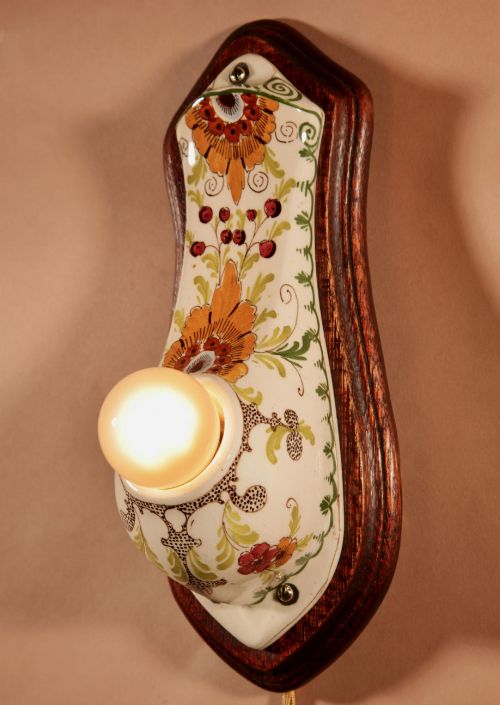


Art Deco Wall Lamps
Art deco wall lamps bring geometric discipline and striking illumination to interiors, offering enduring period character.
Art Deco Wall Lamps
Art deco wall lamps encompass wall lights, sconces, and exterior fixtures originating primarily from the 1920 and 1930 decades, alongside pieces drawing on earlier Edwardian, Art Nouveau, and nineteenth-century traditions. Buyers seeking these items will encounter symmetrical pairs and suites designed to mount directly onto vertical surfaces, providing functional illumination.
The dominant aesthetic centres on the 1930 period, featuring streamlined forms such as clam shells, skyscrapers, trumpets, and tubular shades. Metal and glass dominate the selection, appearing alongside ceramics and copper to form distinctive architectural lighting.
Origins stretch from domestic workshops to continental centres, with French and Dutch examples sitting alongside British pieces. Wall sconces often utilise matching shades arranged in pairs or sets of three and four for balanced room placement.
How they were made
Makers combined polished or plated chrome, brass, steel, and copper with moulded glass elements, utilising frosted, amber, and clear finishes to diffuse light. Bakelite and ceramic bodies also appear in select designs, offering alternative tactile qualities.
Glass components relied on pressing and moulding techniques to achieve distinct profiles like clam shells, flames, and clouds, while metal frames were cast, spun, or hand-chased. Original shades often bear maker signatures or characteristic surface textures from period production methods.
Listings feature pieces spanning from the nineteenth century through the 1940 decade, with chrome and glass as the most common material combination.
What varies in quality
Quality rests in the heaviness of the metal mount, the crispness of the casting, and the integrity of the glass shades. Superior examples feature substantial chrome or brass frames paired with thick, evenly moulded glass that retains its original surface finish.
The presence of named glassmakers or specialised regional manufacture elevates a piece, as does the survival of matching sets and original mounting hardware. Finer lighting demonstrates precision in the alignment of geometric components and clean execution of decorative motifs.
Dugué·ESC Elektrosvit·Lalique
The Art Deco Wall Lamps Glossary
- Sconce
- A wall-mounted lighting fixture designed to project illumination into a room. These pieces attach directly to vertical surfaces and often hold moulded glass shades.
- Frosted glass
- Glass treated to create a textured, opaque surface that softens bulb glare. This finish was widely utilised across period lighting to diffuse light evenly.
- Bakelite
- An early form of synthetic plastic used for electrical housings and lamp bodies. Its dark, durable composition defines many mid-period utilitarian designs.
- Hand-chased
- Metalwork finished using small punches and hammers to create surface detail and texture. Artisans applied this technique by hand to copper and brass elements.
Art Deco Wall Lamps: Frequently Asked Questions
How do I wire vintage wall lamps?
Most period lighting requires modern rewiring to meet current electrical standards. A qualified electrician can safely integrate vintage fixtures into contemporary domestic circuits.
Original lamp holders and mounting brackets should be retained where possible to preserve the authenticity of the fixture.
What metals were used in construction?
Manufacturers utilised chrome plating, polished brass, copper, and steel for structural frames. These materials offered durability and reflected the industrial aesthetic of the era.
Patination varies depending on the metal and the environment the lamp inhabited over the decades.
How do I identify a 1930 piece?
Pieces from this decade typically display streamlined geometry, skyscraper silhouettes, and stepped motifs. Chrome and frosted glass combinations are particularly characteristic of the period.
Construction methods and material choices align with the manufacturing standards of the interwar years.