


Art Deco Tableware Set
An art deco tableware set brings geometric clarity and functional elegance to the table, uniting dining pieces through characteristic interwar design.
Art Deco Tableware Set
An art deco tableware set spans matched groupings for dining and service, appearing most frequently as condiment sets, napkin rings, and coffee services from the interwar decades. These collections bring together specialised dining implements intended for functional use during formal meals, reflecting the streamlined tastes of the period.
The objects take various material forms, ranging from cased solid sterling silver and silver-plated configurations to earthenware tea services and specialised glass-lined vessels. Condiment sets and napkin rings dominate the selection, often accompanied by dedicated spoons and dessert dishes.
Origins trace predominantly to the 1920s and 1930s, capturing the distinct aesthetic shift towards geometric forms and clean lines. Pieces frequently bear hallmarks or maker marks placing them firmly within British silversmithing traditions alongside notable Scandinavian and ceramic workshops.
Materials and methods of manufacture
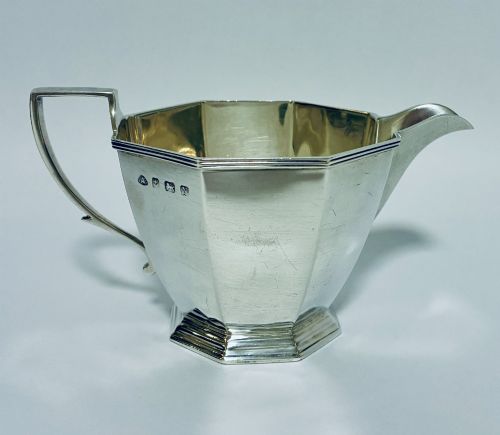
Silversmithing forms the backbone of these collections, utilising solid sterling silver and silver plate shaped into precise geometric contours, often paired with contrasting interior elements such as cobalt glass liners. Makers employed traditional casting and stamping techniques to achieve the crisp angles and clean profiles characteristic of the style.
Ceramic pieces involve earthenware bodies finished with specialised glazes, hand-painted decoration, or moulded surface patterns. Surface ornamentation ranges from vibrant hand-painted motifs to guilloche enamel work over silver gilt, demonstrating the period's diverse decorative approaches.
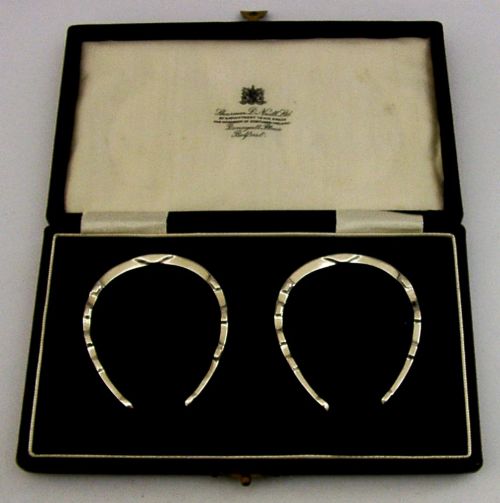
Horseshoe napkin rings bring a touch of interwar optimism to the dinner table, combining superstition with crisp modernist geometry.
Assessing quality in tableware sets
Quality rests upon the integrity of the material and the precision of the execution, where heavier gauges of silver and well-preserved original glass liners distinguish finer productions. The clarity of hallmarks and the crispness of moulded or hand-painted details indicate the level of care invested by the maker.
Completeness within cased sets and the survival of matching components elevate a group, as does the retention of delicate surface treatments such as guilloche enamel or hand-painted earthenware decoration without significant wear.
William Neale·Mappin and Webb·Clarice Cliff·David Andersen·Keith Murray·Walker and Hall·Elkington and Company·Gladstone Potteries
The Art Deco Tableware Set Glossary
- Condiment set
- A matched grouping of small vessels designed for holding salt, pepper, and mustard at the dining table. These typically include small spoons and glass liners.
- Guilloche enamel
- A decorative technique involving precise mechanical engraving beneath translucent enamel layers. This creates repeating geometric patterns that catch the light.
- Silver plate
- A base metal substrate coated with a thin layer of silver. This method offered the visual appeal of solid silver at a more accessible cost during the period.
- Hallmark
- An official stamp indicating the purity of precious metal, the assay office, and the year of manufacture. These marks provide definitive dating for silver items.
- Earthenware
- A porous ceramic body fired at lower temperatures and finished with an opaque glaze. It serves as a common medium for interwar tea and coffee services.
Art Deco Tableware Set: Frequently Asked Questions
How do I clean silver tableware sets?
Use a soft cloth and a specialised silver polish designed to remove tarnish gently without abrading the surface. Avoid harsh chemical dips, particularly on pieces with fitted glass liners or enamel work.
Store items in a dry environment and handle them with clean hands to minimise future tarnishing and preserve the original finish.
Are these tableware sets safe for daily use?
While many pieces were created for functional dining, older silver plate and delicate earthenware require careful handling and hand washing rather than dishwasher cycles. Preserving fragile elements like enamel and cobalt glass liners ensures long-term durability.
Many collectors choose to use them for special occasions rather than daily service to protect the antique finishes.
How can I date an art deco set?
Silver components usually feature British hallmarks that indicate the exact year of assay and the maker's mark. Stylistic cues such as stepped geometric forms and specific enamel patterns also point towards the interwar decades.
Ceramic pieces often bear factory stamps corresponding to specific production eras.
What is a guilloche enamel?
Guilloche enamel is a decorative process where a metal surface is mechanically engraved with intricate geometric patterns before being coated in translucent coloured enamel. This allows the pattern underneath to show through with striking depth.
It appears frequently on small accessories like napkin rings from the period.