
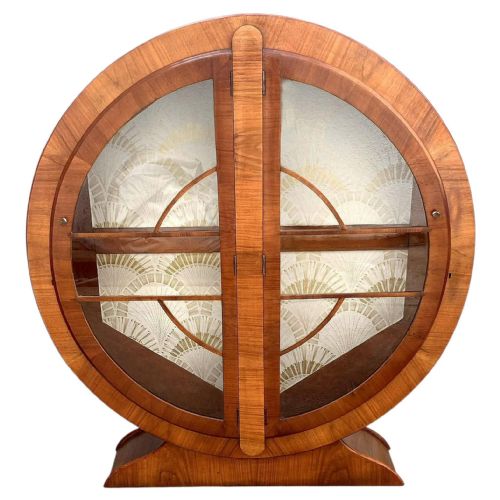
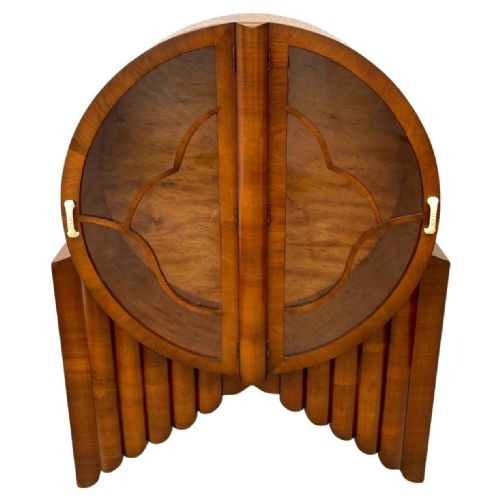
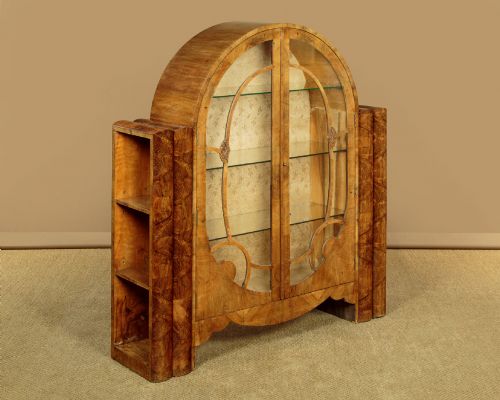
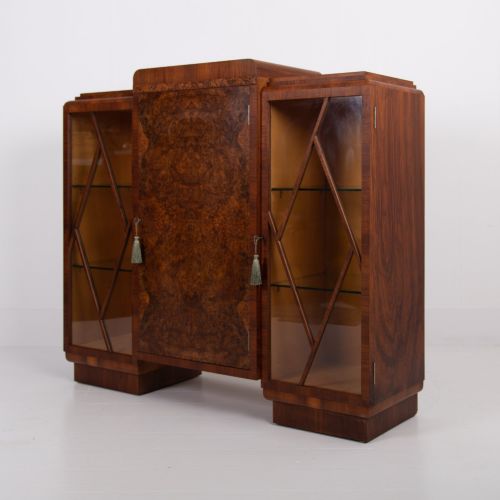


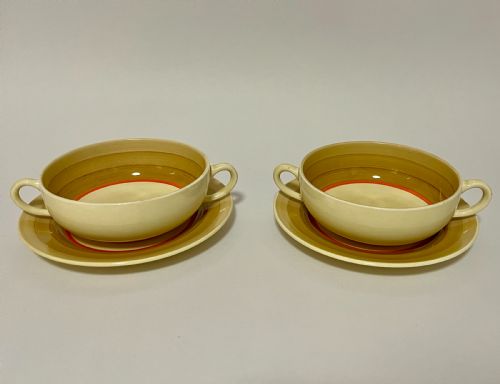


1930s Art Deco China
These 1930s art deco china pieces bring geometric boldness and striking cabinet work to modern interiors, combining functional storage with decorative flair.
1930s Art Deco China
When you search for 1930s art deco china, you encounter a distinct blend of ceramic tableware, tea and coffee sets, alongside display cabinets designed to house them. The selection heavily leans towards notable ceramic patterns alongside the walnut furniture built to showcase them.
Most items stem directly from the 1930 period, with occasional overlapping styles reaching back towards the Edwardian era or the 1920s. Soup bowls, coffee sets, and porcelain figurines dominate the ceramic side, while glazed cabinets form the bulk of the larger physical pieces.
Materials and construction methods
Makers utilised rich timbers such as walnut, burr walnut veneer, and oak to build the architectural cabinets, often incorporating leaded glass panels and brass fittings. Sycamore served as a contrasting interior wood in specific cabinet designs.
On the ceramic side, porcelain received hand-painted glazes, most notably in Bizarre patterns and hand-decorated tea sets. The combination of figured wood veneers and vibrant ceramic glazes defined the aesthetic approach of the era.
The listings on this site combine walnut furniture with porcelain tea sets and glazed cabinets from the 1930 period.
Factors influencing quality
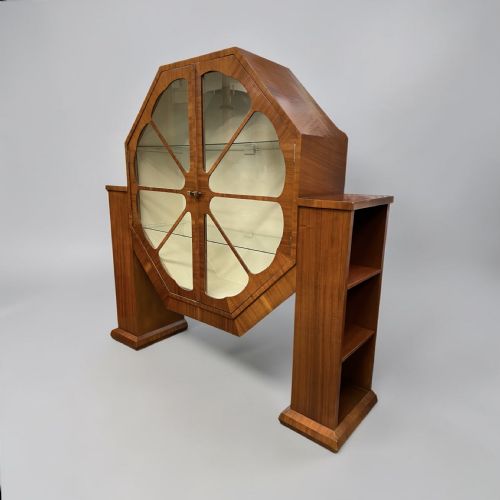
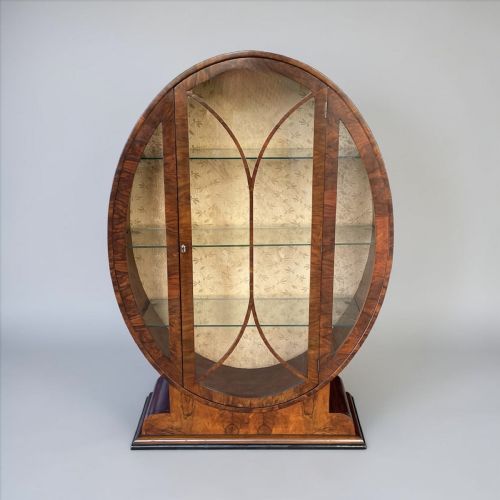
Quality rests heavily on the complexity of the timber veneers and the intricacy of the cabinet geometry. Circular, hexagonal, and clove-shaped display cabinets demonstrate a higher standard of woodworking skill than standard rectangular cases.
In ceramics, the precision of the hand-painted glaze work and the reputation of the specific pottery studio dictate the standing of the piece. Recognised ceramic designers elevate standard tableware into collectible works of art.
Clarice Cliff·Shelley·Royal Doulton·Maurice Adams·Epstein
The 1930s Art Deco China Glossary
- Burr walnut
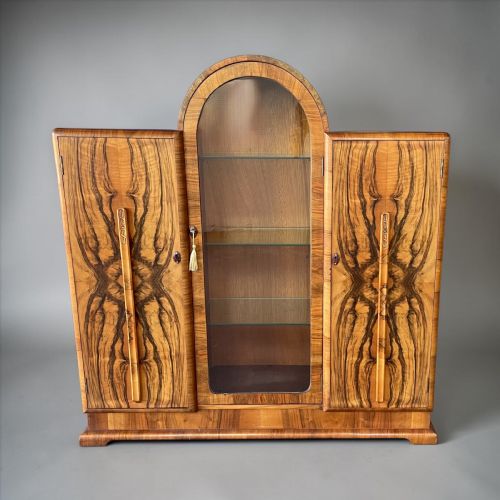
- A wood veneer taken from the growth deformity of a walnut tree, producing swirling, highly decorative grain patterns. This material appears frequently on the doors and panels of higher-end display cabinets.
- Vitrine
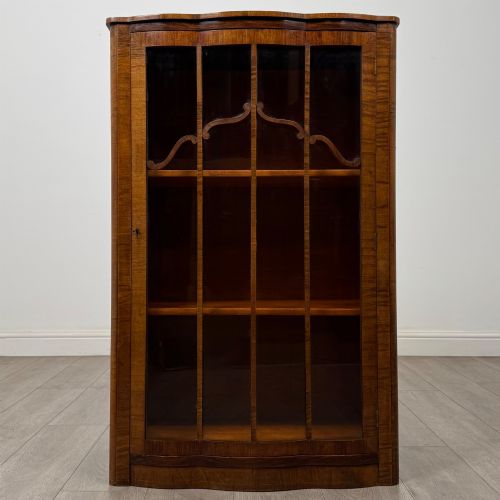
- A glass-fronted cabinet designed specifically for displaying porcelain, china, and decorative objects. These units often feature curved or leaded glass.
- Bizarre ware
- A distinctive line of brightly coloured, hand-painted ceramics produced during the interwar period. These items utilise bold geometric and abstract motifs.
- Harlequin set
- A collection of matching ceramic vessels where each individual piece possesses a different solid colour or alternating pattern. They remain popular for tea and coffee service collections.
1930s Art Deco China: Frequently Asked Questions
What is an art deco china cabinet?
An art deco china cabinet is a glazed storage furniture piece designed during the interwar period to hold and display fine porcelain and tea sets. They frequently utilise geometric shapes like circles, octagons, and rocket forms.
These cabinets rely on figured walnut veneers and glass panels to create a striking focal point in a dining room or living space.
How do I identify 1930s ceramics?
Identifying ceramics from this decade involves looking for hand-painted glaze patterns, bold stylised motifs, and backstamps corresponding to active potteries of the era. Bright colours and abstract designs are typical.
Many pieces from this timeframe also incorporate distinct earthenware or porcelain body types characteristic of English factories active between the wars.
Where should I place a display cabinet?
Display cabinets function best in reception rooms or dining areas where their glass panels can catch the light and showcase collected porcelain. Positioning them away from direct sunlight protects both the wood and the ceramic glazes.
Ensure the floor is level, as heavy walnut furniture with curved or unconventional geometry requires stable placement.