


Art Deco Study Lamp
An art deco study lamp brings genuine period function and bold geometric form straight to your working desk.
Art Deco Study Lamp
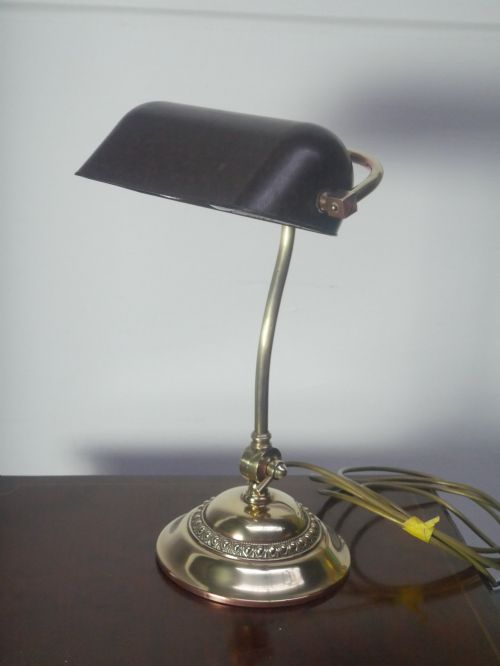
An art deco study lamp is primarily found as a desk lamp or table lamp originating from the nineteen-twenties, nineteen-thirty and nineteen-forty periods. These task lights range from simple bankers models to sophisticated articulated desk lamps with integrated shades.
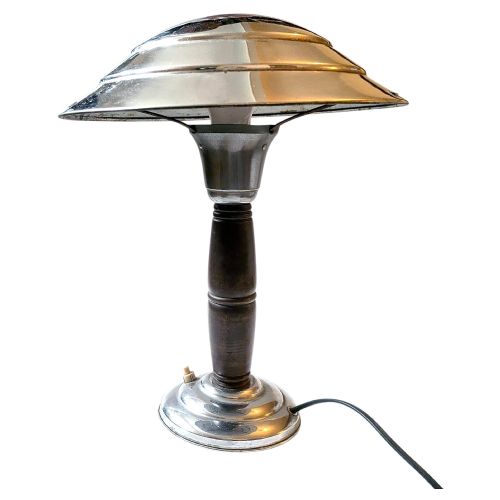
The dominant aesthetic draws heavily from the machine age, combining practical workspace illumination with the sleek architectural lines characteristic of early twentieth century industrial design.
How they were made
Construction relies heavily on durable metals including brass, chrome, steel, cast iron, and toleware, often shaped into adjustable frames and heavy weighted bases. Makers utilised early synthetic plastics such as bakelite for switch housings, shades, and decorative body elements.
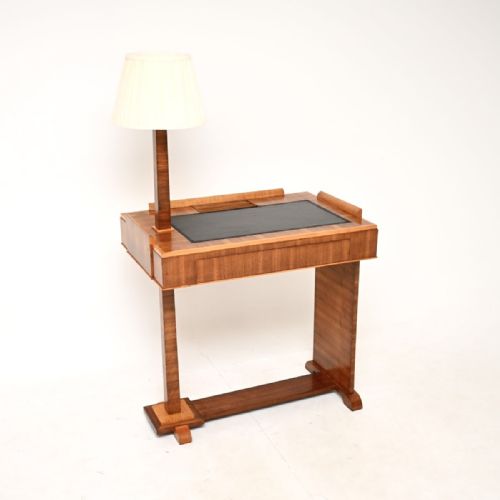
Many examples incorporate articulated joints, flexible tubing, and mechanical tension systems to allow directional movement of the light source. Wooden components like macassar, walnut, and sycamore appear in combination with metalwork to anchor the lamp or form adjoining desk structures.
Some industrious turn-of-the-century clerks likely squinted under these exact articulated brass angles before electric grid lights were entirely stable.
What varies in quality
Quality separates along the lines of material integrity, mechanical complexity, and designer attribution. Heavy gauge chrome, solid brass, and intact moulded bakelite represent superior manufacturing standards compared to lighter base metals.
The sophistication of the articulation mechanism defines the upper tier of these pieces. Smooth movement in adjustable arms and original paired components elevate an example above standard utility lighting.
Eileen Grey·E. Cole·Jumo·Hawkins
The Art Deco Study Lamp Glossary
- Bakelite
- An early thermosetting phenol formaldehyde resin used widely for electrical housings, shades, and switches. Its rich dark finish and durability made it a staple of the period.
- Articulated
- Describing a lamp frame designed with joints or flexible sections for adjustable positioning. This mechanical complexity allowed focused task lighting across a workspace.
- Toleware
- Painted or lacquered metalware often used for lamp shades and bases. It provided a durable coloured surface finish during manufacturing.
- Machine Age
- A design era spanning the nineteen-twenties and nineteen-thirties that celebrated industrial efficiency, steel, chrome, and streamlined geometry.
- Pirouette
- A specialised descriptor for certain balanced mechanical desk lamps that pivot smoothly on a central axis.
Art Deco Study Lamp: Frequently Asked Questions
How do I date an art deco study lamp?
Dating relies on identifying period materials such as bakelite, chrome plating, and solid brass construction typical of the interwar decades. The presence of machine age styling cues and adjustable mechanical joints also points directly to the nineteen-twenties and nineteen-thirties.
Examining any stamped foundry marks, maker attributions, or patent dates stamped onto the cast iron base provides further chronological certainty.
Were these lamps used only for desks?
While primarily manufactured as functional desk lamps and bankers lamps for office work, many versatile table lamps served equally well in libraries and reading rooms. Some elaborate examples were built directly into executive walnut and sycamore writing desks.
Their adjustable angle arms made them adaptable for drafting, accounting, and general study tasks.
What is a machine age desk lamp?
A machine age desk lamp reflects the industrial optimism of the interwar era through exposed metal components, chrome finishes, and unadorned geometric shapes. These pieces prioritized functional articulation over ornamentation.
They often feature heavy cast iron bases and steel tubing designed to withstand heavy daily office use.