


Art Deco Sculpture Lamp
An art deco sculpture lamp brings sculptural figures and atmospheric illumination together from the nineteen-twenties and nineteen-thirties.
Art Deco Sculpture Lamp
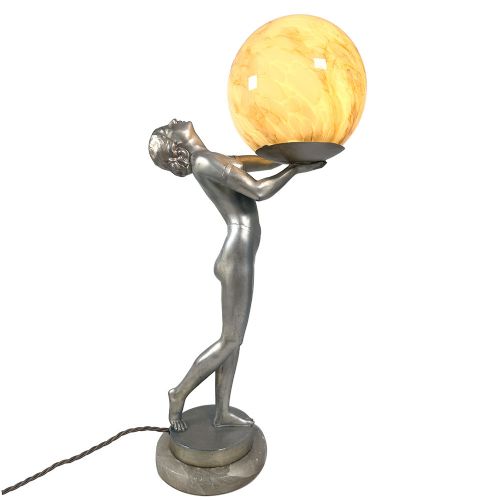
When you search for an art deco sculpture lamp, you encounter table lamps, night lights, and figural pieces that integrate human or animal forms with functional lighting. The selection spans French art deco creations, table lamps featuring figures, and small night lights designed to cast a soft glow.
Most examples date from the nineteen-twenties and nineteen-thirties, showcasing the characteristic aesthetic of the interwar period. The forms range from large floor standing sculptures to intimate veilleuses and perfume lamps intended for domestic interiors.
Materials and construction
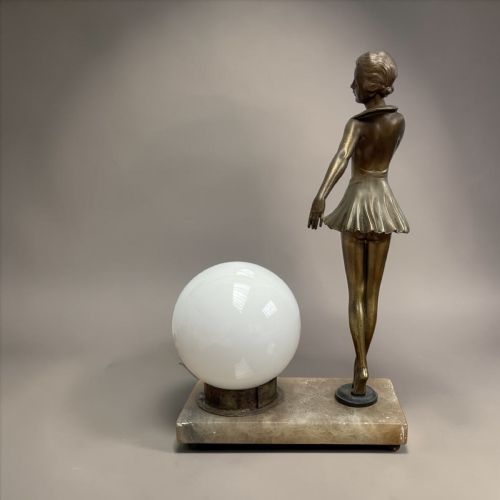
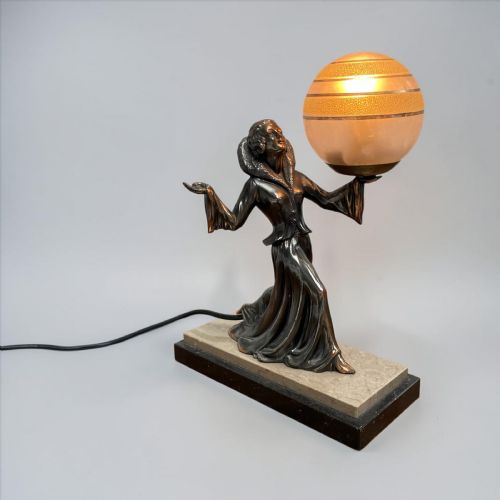
Maker studios utilised a combination of cast metals, patinated bronze, and spelter paired with heavy marble or granite bases to anchor the figural elements. Cold painting frequently added surface detail to the bronze and metal figures.
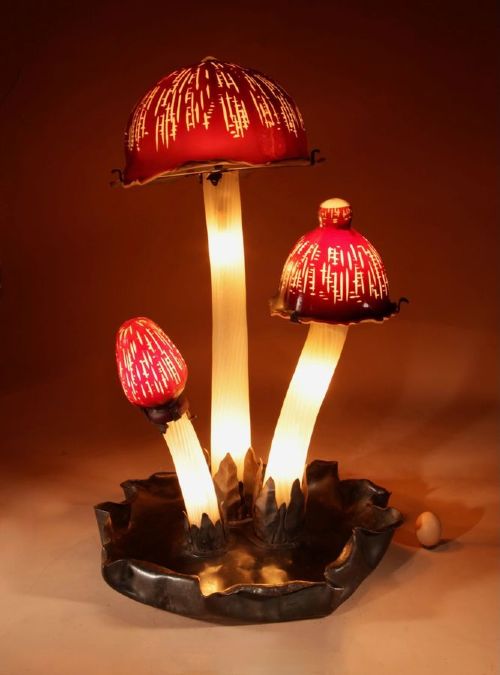
Lighting components incorporated pressed glass, crackle glass, frosted glass, and mottled opaline glass shades. Lamp work glass and delicate porcelain also formed the luminous bodies of these decorative objects.
Illuminated cats, greyhounds, seagulls, and elephants wait patiently to light up your sideboard.
Assessing the pieces
Quality depends upon the definition and crispness of the cast metal or carved porcelain sculpture, alongside the weight and selection of the marble base. The marriage between the sculptural figure and the original glass shade determines the integrity of the composition.
Pieces bearing signatures from known designers or established Parisian studios demonstrate superior artistic execution in the modelling of human and animal subjects such as greyhounds, falcons, and female nudes.
Argilor Paris·Bruno Zach·Auguste Moreau
The Art Deco Sculpture Lamp Glossary
- Veilleuse
- A small ceramic or porcelain night light designed to hold a low wattage bulb inside a hollow figural body. These diminutive lamps often doubled as perfume burners in period bedrooms.
- Spelter
- A zinc alloy commonly utilised as a less costly alternative to bronze during the interwar period. It accepts patination and cold painting readily to mimic heavier metal.
- Lamp work
- A glassworking technique where rods of glass are melted over a torch flame and shaped by hand. This method produces intricate figurative elements such as small snakes and delicate animals.
Art Deco Sculpture Lamp: Frequently Asked Questions
What is an art deco sculpture lamp?
These pieces combine a decorative figural sculpture with an integrated light source, functioning primarily as decorative table lamps or night lights.
They utilise human figures, animals, and natural motifs cast in metal or modelled in glass and ceramic.
How were these lamps used originally?
Owners placed them on side tables, mantelpieces, and sideboards to provide low, atmospheric illumination rather than bright room lighting.
Smaller night lights and perfume lamps served in bedrooms to diffuse gentle light and scented oils.
How do I date an art deco sculpture lamp?
Dating relies on stylistic markers from the nineteen-twenties and nineteen-thirties, combined with the specific materials and manufacturing techniques recorded in the period.
Signatures, foundry marks, and the type of glass or marble employed also help narrow the timeframe.
What materials are common on these lamps?
Common materials include patinated bronze, cold painted metal, spelter, and porcelain mounted on solid marble or granite bases.
Shades typically feature frosted glass, crackle glass, or mottled opaline glass.