

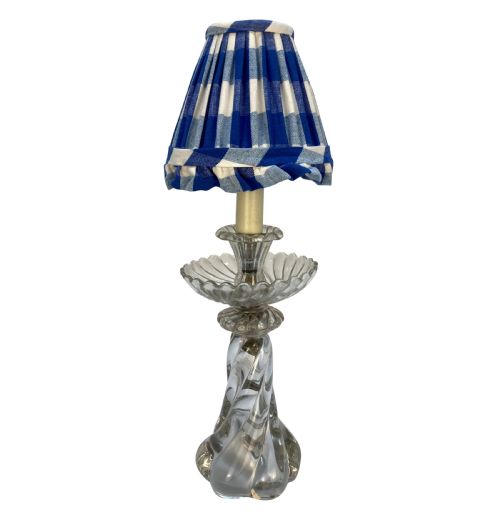


Art Deco Scalloped Table
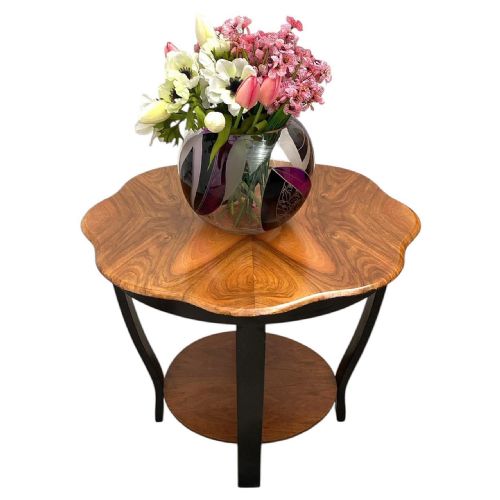
An art deco scalloped table brings geometric elegance and clean lines straight into a sitting room.
Art Deco Scalloped Table
An art deco scalloped table belongs to the interwar design movement defined by clean geometry and striking materials. Buyers look for these items to anchor a room with distinct period character.
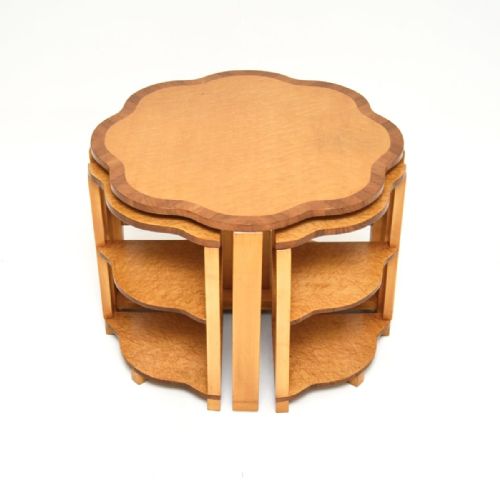
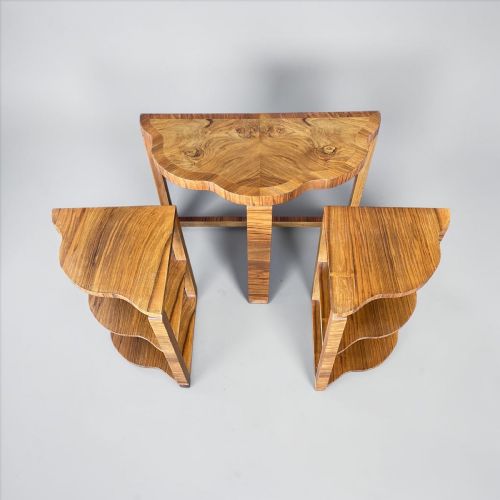
The selections available run from nested coffee tables to two-tier designs intended for daily use in a reception room. English and French workshops produced these forms across the nineteen twenties, thirties and forties.
Alongside tables, the broader selection includes matching stools, lighting, trays and dining sets that share the same design vocabulary. Walnut and birds-eye maple dominate the forms currently found on the market.
How they were made
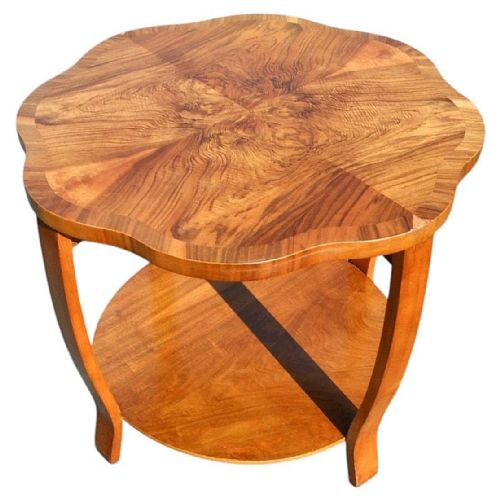
Cabinet makers utilised rich timbers like figured walnut and birds-eye maple, often applying fine veneers over a sturdy wood carcass to create striking grain patterns across the surface. These veneers demanded precise cutting and matching to achieve the symmetrical motifs typical of the period.
Glass panels and silver-plated elements appear alongside wood to add contrast and texture to the finished pieces. Construction methods relied on solid joinery tailored to support the multi-tiered designs and nesting configurations.
French workshops occasionally added silver-plated trays to their repertoire, ensuring your cocktails travelled in absolute geometric style.
What varies in quality
The grade of timber veneer and the precision of its matching dictate the visual appeal of each piece. Strong, natural grain patterns thoughtfully arranged across a top create a far more compelling surface than plain or mismatched timber.
Construction integrity separates standard workshop output from finer examples. Well-executed tiered structures and tight joints ensure the item survives decades of practical use while maintaining its original geometry.
The Art Deco Scalloped Table Glossary
- Art Deco
- A design style emerging in the early twentieth century characterised by sleek lines, geometric shapes and modern materials. It influenced furniture, architecture and decorative arts.
- Veneer
- A thin layer of choice wood applied over a base of cheaper timber to provide a decorative surface. Figured walnut and birds-eye maple frequently appear in this application.
- Nesting tables
- A set of several tables of graded size designed to fit neatly beneath one another. They offer flexible surface space in compact rooms.
- Two tier
- A furniture construction featuring a main upper surface supported above a lower shelf. This design increases utility without expanding the footprint.
Art Deco Scalloped Table: Frequently Asked Questions
What is an art deco scalloped table?
An art deco scalloped table is a period furniture piece featuring curved or scalloped edges characteristic of the nineteen thirties design aesthetic. These items combine geometric structure with decorative wood veneers.
They serve primarily as coffee tables or occasional surfaces in living spaces. Their distinctive outline adds visual interest to a room without sacrificing function.
How do I style an art deco table?
Pair the piece with complementary interwar furnishings, minimalist seating, or contrasting modern decor to let the wood grain stand out. Keeping surface accessories simple highlights the geometric lines.
Consider placing it centrally in a seating area where the tiered structure or scalloped edge remains visible from all angles. Good lighting enhances the natural figure of the walnut veneer.
How do I date an art deco table?
Examine the construction methods, materials, and overall silhouette to place the item within the nineteen twenties to nineteen forties timeframe. English and French pieces from this era often utilise figured walnut and maple veneers.
Hardware, under-framing, and label remnants can offer further clues to the manufacturing decade. Comparing the form against documented period catalogues helps confirm the timeline.
Are these tables practical for daily use?
The sturdy wood construction and multi-tiered designs make them well-suited for holding drinks, books, or lamps in a busy room. Nesting variants offer extra surface area when entertaining guests.
Routine care involves gentle dusting and protecting the veneer from excessive moisture. Proper maintenance preserves the finish for continued daily enjoyment.