



Art Deco Pendant Lamp
An art deco pendant lamp brings distinct geometric form and diffused light to a room, drawing the eye upwards with period character.
Art Deco Pendant Lamp
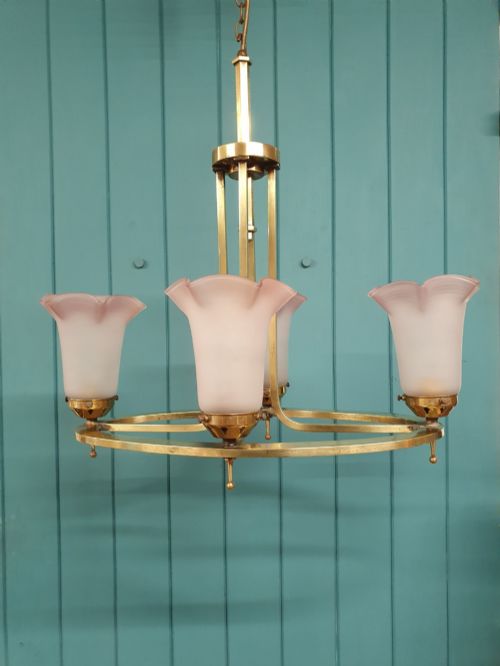
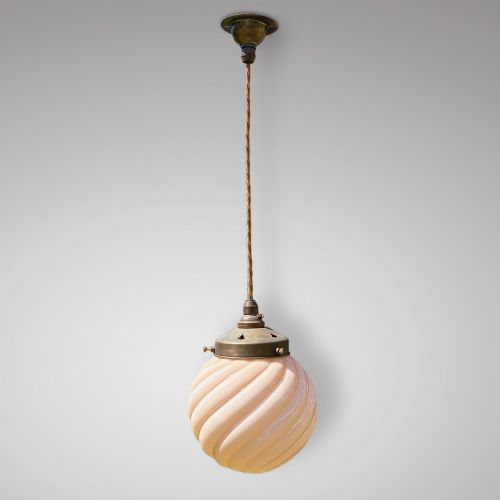
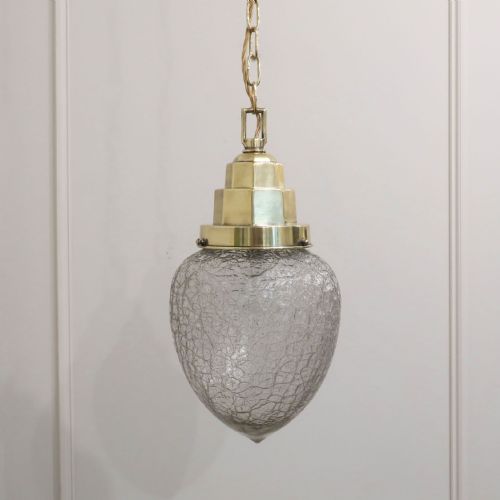
An art deco pendant lamp hangs from the ceiling to illuminate a space, drawing primarily on designs from the 1920s and 1930s. Buyers encountering this selection will find a variety of hanging lights, ceiling fixtures, chandeliers, and individual glass shades.
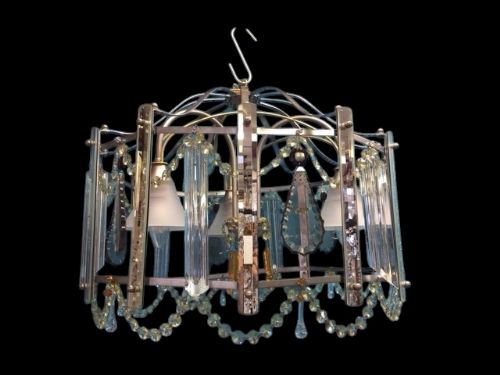
The selection spans forms from single-bulb glass globes and pear-shaped opaline pendants to multi-tier crystal chandeliers and robust brass or chrome hall lanterns. While the core of the inventory dates to the interwar decades, related pieces stretch from the 19th century through the mid-20th century, encompassing styles such as industrial, Edwardian, and Amsterdam School alongside quintessential Art Deco.
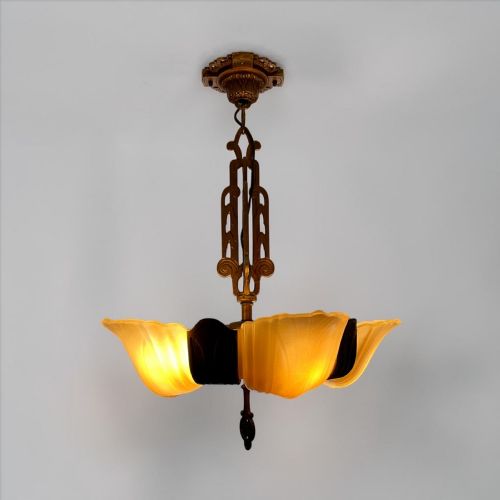
Makers and regional schools represented include French pieces by designers like Émile-Jacques Ruhlmann and Jean Gauthier, American slip shade designs, and Swedish carved alabaster bowls. Whether seeking an opaque glass shell or a steel lantern, the buyer selects from functional ceiling lighting shaped by diverse interwar materials.
How they were made
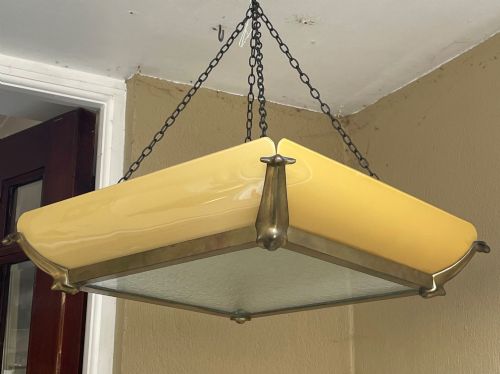
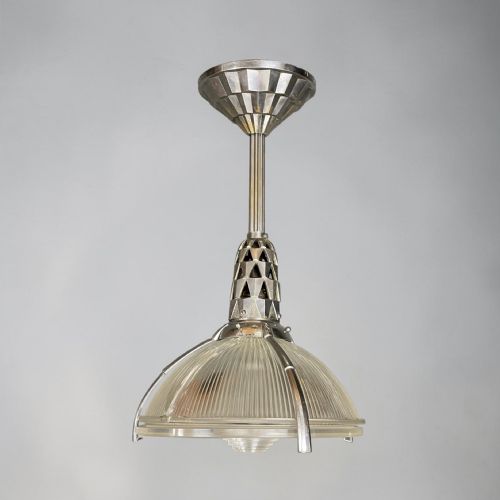
Makers constructed these fixtures using structural metals such as brass, chrome, copper, steel, and iron to form the galleries, frames, and suspension chains. These metals were cast, spun, or forged to hold glass shades securely, often incorporating galleries that gripped the top of the shade.
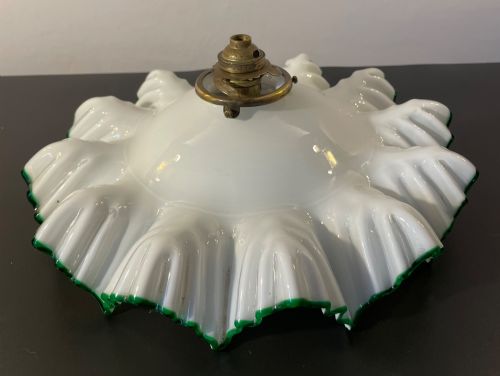
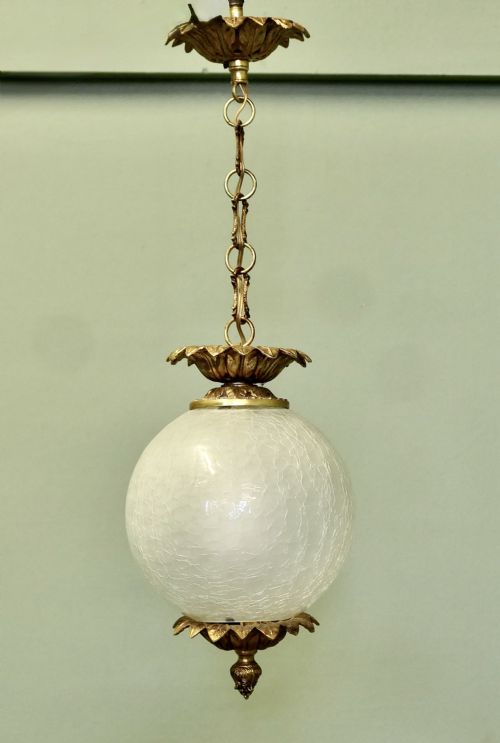
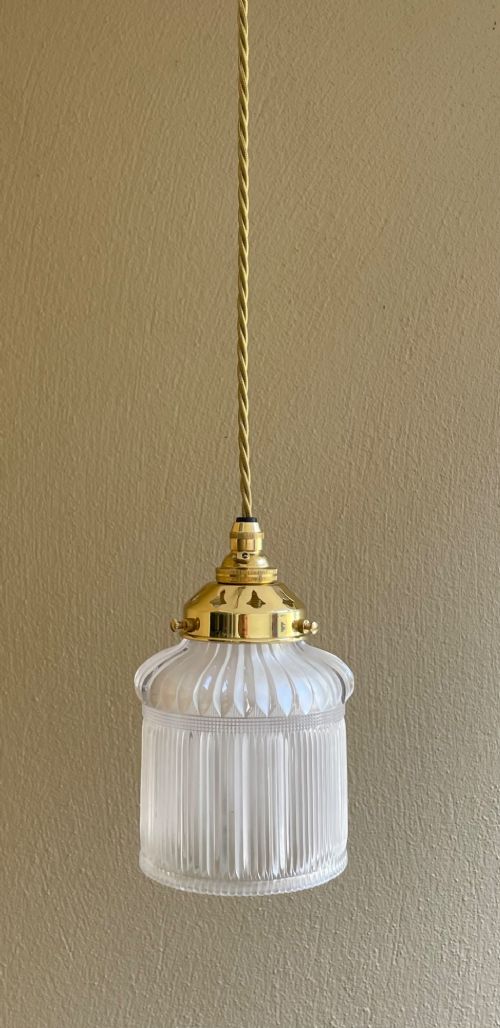
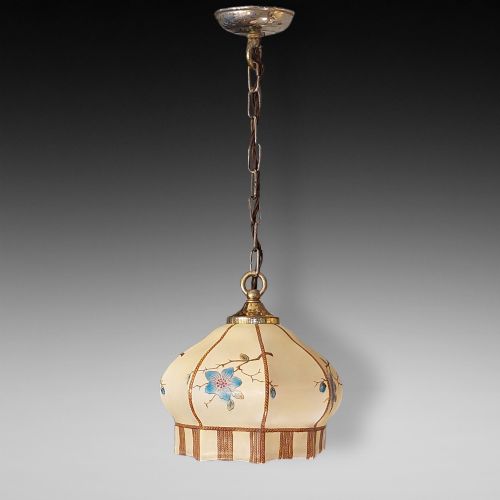
Glass production defined the visual impact of the fixtures, utilising techniques that produced opaline, frosted, crackled, cut, opalescent, and amber glass. Workshops moulded glass into geometric slip shades, clam shell bowls, pear shapes, and fish scale patterns to soften and diffuse the electric light within.
Fish scale opaline shades bring an unexpected maritime texture to the geometry of the interwar ceiling.
What varies in quality
The sophistication of the glasswork largely sets the upper tier apart from standard production, seen in heavy mouldings, complex opalescent effects, and intricate cut crystal tiers. Superior pieces often feature signed or attributed glass and substantial metalwork galleries rather than plain spun metal.
Proportion and architectural presence distinguish exceptional chandeliers and large hall lanterns from simple domestic pendants. The integration of high-grade materials like carved alabaster or heavy mercury mirrored glass elevates a fixture's design execution.
Émile-Jacques Ruhlmann·Jean Gauthier
The Art Deco Pendant Lamp Glossary
- Pendant light
- A hanging light fixture suspended from the ceiling by a cord, chain, or metal rod. These fixtures serve as central overhead illumination in hallways, living spaces, and dining rooms.
- Opaline glass
- A milky, semi-translucent glass that diffuses light softly without harsh glares. It appears frequently in 1920s and 1930s shades moulded into pear or fish scale forms.
- Slip shade
- A moulded piece of glass that slips directly into a metal frame or arms on a ceiling fixture. This technique was common in American Art Deco lighting designs.
- Gallery
- The metal ring or collar at the top of a pendant light that grips the lampshade and connects it to the suspension wiring. Galleries are often cast in brass, chrome, or copper.
- Plafonnier
- A ceiling-mounted light fixture with a bowl-shaped shade positioned flat or close against the ceiling. These fixtures project light downward and outward across a room.
Art Deco Pendant Lamp: Frequently Asked Questions
How do I hang a heavy art deco pendant?
Heavy fixtures require proper ceiling joist anchorage and a sturdy mounting hook capable of supporting the combined weight of the metal frame and thick glass shades.
Consult a qualified electrician to ensure the junction box and wiring can safely carry the load of larger multi-light chandeliers or alabaster bowls.
Are these lamps rewired for modern use?
Many vintage ceiling lights arrive with updated wiring, while others retain their original historical cords and fittings that require professional rewiring.
An electrician can easily install modern internal wiring while preserving the external period gallery and suspension components.
How do I clean antique glass shades?
Wash opaline, frosted, or cut glass shades gently in warm soapy water using a soft cloth, avoiding abrasive pads that can scratch delicate surfaces.
Dry the glass thoroughly before reattaching it to the metal gallery to prevent moisture damage to old fittings.
What rooms suit an art deco pendant?
Pendant lights fit well in hallways, dining areas, and entryways where their geometric lines and diffused illumination serve as a focal point.
Select smaller opaline globes for compact spaces and larger multi-tier crystal or brass fixtures for rooms with higher ceilings.