




Art Deco Opaline Shade
These art deco opaline shade pieces are milky glass diffusers designed to cast a soft, even glow, and every collector wants one for that inimitable period warmth.
Art Deco Opaline Shade
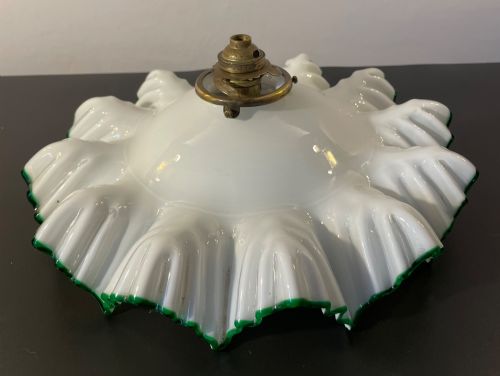
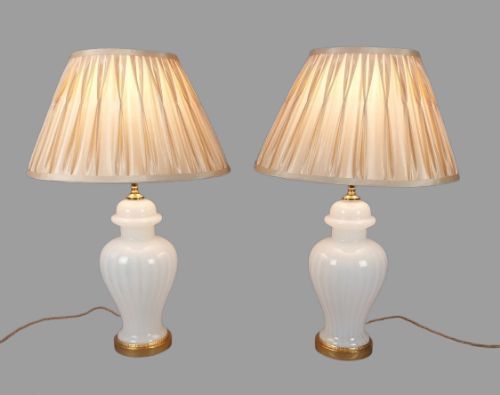
When you search for art deco opaline shade, you are looking at utilitarian glassware turned decorative during the interwar years. The selection here leans heavily towards French pendant lights and table lamps originating from the 1920s and 1930s.
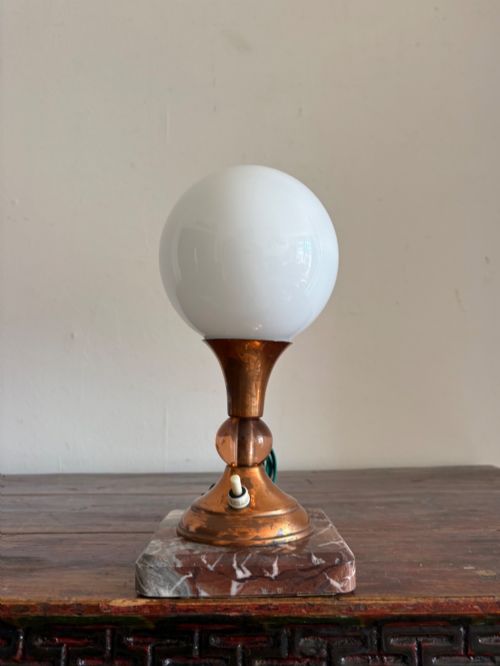
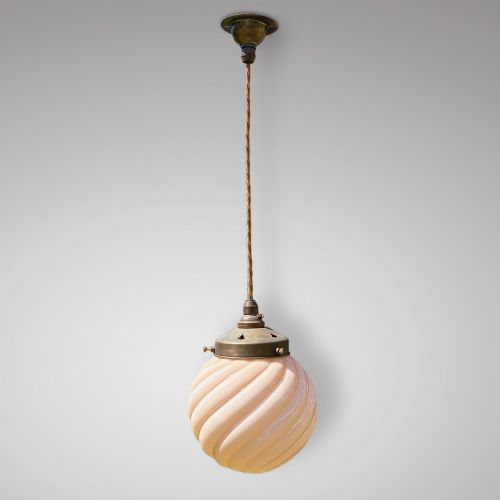
The most common forms you will meet on this page are pear-shaped, conical, and fish-scale hanging pendants alongside copper and marble desk lamps. These fixtures bridge the gap between industrial utility and domestic elegance.
Originating predominantly from France, these items capture the clean geometric lines and functional modernism of the period. They serve both as task lighting and as sculptural centrepieces in contemporary interiors.
How they were made
The defining material is opaline glass, an opaque or translucent white glass achieved by adding bone ash or metal oxides to the melt. This gives the shades their characteristic milky appearance and exceptional light-softening properties.
Mountings and bases frequently employ brass, chrome, or copper, paired occasionally with marble for stability in desk lamps. These metals are shaped and patinated to complement the cool luminescence of the glass.
The listings here span the 1920 and 1930 periods, incorporating opaline glass, brass, chrome, and marble in pendant and table lamp forms.
What varies in quality
Quality rests in the density and evenness of the glass mix, which dictates how smoothly the light diffuses across the surface. Thicker, heavier opaline holds a deeper creaminess that cheaper, thinner alternatives simply lack.
The integration between the glass shade and its original metal gallery or brass mount separates ordinary examples from superior ones. Matching patinated brass or chrome galleries demonstrate a considered original assembly rather than later adaptation.
The Art Deco Opaline Shade Glossary
- Opaline glass
- A milky, translucent white glass developed to diffuse light without glare. It absorbs harsh lumens and creates a warm, ambient glow.
- Gallery
- The metal collar or ring that grips the top of a lampshade and connects it to the flex or fixed rod. Original galleries often bear maker marks or specific ventilation slots.
- Pendant light
- A hanging light fixture suspended from the ceiling by a cord, chain, or metal rod. These direct illumination downward while spilling soft light through the shade walls.
- Patina
- The surface sheen or oxidation acquired by metals such as copper and brass over decades of exposure to air and handling. It signals genuine age and careful preservation.
Art Deco Opaline Shade: Frequently Asked Questions
What rooms suit an art deco opaline shade?
These milk-glass shades suit hallways, kitchens, and studies where clean illumination matters. Their understated white tone blends easily into both neutral and boldly coloured schemes.
Because they project a diffused rather than glaring light, they work particularly well over dining tables or desks where eye comfort is paramount.
Are these shades fragile?
Opaline glass is robust and thick compared to standard domestic glassware, but it remains glass and demands care during cleaning and installation. Handling the piece by the body rather than the rim prevents accidental chipping.
Most surviving examples have endured a century precisely because the interwar manufacturing standards were remarkably durable.
How do I identify the 1920s period?
The 1920s pieces on this page display distinct geometric tendencies, often featuring stepped forms, reeded designs, or clean conical silhouettes. They combine industrial metals like copper and chrome with soft glass.
Look for the weight of the glass and the simple, functional lines that define early modernist lighting design.