




Opaline Ceiling Fixture
Opaline ceiling fixtures bring a soft, milk-white glow to a room, cast through dense glass that diffuses light without glare.
Opaline Ceiling Fixture
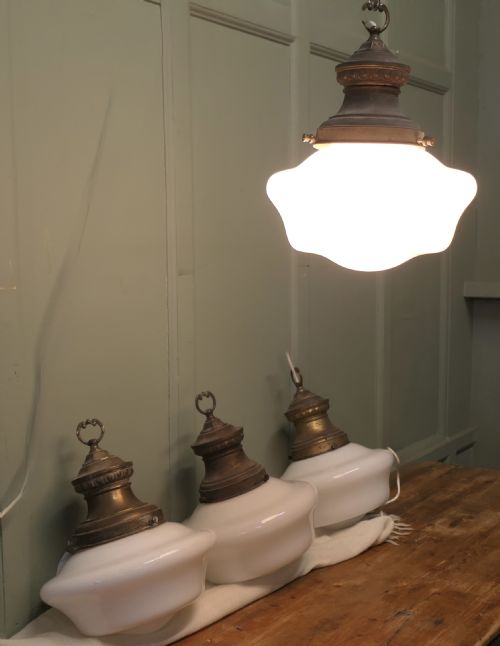
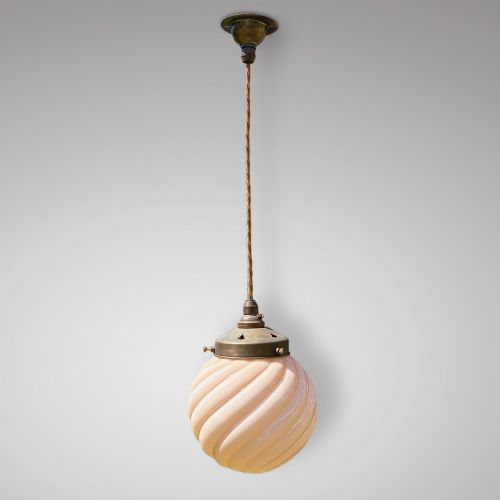
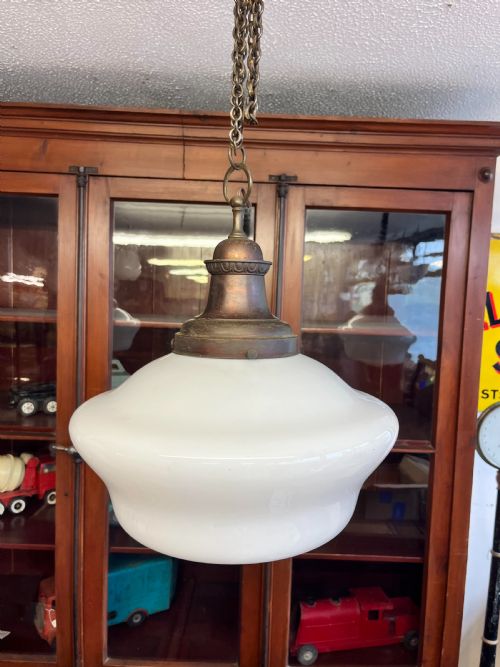
An opaline ceiling fixture is a hanging light that uses milk glass to soften and scatter illumination across a space. When you search for an opaline ceiling fixture, you encounter examples spanning from the Victorian and Edwardian eras through to the 1930s.
The selections on this page include single pendants, matched sets, and larger chapel or lantern forms. Styles range from Victorian and Gothic Revival to Art Deco and industrial designs.
Pendant lights and ceiling lighting dominate the forms, often paired with brass, bronze, or chrome fittings. You are most likely to meet pear-shaped shades, reeded designs, and fish-scale patterns.
Materials and construction
These fixtures combine opaline glass shades with metal mounts cast in brass, bronze, gilt bronze, or chrome. The milk glass itself is blown or moulded to create the dense, milky appearance characteristic of the type.
Metal components provide structural support and suspension, utilising chains, rods, or fabric flex. Decorative metalwork ranges from simple industrial galleries to elaborate gilt bronze mounts.
Fish-scale opaline shades bring an unexpected aquatic texture straight to your ceiling.
What separates the fine from the ordinary
Quality in an opaline ceiling fixture lies in the weight and density of the glass, alongside the fineness of the metalwork. Superior examples show careful moulding in shapes like reeded or fish-scale patterns rather than plain utility finishes.
The distinction also rests in the hardware, where cast brass, bronze, or gilt bronze mounts outlast simpler metal components. Maker attribution, such as work by Perry & Co, elevates a piece through documented craftsmanship.
Perry & Co
The Opaline Ceiling Fixture Glossary
- Opaline glass
- A type of semi-translucent milk glass that diffuses light evenly. It appears in white and various pastel shades across Victorian and twentieth-century lighting.
- Pendant light
- A hanging light fixture suspended from the ceiling by a cord, chain, or metal rod. These comprise the majority of the single shade forms found in this category.
- Gilt bronze
- Bronze metal that has been coated with a thin layer of gold. This material appears on high-end Victorian lanterns and decorative mounts.
- Reeded design
- A surface pattern consisting of parallel raised ridges running vertically along the shade. This adds texture and visual interest to the glass body.
- Gothic Revival
- An architectural and decorative style drawing inspiration from medieval forms. It manifests in ecclesiastical-leaning brass frames and glass globes from the Edwardian period.
Opaline Ceiling Fixture: Frequently Asked Questions
What is an opaline ceiling fixture?
An opaline ceiling fixture is a hanging light featuring a shade made from translucent milk glass. This glass type is specifically designed to soften harsh bulb glare into an even, ambient glow.
Such fixtures appear in various forms, including single pendants, multi-light sets, and large chapel lamps. They bridge utilitarian and decorative lighting across several decades.
How do I date an opaline fixture?
Dating relies on observing the combination of glass shape, metal hardware, and decorative style. Victorian and Edwardian examples often feature elaborate brass, bronze, or gilt bronze mounts.
Later pieces from the 1920s and 1930s lean towards Art Deco geometries, industrial galleries, or specific moulded textures like fish scale and reeded surfaces.
Where were these fixtures used originally?
These lights served both domestic and institutional spaces, providing functional illumination in homes, shops, and larger public rooms. Chapel lights and large pendants indicate use in high-ceilinged communal buildings.
Smaller single pendants suited task lighting in domestic settings, while matched sets lit corridors or larger rooms requiring uniform illumination.
How do I live with an opaline light?
Living with these fixtures involves appreciating their dual nature as decorative objects when unlit and soft light sources when switched on. The milk glass diffuses light pleasantly, making them suitable for spaces where harsh glare is undesirable.
They pair well with historical interiors as well as contemporary settings that benefit from mid-century or industrial character.