



Art Deco Office Lighting
Art deco office lighting brings functional period character to a workspace, combining clean geometric lines with industrial utility.
Art Deco Office Lighting
Art deco office lighting encompasses task lamps and integrated desk solutions designed during the 1920s, 1930s, and 1940s. These pieces combine utilitarian desk space with distinct period illumination.
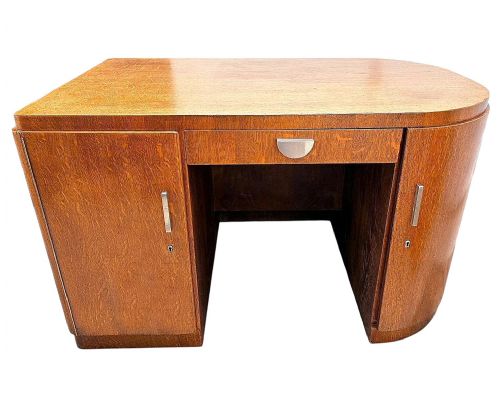
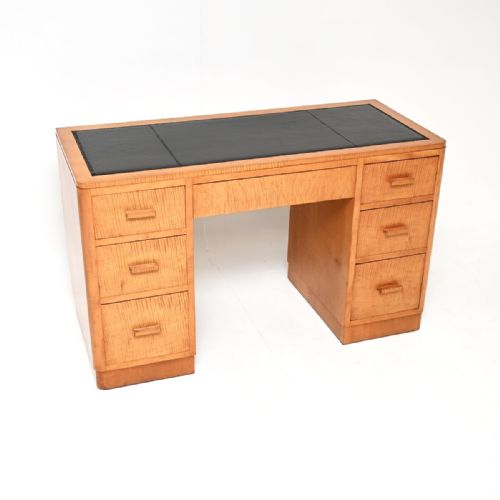
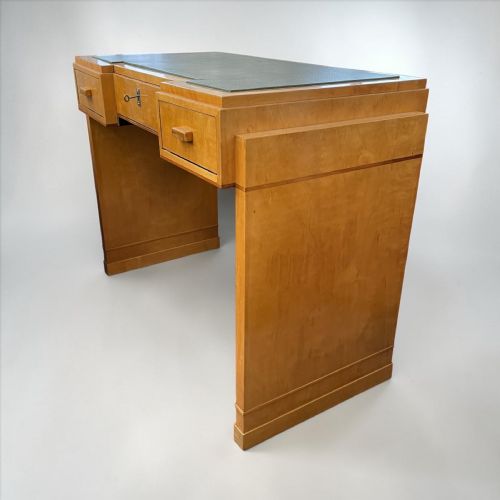
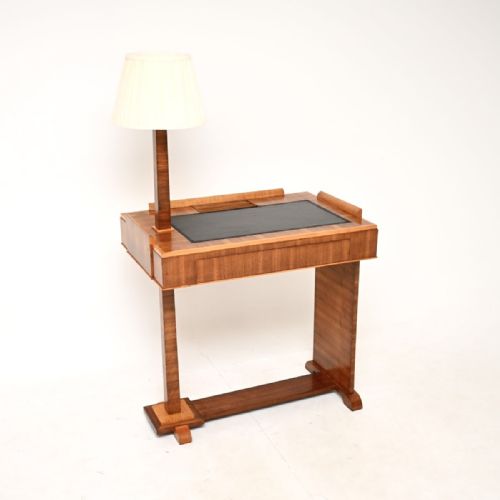
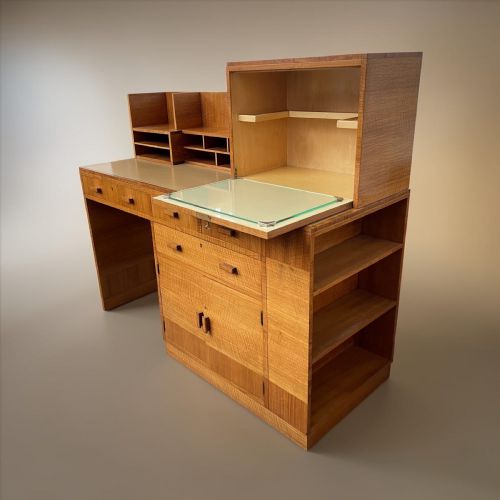
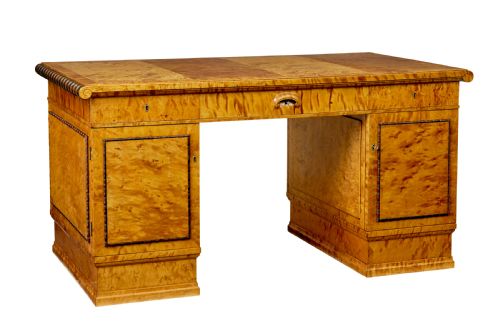
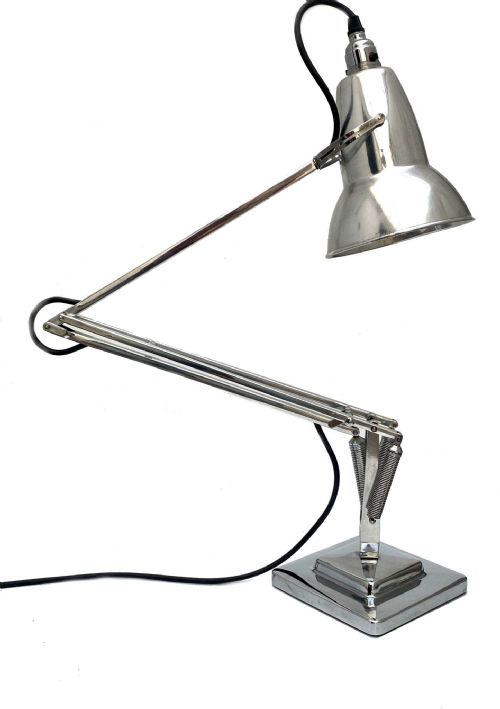
The most common variants on this page are articulated and adjustable desk lamps, alongside large pedestal desks fitted with lamps. They originate from British, French, and Scandinavian workshops.
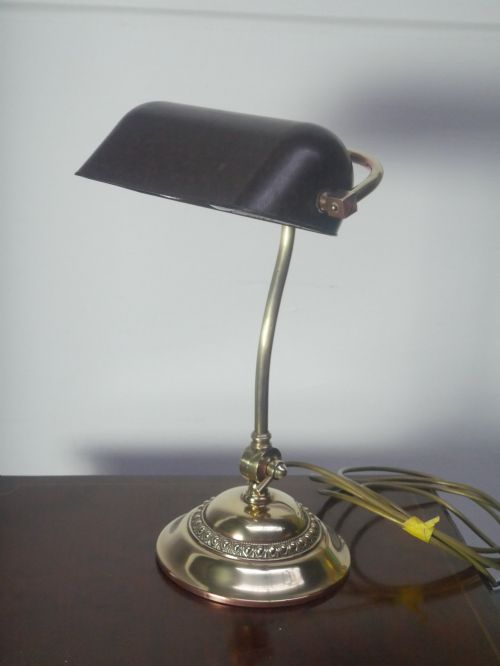
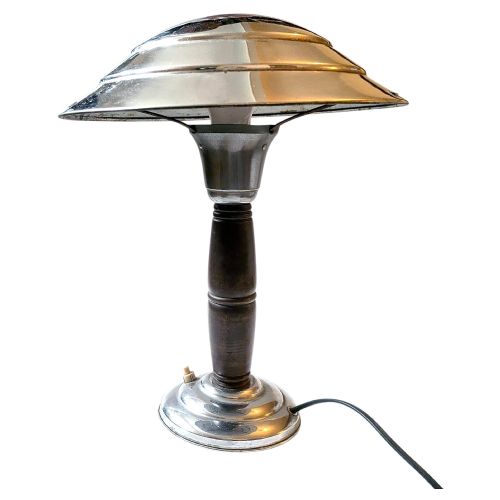
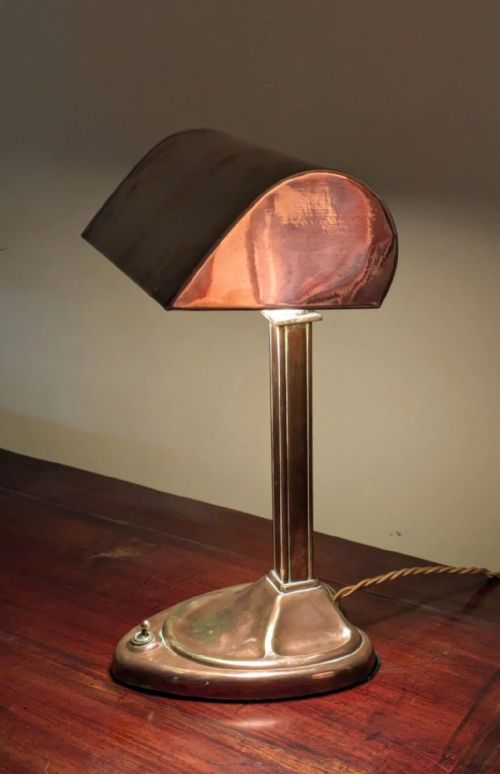
Forms range from simple banker lamps to sculptural machine-age chrome designs and streamlined bakelite models. Each variant serves to illuminate a work surface while expressing the geometric aesthetic of the period.
Materials and construction
Metal fabrication dominates these pieces, utilising chrome, brass, steel, and copper to form adjustable arms and weighted bases. Manufacturers often paired polished metals with glass shades or dark woods like walnut, macassar, and birch.
Bakelite emerged as a crucial modern material for moulded lamp bodies and switches, offering sleek surfaces and rich colour. Leather tops frequently appeared on the associated desks, complementing the metallic and wooden elements of the lighting fixtures.
Distinctions in craftsmanship
Quality separates mass-produced items from pieces featuring sophisticated engineering, such as complex articulated joints and balanced counterweights. The precision of the metal plating and the durability of the bakelite moulding indicate the standard of manufacture.
The integration of materials also defines the tier of a piece, seen in the cohesion between metal frames, wooden veneers, and specialised shades. Finer examples display careful attention to mechanical movement and material pairing without loss of structural integrity.
Heal's·Herbert Terry·Eileen Grey·E. Cole·Pirouette·Hawkins
The Art Deco Office Lighting Glossary
- Bakelite
- An early synthetic thermosetting plastic formed from phenol and formaldehyde. It allowed manufacturers to mould smooth, durable lamp bodies and switch housings in the twentieth century.
- Articulated
- Jointed or hinged to allow flexible movement and positioning of the lamp arm. This mechanical design enabled users to direct light precisely across a workspace.
- Machine Age
- A design aesthetic reflecting the influence of industrial machinery, factories, and transport. It prioritised chrome, steel, and unadorned geometric forms.
- Streamline
- A late phase of the style emphasising aerodynamic curves, horizontal lines, and smooth surfaces. It appeared frequently on moulded lamp bases and shades from the nineteen-thirties.
Art Deco Office Lighting: Frequently Asked Questions
How do I adjust an articulated desk lamp?
Articulated desk lamps utilise a system of springs, counterweights, and friction joints to hold the metal arm in position. Moving the shade or arm gently allows you to direct the beam across the desk surface without straining the internal wiring.
Older mechanisms may require careful handling to preserve the original metal finish and tension springs. Regular, gentle adjustment prevents excessive wear on the vintage joints.
Where should I place a banker lamp?
Bankers lamps sit best on wooden pedestal desks or executive tables where their brass or chrome bases can anchor the visual weight. Their downward-facing shades provide focused task lighting for reading and writing.
Ensure the lamp sits safely away from the edge of the desk to protect the brass or metal fittings. Positioning it to the side of your workspace reduces glare on paper and computer screens.
How do I care for bakelite lamp bodies?
Bakelite requires gentle cleaning with a soft, dry cloth to remove dust and maintain its polished dark surface. Avoid harsh chemical solvents or abrasive cleaners that can strip the vintage finish.
Keep these lamps away from direct, intense heat sources to prevent warping or discoloration of the synthetic material. Occasional application of a neutral wax can help protect older moulded surfaces.
How do I date a machine age lamp?
Dating relies on identifying the primary materials, such as the heavy use of chrome plating alongside steel and bakelite. The presence of specific maker names or patent stamps on the base often narrows the production period.
Design motifs like shell-shaped shades and stepped bases typically point toward nineteen-twenties and nineteen-thirties manufacturing techniques. Comparing the wiring and switch types provides further clues regarding the era of assembly.