
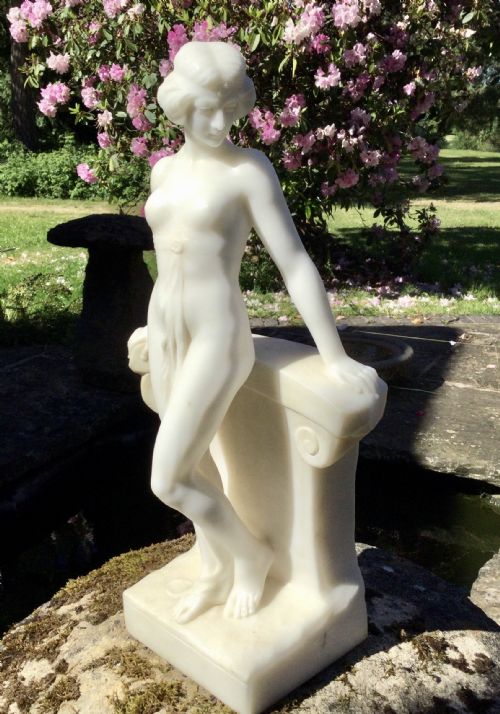

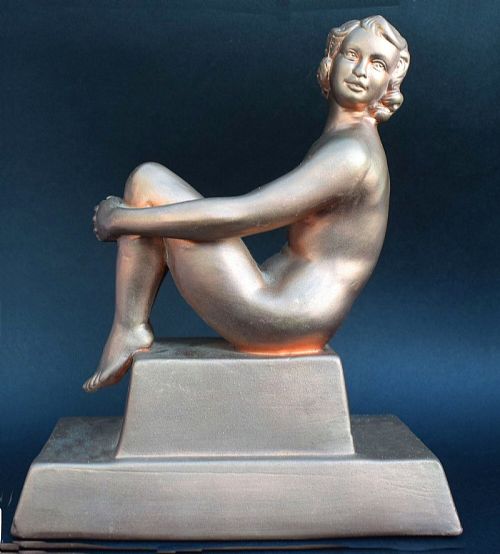

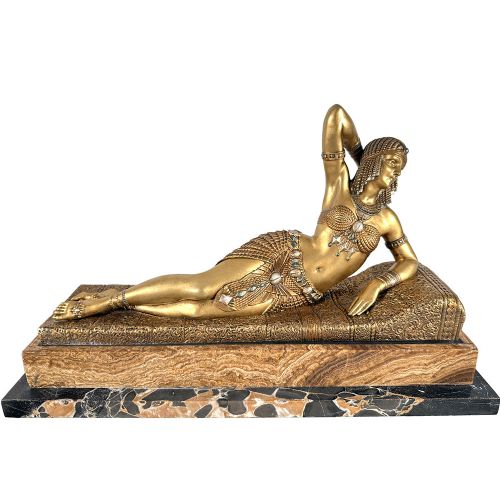


Art Deco Nude Statue
An art deco nude statue captures the stylised elegance and dynamism of the interwar period, offering a dramatic focal point for any interior.
Art Deco Nude Statue
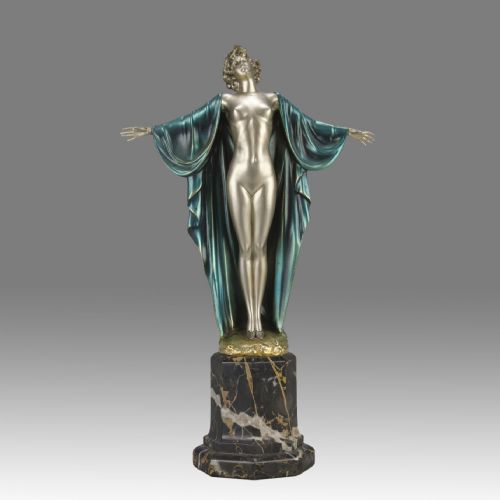
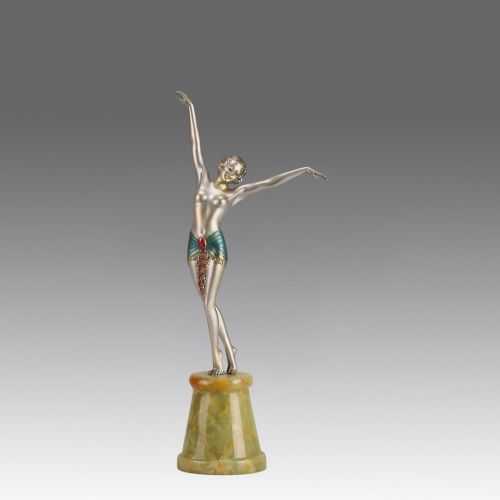
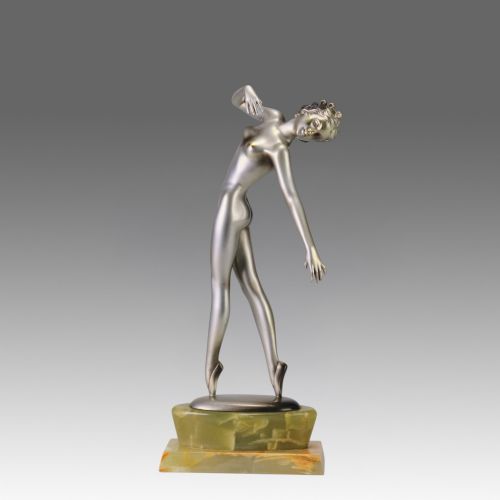
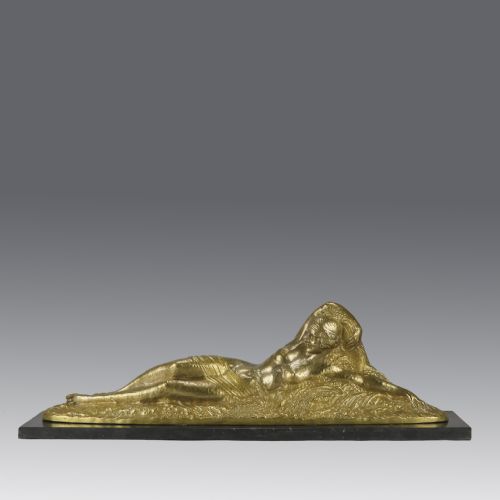
When searching for an art deco nude statue, buyers encounter sculpted representations of female dancers, mythological figures, and athletic studies produced primarily during the 1920s and 1930s. The most common examples take the form of patinated or cold-painted bronze figures mounted upon heavy marble or onyx plinths. These pieces reflect the dominant sculptural idioms of French Modernism and Art Deco, alongside occasional earlier Art Nouveau influences.
The subjects range from dynamic dancers caught mid-movement to stylised reclining nudes and car mascots designed for motor vehicles. Many works incorporate functional elements such as lamp fittings, turning a sculptural figure into a lighting centrepiece. Originating largely from French and Austrian studios, these works embody the period's fascination with movement, grace, and stylised anatomy.
Materials and casting methods
Makers utilised traditional lost-wax casting methods to shape bronze, silvered bronze, and gilt bronze, often applying cold-painted polychrome finishes or patination to the metal surface. Spelter and patinated metal served as more accessible alternatives to bronze for figures produced in larger quantities. These metallic elements were routinely paired with carved stone, enamelled details, and occasionally porcelain.
Stands and bases relied heavily on contrasting natural stones, particularly polished marble and variegated onyx, which provided stability and visual weight to slender figures. Sculptors achieved varied textures by combining smooth metallic surfaces with intricate chased detailing on garments, hair, or surrounding props like hoops and scarves.
Several ladies balance precariously inside oversized metal hoops, proving that 1930s decor took gym class very seriously.
Assessing craftsmanship
The reputation of the foundry and the distinct artistic signature of the modeller heavily influence the standing of a piece. Works associated with known designers demonstrate deliberate composition and precise balancing, particularly in complex cantilevered poses like dancers on outstretched arms or hoops.
Ferdinand Preiss·Josef Lorenzl·Demetre Chiparus·Pierre Le Faguays·Royal Dux
The Art Deco Nude Statue Glossary
- Cold-painted
- A technique where paint is applied to metal without subsequent high-temperature firing. This finish is susceptible to wear over time and requires careful preservation.
- Spelter
- A zinc alloy commonly utilised as a less expensive substitute for bronze in decorative figures. It is softer and lighter than genuine bronze.
- Patination
- The chemical treatment or natural oxidation applied to metal surfaces to create specific colours and tones. It protects the underlying metal while enhancing visual depth.
- Lost-wax casting
- A meticulous process where a wax model is melted out of a mould to be replaced with molten metal. This method allows for exceptional fine detail in sculptural works.
Art Deco Nude Statue: Frequently Asked Questions
How do I clean a bronze figure?
Dust the piece gently with a soft, dry brush to prevent the accumulation of abrasive particles.
Avoid using water, chemical solvents, or metal polishes, as these substances can strip the original patination.
Are these figures made of solid bronze?
Many sculptures are cast in solid bronze, while others utilise hollow casting methods to save weight and metal.
Alternative alloys such as spelter also appear frequently among figures from the period.
Why are most figures mounted on stone?
Marble and onyx bases provide essential physical stability for slender, dynamic figures with high centres of gravity.
These dense stones also offer a contrasting aesthetic that complements the metallic tones of the sculpture.
How do I distinguish bronze from spelter?
Bronze feels notably heavier, exhibits a resonant sound when lightly tapped, and accepts a more durable patination.
Spelter is softer, lighter, and tends to show a greyish metal underneath any worn areas of surface finish.