



Art Deco Mantelpiece Ornament
An art deco mantelpiece ornament brings period character to a room, offering the bold lines and figurative subjects of the interwar years.
Art Deco Mantelpiece Ornament
An art deco mantelpiece ornament is typically a sculptural object designed for display on a shelf or fireplace, drawing on twentieth-century design. These pieces include animal figures, female nudes, and maritime models produced during the 1920s and 1930s.
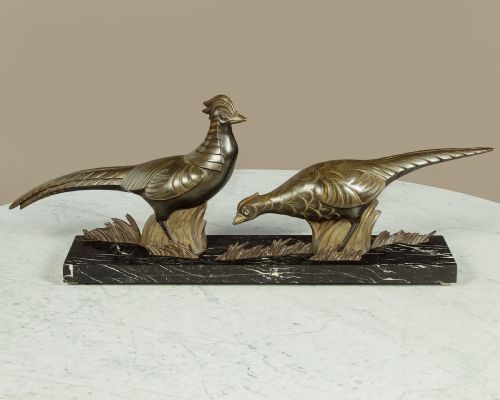
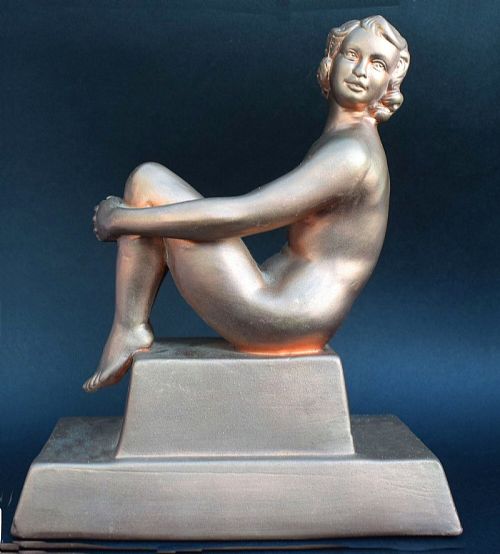
The selections available here range from ceramic deer and porcelain ladies to metal figures mounted on marble and onyx bases. Figurines of women dancing, birds, and literary or mythological subjects appear frequently alongside model boats.
Originating largely from the 1930 period, these ornaments reflect the prominent styles of the era, including maritime motifs and stylised human and animal forms.
How they were made
Materials span cast metals, spelter, bronze, and chrome plate, often paired with polished stone bases such as marble or onyx. Artisans also utilised glazed ceramics and painted finishes to accentuate details like gilded highlights.
Metal sculptures frequently combine cast metal or spelter with multi-coloured patination, while ceramic pieces employ moulded clay finished with coloured glazes.
Golden pheasants and ceramic deer share the mantelpiece with ancient literary heroes and dancing women.
What varies in quality
Quality rests on the crispness of the casting and the fidelity of the modelling, alongside the weight and choice of the supporting stone base. Pieces that combine mixed metals or integrate painted surfaces with patinated metal demonstrate greater complexity in execution.
The integrity of the original finish, whether glaze, chrome plating, or paint, distinguishes standard production items from finer studio or signed works.
Royal Doulton·H. Bal
The Art Deco Mantelpiece Ornament Glossary
- Spelter
- A zinc alloy commonly utilised as a substitute for bronze in interwar sculpture. It accepts patination and paint well, often finished to resemble heavier metals.
- Patinated metal
- Metal treated with chemicals or heat to produce a coloured surface layer. This technique protects the underlying metal while adding visual depth.
- Onyx
- A banded variety of chalcedony frequently used for ornamental bases. Its natural veining complements the geometric qualities of interwar design.
- Porcelain figurine
- A modelled ceramic figure made from vitrified clay paste. These objects are fired at high temperatures and hand-painted with detailed glazes.
Art Deco Mantelpiece Ornament: Frequently Asked Questions
What materials were used?
Makers utilised a variety of materials including marble, onyx, bronze, spelter, chrome plate, and glazed ceramic. Many sculptures combine these elements, mounting metal figures onto stone bases.
Painted metal and gilded highlights also appear frequently across the interwar period.
Where were they made?
The listings include French sculptures and English porcelain figures from the interwar decades. Continental workshops produced many of the spelter and metal figures on stone bases.
English potteries supplied the porcelain and ceramic examples.
How do I clean them?
Dust metal and stone surfaces gently with a soft, dry cloth to preserve patination and finishes. Avoid abrasive cleaners or excess moisture on painted and gilded areas.
Ceramic and porcelain items tolerate light cleaning with a damp cloth if dried immediately.
How do I date them?
Dating relies on the stylistic markers of the 1920 and 1930 periods, such as geometric forms and stylised figurative subjects. Maker marks, signatures, and specific material combinations also help establish the decade of production.
Many pieces are characteristic of the interwar design movement.