

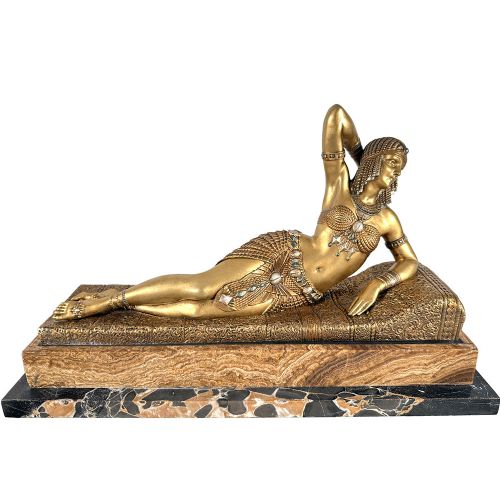


Gilded Art Deco Figurine
A gilded art deco figurine captures the elegant geometry and glamour of the interwar period through striking metallic surface highlights.
Gilded Art Deco Figurine
A gilded art deco figurine brings the distinctive aesthetics of the early twentieth century into a modern interior space through sculptural representation. When browsing for a gilded art deco figurine, you will encounter diverse interpretations ranging from dynamic dancers to animals and utilitarian powder boxes.
The objects span periods from the Edwardian era through to the nineteen thirties, maintaining the core artistic tenets of the movement. Many pieces combine metallic gilding with sturdy stone or ceramic supports, creating balanced sculptural compositions.
Materials and construction
Makers utilised bronze, spelter, and porcelain as the primary sculptural media, applying surface gilding to highlight garments, hair, or anatomical details. These figures frequently stand upon substantial bases fashioned from marble or onyx to anchor the weight.
The listings encompass figures dated from the Edwardian period through the nineteen thirties.
Assessing quality and execution
The distinction between tiers rests upon the crispness of the casting and the finesse applied to the gilded surfaces. Superior examples demonstrate fluid anatomy and sharp facial expressions, whereas simpler pieces rely on basic press-moulded construction.
The choice of base material also indicates grade, with fine veined marble and onyx elevating the presence of the sculpture compared to lighter plaster foundations.
Demetre Chiparus·Theo Voss·Bruno Zach·Claire Colinet·Karl Tutter·Charlotte Monginot
The Gilded Art Deco Figurine Glossary
- Spelter
- A zinc alloy commonly utilised as a cost-effective alternative to bronze for sculptural casting during the period. It often receives a painted or gilded finish to simulate more expensive metals.
- Gilding
- The application of a very thin layer of gold leaf or powder to the surface of an object. This technique accentuates specific details and adds reflective warmth.
- Onyx
- A banded variety of chalcedony frequently shaped into heavy, polished rectangular or circular bases for sculptures. Its natural strata provide decorative weight to the display.
- Patination
- The natural or induced chemical change on the surface of bronze that creates distinct coloration. It contrasts effectively with bright sections of gilding.
Gilded Art Deco Figurine: Frequently Asked Questions
Where should I display these figures?
Place them on sturdy mantelpieces, sideboards, or dedicated display cabinets away from direct sunlight.
Ensure the heavy marble or onyx bases rest on stable, level surfaces to prevent accidental tipping.
How do I tell bronze from spelter?
Bronze objects feel noticeably heavier and ring with a clear tone when tapped lightly.
Spelter is softer, lighter, and often reveals a greyish metal beneath any worn surface paint or gilding.
Are these pieces purely decorative?
Most examples function strictly as standalone sculptures or statuettes designed to capture the aesthetic spirit of the era.
Certain items, such as powder jars or trinket boxes, combine sculptural lids with functional storage compartments.