



Art Deco Leather Suite
An art deco leather suite brings striking geometric forms and comfortable padded seating into the room, uniting bold twentieth-century design with practical domestic use.
Art Deco Leather Suite
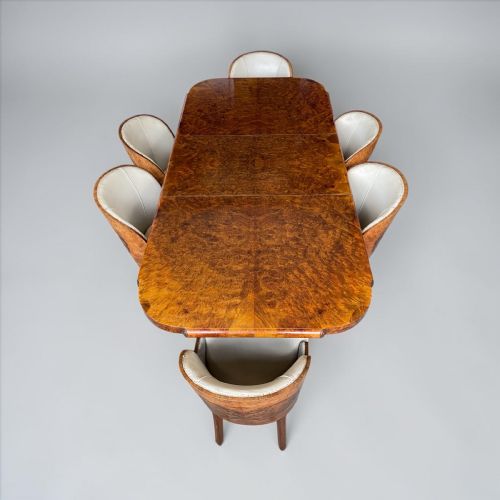
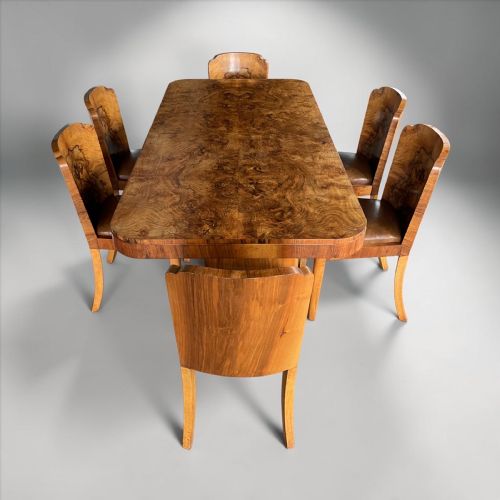
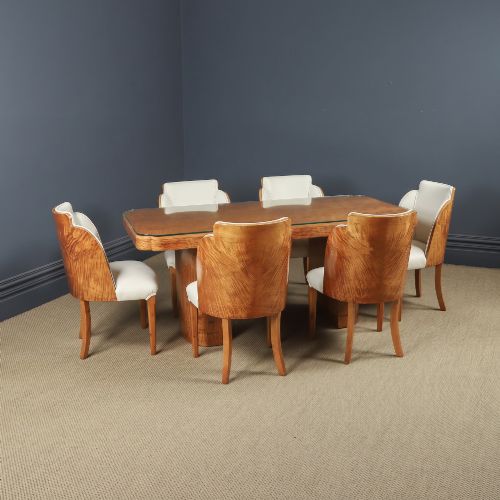
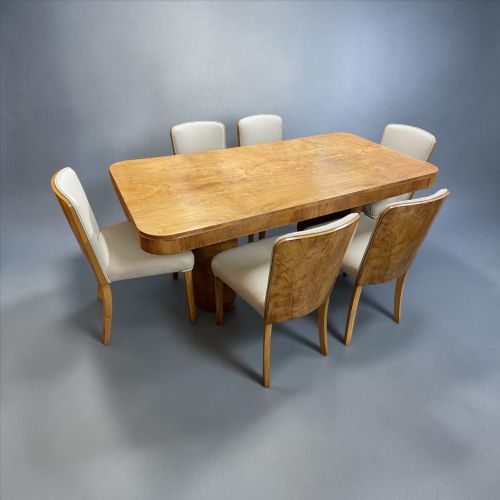
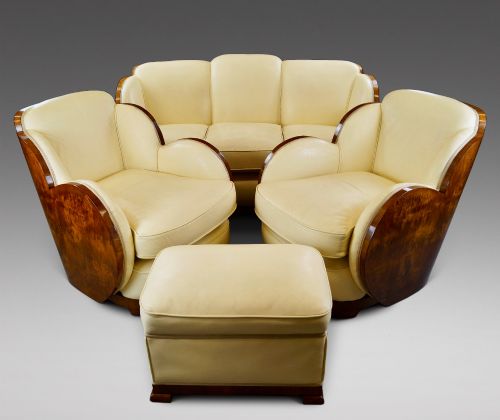
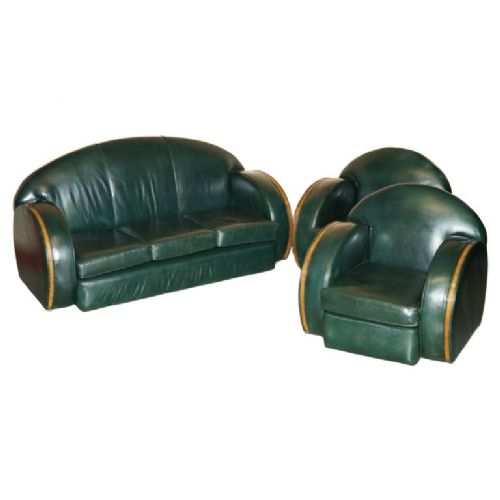
An art deco leather suite encompasses matching sets for dining and lounging, typically taking the form of large sofa and armchair arrangements or complete dining tables paired with six or eight chairs. When searching this phrase, buyers encounter two distinct categories: monumental lounge suites featuring rounded cloud shapes and extensive timber frames, alongside formal dining suites where leather upholstery complements polished wood.
The material combinations define the visual weight of these pieces, pairing rich hides with burr walnut, maple, satinwood, and hardwood. While the majority of examples originate from the 1930s, occasional pieces emerge from the 1920s and 1940s, showing a steady continuity of the style across three decades. Miniature apprentice versions also appear, demonstrating the same stylistic priorities on a smaller scale.
Materials and construction methods
Makers built the structural frames from sturdy timbers like hardwood and walnut, often applying decorative veneers such as burr walnut, bird's eye maple, and satinwood to the visible surfaces. These wood elements provide the rigid architecture that balances the soft, rounded upholstery of the seating components.
Leather forms the primary contact surface for the upholstery, tailored to fit the distinctive curved profiles of the era. Craftsmen combined traditional joinery for the wooden dining tables and chair frames with robust internal padding to achieve the characteristic silhouette of the style.
Miniature apprentice pieces appear alongside full-sized suites, proving that tiny craftsmen needed comfortable leather seating too.
Assessing quality in the range
The distinction between standard production and top-tier work rests on the selection of decorative timber veneers and the precision of the upholstery tailoring. Superior lounge suites utilise striking burr walnut or maple figures across large curved surfaces, whereas lesser pieces rely on plain timber or simpler grain patterns.
Attribution to notable workshops and makers introduces a further distinction in execution and finish. Pieces bearing documented maker names display sharper attention to the transitions between polished woodwork and fitted leather.
Maurice Adams·Harry and Lou Epstein
The Art Deco Leather Suite Glossary
- Art Deco
- A design style dominant in the 1920s and 1930s characterised by sleek geometric shapes, streamlined forms, and modern industrial materials. It influenced architecture, furniture, and decorative arts globally.
- Cloud Suite
- A specific upholstered lounge grouping featuring rounded, voluminous padded backs and armrests that resemble soft clouds. This form defines many prominent seating arrangements from the period.
- Burr Walnut
- A highly prized wood veneer taken from the growth growths or burls of the walnut tree, showing intricate, swirling grain patterns. Makers used it to create dramatic decorative surfaces on tables and cabinetwork.
- Satinwood
- A durable, yellowish-brown hardwood from tropical trees with a natural sheen that resembles satin. It served as a pale contrasting veneer in high-end dining and occasional furniture.
Art Deco Leather Suite: Frequently Asked Questions
What pieces make up a suite?
An art deco leather suite generally comprises either a matching set of a sofa and two armchairs or a large dining table accompanied by six to eight leather-upholstered chairs. These groupings were designed to provide a unified aesthetic for principal rooms.
The lounge variations focus on deep, rounded seating with prominent wooden frames, while the dining versions coordinate the timber of the table base and chair frames with leather seat pads.
Which woods appear most often?
Walnut forms the foundation of the timber work across most examples, frequently enhanced by decorative veneers like burr walnut, bird's eye maple, and satinwood. Hardwood and general timber also support the internal structures.
These timbers provide a contrasting frame to the soft leather upholstery, establishing the characteristic two-tone visual balance of the period.
How do I spot a 1930s piece?
Pieces from this decade rely on streamlined silhouettes, curved cloud shapes, and the extensive application of decorative wood veneers alongside leather. The construction prioritises bold, unified proportions rather than historical revivalism.
Comparing the grain of the burr walnut or maple against the texture of the leather helps identify the manufacturing ethos typical of the era.
Where should I place a suite?
A lounge suite requires adequate floor space to showcase its volumetric curves and polished wooden accents without crowding the room. Placing it away from direct heat sources protects both the timber veneer and the leather upholstery.
Dining suites suit principal dining spaces where the matching table and leather chairs can be viewed together as a complete artistic statement.