




1930s Art Deco Settee
A 1930s art deco settee brings sculptural geometry and club-chair comfort into a room, offering the bold lines collectors want.
1930s Art Deco Settee
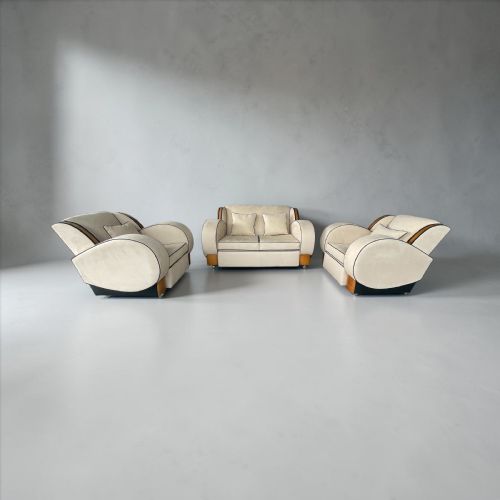
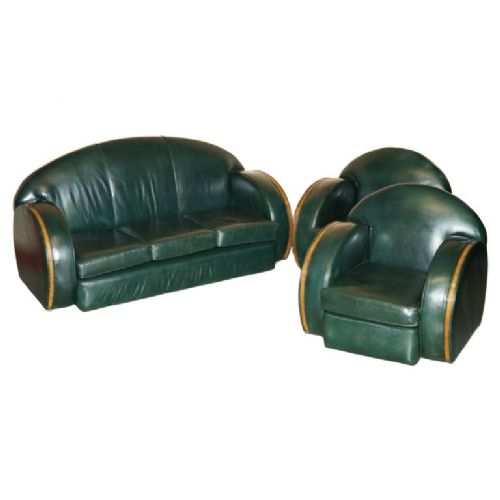
Every 1930s art deco settee found on this page belongs to the interwar decades, spanning the 1920s and 1930s, and takes the form of sofas, lounge suites, or miniature furniture. Buyers searching this phrase encounter distinct seating variations, ranging from grand three-seater sofas to complete three-piece lounge suites paired with armchairs.
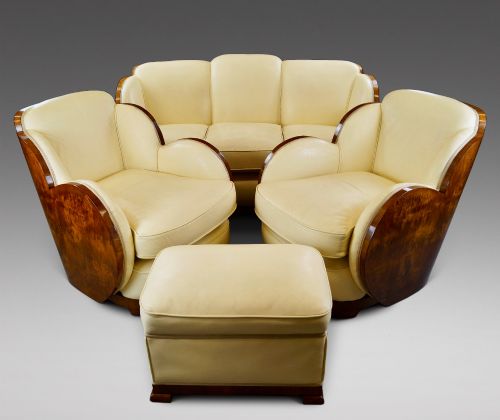
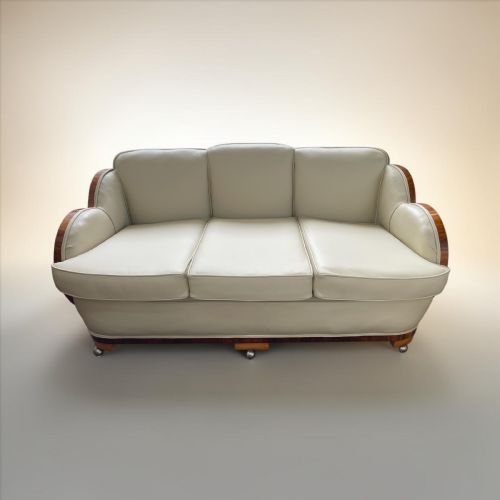
The most prevalent iterations on this page include the iconic cloud suite and the bankers sofa, alongside scroll-shaped pieces and re-upholstered Chesterfield frames. Makers and workshops of the period construct these items in robust forms, often grouping matching armchairs with the central settee to create a unified room arrangement.
Construction and Materials
Makers build the structural framework of a 1930s art deco settee using solid hardwoods as a foundation, applying decorative veneers such as walnut, burr walnut, and exotic palisander across visible surfaces. Brass details occasionally appear as accents, grounding the woodwork with metallic trim.
Upholstery relies heavily on traditional leather and textured fabric, sometimes updated with automotive hides like Alfa Romeo leather during later restoration. Craftsmen shape these materials into voluminous curves, notably the padded rolls of the cloud design, or stretch them tightly over scroll-shaped wooden frames.
One tiny apprentice settee waits patiently on this page, perfectly formed by a learner who clearly understood the art of miniature club seating.
Judging Quality
The distinction between standard production and top-tier work rests on the selection of decorative veneers and the attribution to notable makers. Grain matching across burr walnut surfaces and the precision of scroll-shaped woodwork separate exceptional studio pieces from simpler commercial output.
Integrity of the original framework and the execution of the upholstery dictate the longevity of the piece. Suites attributed to recognised workshops display superior internal framing and careful leather selection that elevates the entire ensemble.
Harry and Lou Epstein
The 1930s Art Deco Settee Glossary
- Cloud suite
- A seating group characterised by heavy, rounded, organic upholstery rolls resembling cumulus clouds. This design defines much of the prominent seating produced during the period.
- Burr walnut
- A wood veneer taken from the warted excrescences of walnut trees, prized for its swirling, intricate grain patterns. Cabinetmakers apply this finish to prominent exterior panels.
- Palisander
- A dense, dark tropical timber featuring rich figuring, utilised for high-end modernist cabinetwork and decorative framing. This exotic wood provides a dramatic contrast in tone.
1930s Art Deco Settee: Frequently Asked Questions
Are these settees comfortable?
Most pieces provide deep, supportive seating intended for lounge environments. Generous padding and robust internal springing deliver substantial comfort.
Original leather or fabric upholstery maintains a firm yet pliable feel when properly maintained.
How do I identify this period?
Look for symmetrical geometric shapes, streamlined curves, and rich wood veneers like walnut. These visual markers separate interwar designs from earlier Victorian or Edwardian seating.
Architectural influences of the era dictate the heavy, sculptural silhouettes.
What is an apprentice piece?
An apprentice piece is a miniature replica built by a craftsman in training. These models showcase advanced woodworking and upholstery skills at a reduced scale.
Despite their small size, they feature the exact same construction methods as full-sized furniture.