

Art Deco Leather Seat
An art deco leather seat brings robust club proportions and streamlined twentieth-century comfort directly into a modern interior.
Art Deco Leather Seat
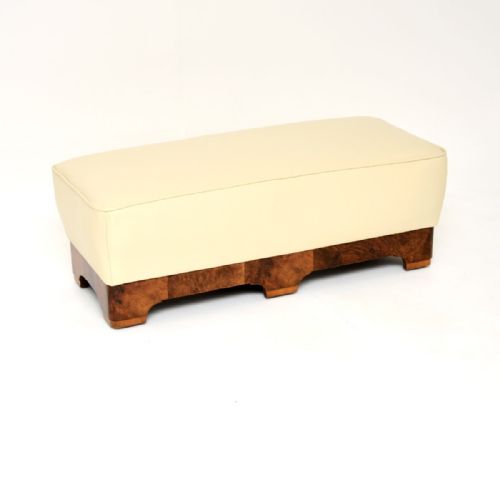
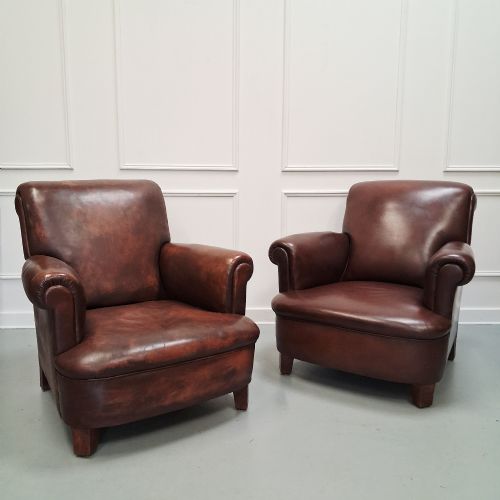
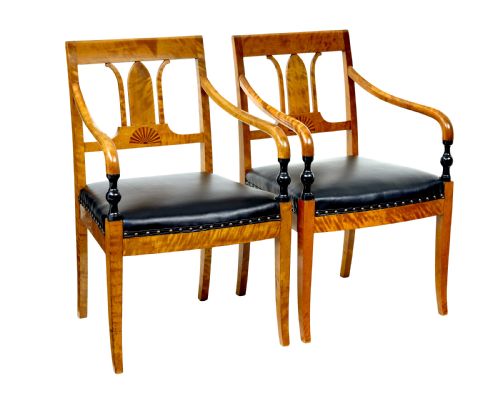
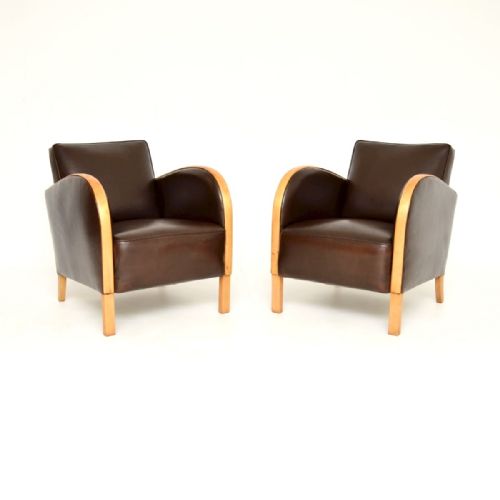
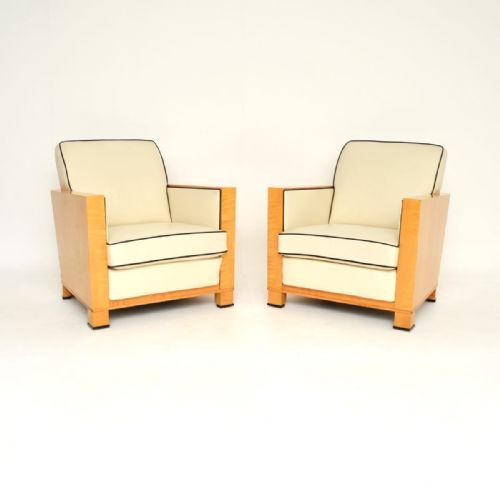
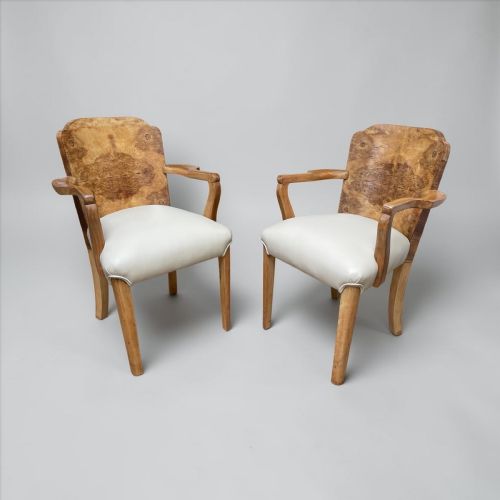
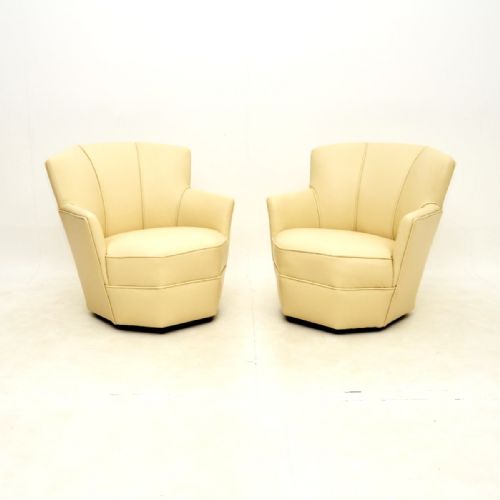
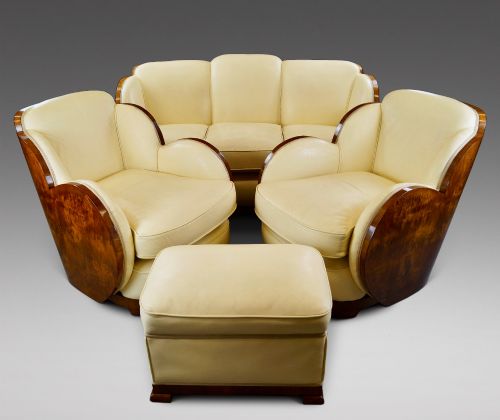
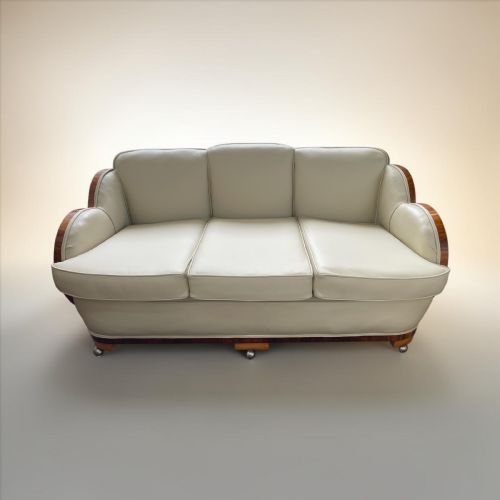
An art deco leather seat encompasses deep-seated armchairs, club fenders, dining chairs, stools, and complete lounge suites originating primarily from the nineteen-twenties and nineteen-thirties. Pieces reflecting French, Swedish, and English interpretations emerge frequently across the selection.
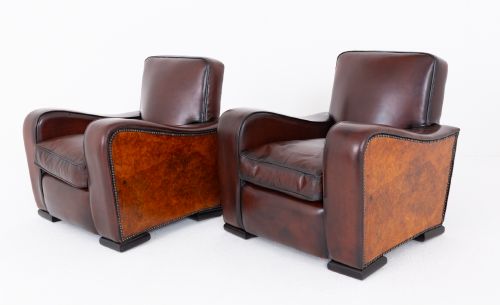
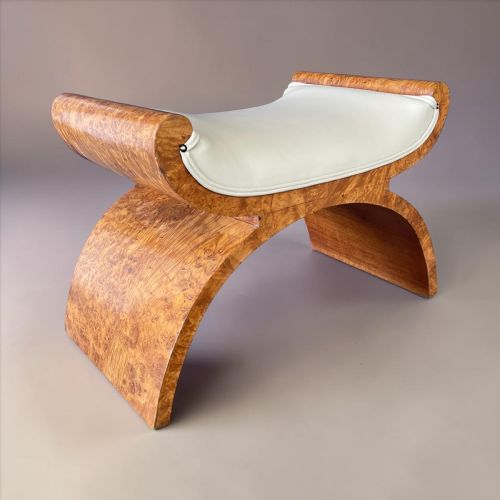
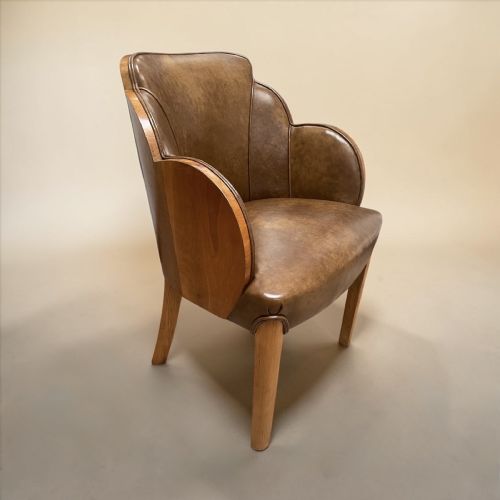
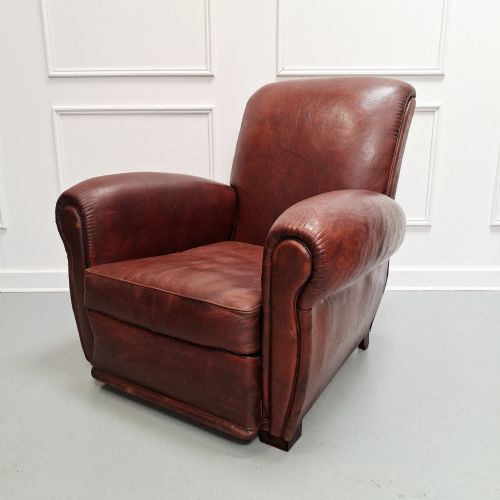
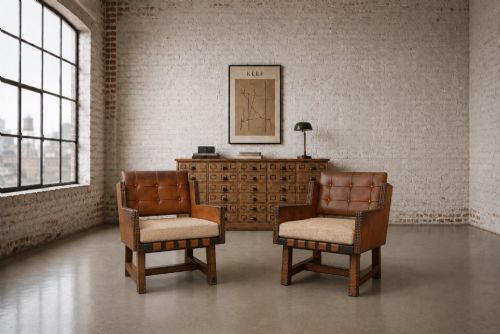
The heavy club armchair and the low dressing table stool represent the most common forms encountered on this page. Designers utilised distinctive silhouettes, ranging from generous cloud-backed curves to geometric occasional chairs.
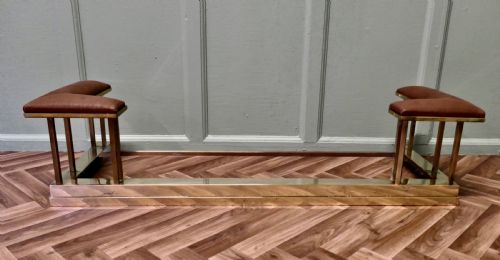
Earlier Victorian and Edwardian examples occasionally appear alongside the dominant interwar output, usually taking the form of brass or iron club fenders fitted with leather seating pads.
Materials and Construction
Makers constructed these frames from sturdy hardwoods, incorporating visible show-woods such as burr walnut, walnut, satin birch, birds-eye maple, and oak. Metal components in brass and heavy iron appeared frequently on club fenders and specific structural frames.
Upholstery relies heavily on durable leather and sheep's hide, often stretched tightly over sprung interiors or button-backed padding. Timber surfaces received polished finishes to highlight the natural grain patterns inherent in walnut and birch.
Listings feature timber varieties including burr walnut, walnut, satin birch, birds-eye maple, and oak alongside brass and iron.
Judging Quality
The distinction between standard commercial output and superior craftsmanship rests on the ambition of the design and the choice of timber veneers. Exceptional pieces display carefully matched burr walnut or satin birch grains that wrap harmoniously around sweeping curved frames.
Mastery of upholstery determines the longevity and tactile appeal of the piece. Firm, supportive sprung interiors combined with hand-stitched leather hide separate workshop masterpieces from ordinary utility furniture.
Harry and Lou Epstein·Hille
The Art Deco Leather Seat Glossary
- Club fender
- A low fireside seat with upholstered leather pads flanking an open hearth. These metal and leather structures provided practical seating close to the fire.
- Cloud chair
- An armchair featuring rounded, voluminous upholstered shapes reminiscent of cumulus clouds. This heavy silhouette became synonymous with interwar British lounge suites.
- Burr walnut
- A prized timber veneer showing intricate, swirling growth patterns derived from tree knots. Cabinet makers utilised this decorative wood on prominent exterior surfaces.
- Satin birch
- A pale, fine-grained hardwood favoured by Scandinavian and European designers for modernist furniture. The timber offers a luminous, straw-coloured finish.
- Sheep's hide
- A soft, pliable animal skin traditionally utilised for upholstery on club armchairs. This material develops a rich patina with handling and age.
Art Deco Leather Seat: Frequently Asked Questions
What defines an art deco leather seat?
An art deco leather seat combines twentieth-century modernist geometry or rounded club proportions with durable leather upholstery. These pieces draw on French, Swedish, and English design traditions from the interwar decades.
Makers employed rich timber veneers like walnut and birch alongside heavy hides to create substantial armchairs, sofas, and compact stools.
Where were club fenders placed?
Club fenders were positioned around open fireplaces to provide low, communal seating within the warmth of the hearth. The metal frames kept occupants at a safe distance from active flames.
Fitted leather pads offered comfortable perches during social gatherings in large Edwardian and interwar reception rooms.
How do I care for vintage leather?
Vintage leather benefits from regular dusting and occasional treatment with appropriate conditioning balms to maintain flexibility. Avoiding direct sunlight prevents the hide from drying out and cracking.
Preserving the natural patina requires gentle cleaning rather than aggressive chemical restoration.
Are cloud chairs comfortable?
Cloud chairs provide deep, enveloping support due to their generous sprung interiors and heavily padded upholstered frames. The rounded contours embrace the sitter for relaxed lounging.
These substantial armchairs were engineered specifically for domestic comfort during the nineteen-thirties.
How do I distinguish 1920s from 1930s pieces?
Nineteen-twenties pieces often retain transitional Edwardian stiffness or early geometric motifs, whereas nineteen-thirties designs lean heavily into exaggerated curves and voluminous cloud shapes. Timber choices also shifted during this period towards exotic veneers.
Examining the construction methods and upholstery styling helps clarify the specific decade of manufacture.