



Art Deco Lapel Pin
An art deco lapel pin brings geometric lines and precise metalwork to a jacket, fastening neatly through heavy cloth.
Art Deco Lapel Pin
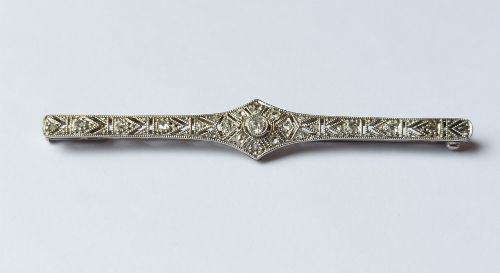
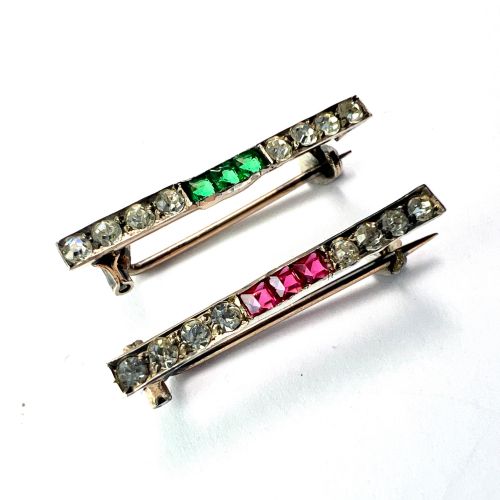
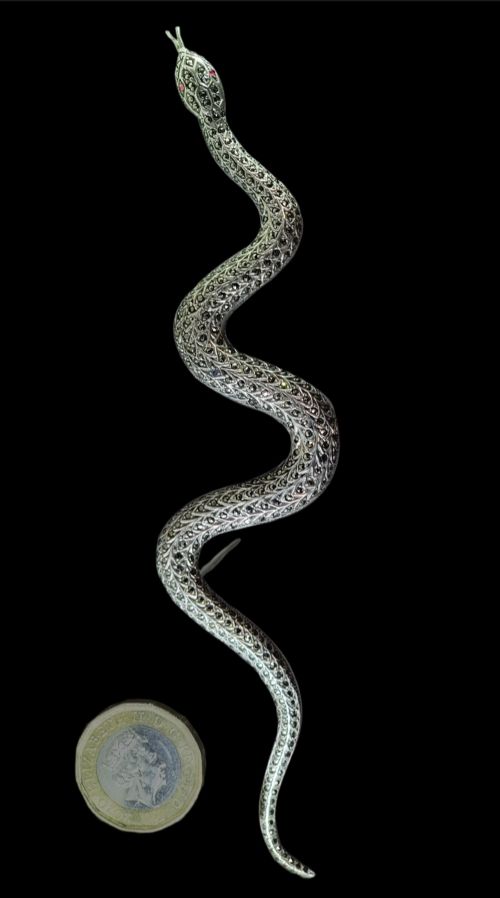
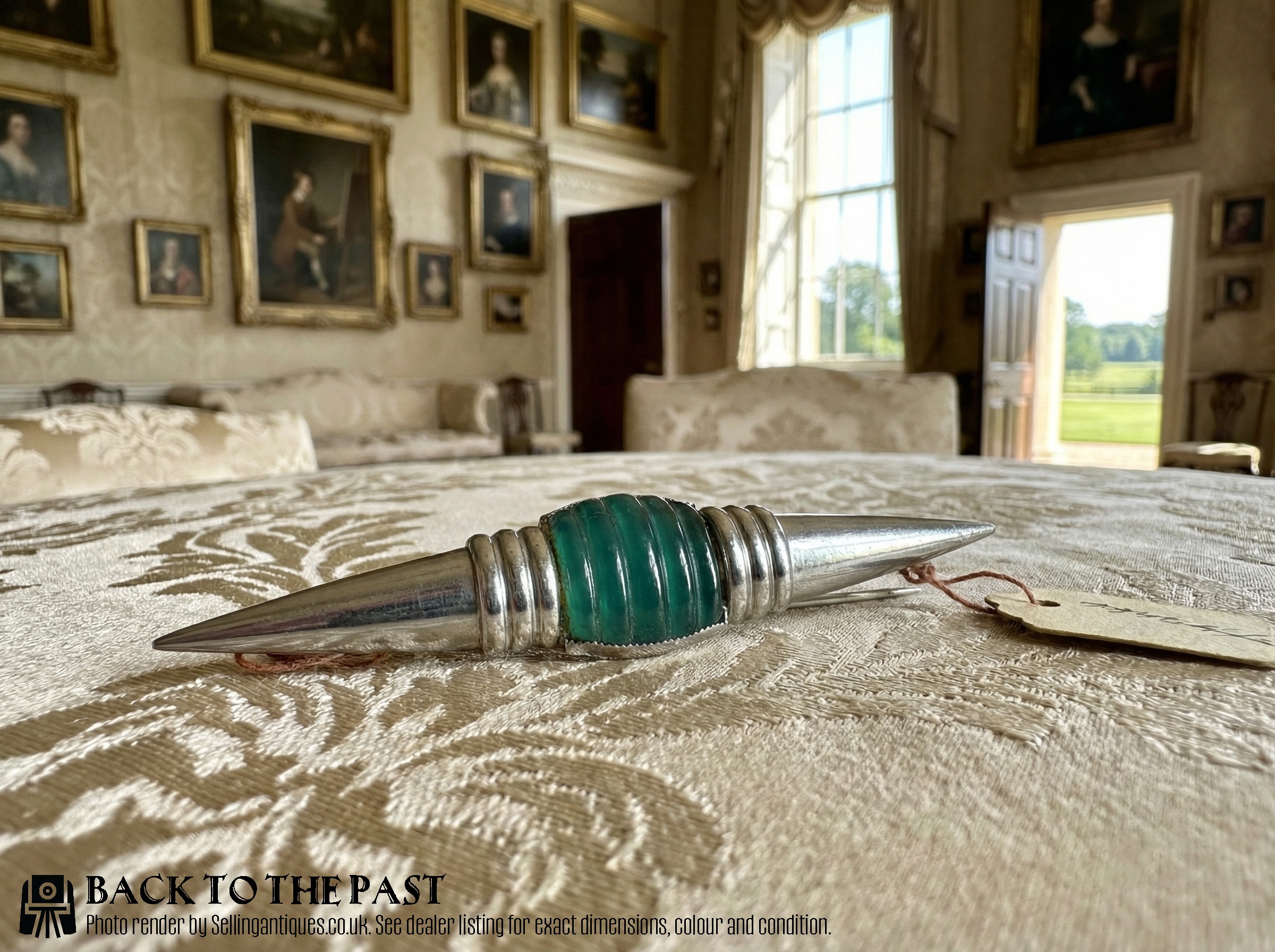
An art deco lapel pin is typically encountered on this page as a bar brooch, a shaped dress clip, or a small decorative fastener from the nineteen twenties and nineteen thirties. These items range from delicate platinum and diamond bar designs to sterling silver pieces set with marcasite, enamel, or glass.
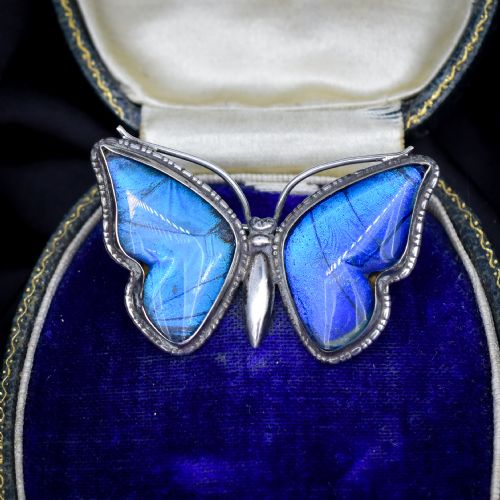
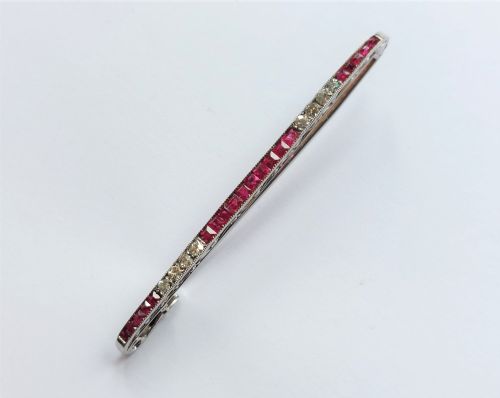
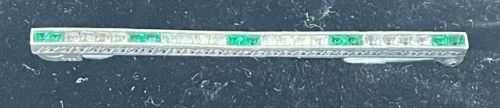
Makers produced these accessories in silver, white gold, and platinum, often incorporating gemstones such as rubies, emeralds, sapphires, and aquamarines. Certain examples take the form of insects like butterflies and dragonflies, while others feature geometric motifs typical of the period.
The selection also spans related items including hat pins and fob watches alongside standard brooches. Origins stretch from British workshops to continental Europe and Scandinavia, reflecting diverse regional interpretations of the style.
How they were made
Artisan jewellers constructed these pieces using durable metals such as platinum, sterling silver, and eighteen carat white or yellow gold to securely hold intricate stone settings. Platinum allowed for fine, strong wirework and knife-edge bars that could support multiple diamonds without heavy metal backing.
Surface decoration frequently relied on guilloché enamel, hand-set marcasite stones, and glass inserts to achieve vibrant colour contrasts. Silversmiths also utilised filigree techniques, twisting fine silver wire into openwork patterns for lighter butterfly and floral motifs.
Object forms span bar brooches, hat pins, fob watches, and insect motifs including butterflies, dragonflies, and pheasants.
What varies in quality
Quality in these pins is dictated by the precision of the stone setting and the integrity of the original metalwork. Finer examples display tightly spaced pavé or prong settings that hold diamonds, rubies, or paste securely without excess solder.
The sophistication of the design execution separates standard production items from finer workshop pieces. Enamel work that remains smooth and chip-free alongside crisp, sharp casting on silver and marcasite figures indicates superior original craftsmanship.
Cartier Paris·Jakob Bengel
The Art Deco Lapel Pin Glossary
- Bar brooch
- A slender horizontal pin, frequently set with diamonds or coloured gemstones, designed to fasten across the lapel or collar.
- Marcasite
- Small, faceted pieces of iron pyrite polished and set into silver to create a sparkling, dark metallic border.
- Guilloché enamel
- Decorative enamel applied over engine-turned metal engraving, creating repetitive geometric patterns beneath translucent colour.
- Filigree
- Delicate openwork jewellery formed from twisted fine metal wires soldered together into intricate patterns.
Art Deco Lapel Pin: Frequently Asked Questions
How do I wear a lapel pin safely?
Secure the pin through thick lapel fabric by engaging the safety catch firmly behind the garment. Ensure the weight of the piece matches the cloth so the fabric does not sag.
Heavier platinum and diamond bar brooches require sturdy wool or tweed, whereas lighter silver and enamel butterfly designs suit softer jackets.
Are these pins made of solid platinum?
Many pieces from the period combine platinum settings with white gold or silver structural components. Jewellers utilised platinum for its strength in delicate diamond settings.
Inspect the reverse of the piece to identify hallmarks indicating sterling silver, eighteen carat gold, or platinum content.
What is butterfly wing jewellery?
This technique uses real iridescent butterfly wings preserved beneath a clear glass dome, often forming the wings of depicted insects.
Originating during the early twentieth century, these panels are typically framed in sterling silver alongside hand-painted backgrounds.
How do I date an art deco piece?
Examine the construction style, stone cuts, and metal types for characteristics typical of the nineteen twenties and thirties. Geometric symmetry and calibre-cut gemstones strongly indicate this era.
Look for maker marks, stamped metal purities, and pin mechanism types to narrow down the decade of production.