



Art Deco Hostess Trolley
An art deco hostess trolley brings the sharp geometric style and practical mobility of the 1920s and 1930s directly into a modern room.
Art Deco Hostess Trolley
An art deco hostess trolley is a mobile serving piece designed for entertaining, appearing primarily in forms such as drinks trolleys, bar carts, and tea trolleys. These items serve as functional furniture that transports beverages and glassware with ease.
The pieces on this page emerge predominantly from the 1930s, alongside examples from the 1920s. English origins appear frequently among these circular and multi-tiered designs.
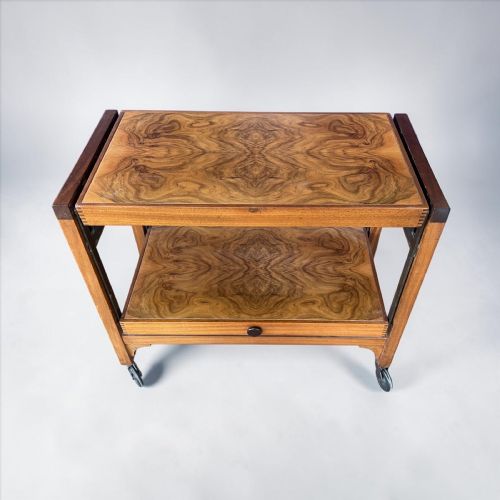
Buyers encounter variations ranging from two-tier tea trolleys to circular walnut drinks bar carts and modernist chrome versions. Each configuration reflects the specific entertaining habits of the period.
Materials and Construction
Cabinet makers utilised rich timbers including figured walnut, mahogany, and macassar ebony to build the wooden structures. These woods provide deep grain patterns across circular and multi-tier surfaces.
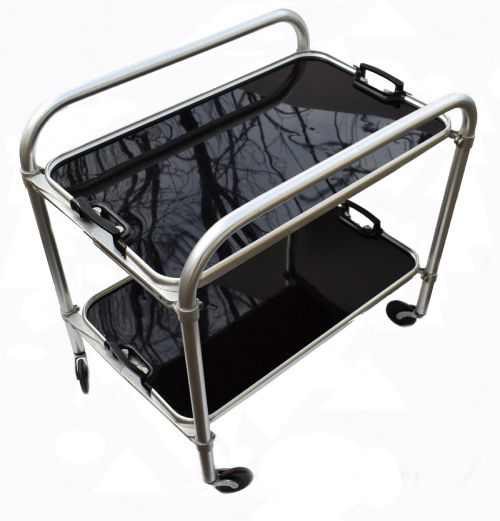
Metal components introduce contrasting industrial elements through the use of chrome, brass, steel, and aluminium. These metals form the sleek frames, handles, and supports characteristic of the era.
Glass, mirror, and black glass panels inset into the tiers provide durable, reflective surfaces for serving drinks. Castors attached to the base ensure smooth mobility across the floor.
The listings on this site combine wooden forms in walnut and mahogany with metal elements in chrome, brass, steel, and aluminium.
Factors of Quality
The refinement of the timber veneer and the precision of the metal framing distinguish superior examples from simpler ones. Figured walnut and macassar ebony demand expert handling to achieve a smooth, deep finish.
The integration of materials determines the overall visual weight, where chrome and mirror glass combine to create a clean modernist line. Simpler tea trolleys rely on the warmth of polished mahogany or walnut rather than metallic contrast.
The Art Deco Hostess Trolley Glossary
- Drinks trolley
- A specialised serving cart configured specifically for holding bottles, glassware, and cocktail accessories. Many examples incorporate circular trays or gallery rails.
- Bar cart
- An alternative term for a mobile serving unit focused on beverage preparation and display. These often showcase bright chrome and glass construction.
- Castor
- A small wheel fitted to the legs of the trolley to allow smooth rolling across floors. They enable the piece to function as mobile furniture.
- Modernist
- A design approach emphasising clean lines, functional forms, and industrial materials like chrome and steel. This style defines the streamlined aesthetic of the 1930s.
Art Deco Hostess Trolley: Frequently Asked Questions
What is an art deco hostess trolley?
An art deco hostess trolley is a mobile serving cart from the 1920s or 1930s built to carry drinks and glassware. It combines functional wheels with stylish materials like walnut and chrome.
These pieces were designed for entertaining at home, allowing hosts to move refreshments between rooms easily while making a distinct design statement.
How do I use a bar cart today?
A bar cart functions well as a permanent station for bottles, decanters, and glassware in a living or dining room. The wheels allow you to roll it closer to guests when serving.
Keeping the tiers organised with everyday items makes the cart both a practical helper and a decorative focal point in the interior.
What materials were used in 1930s trolleys?
Maker workshops combined warm woods like figured walnut, mahogany, and macassar ebony with polished metal frames. Chrome, brass, steel, and aluminium provided the bright, reflective accents typical of the decade.
Insets of clear glass, mirror, or black glass completed the surfaces, offering durable trays that resisted spills and reflected light.
How do I date an art deco trolley?
Dating relies on examining the construction materials and stylistic details recorded from the 1920 and 1930 periods. The presence of streamlined chrome and mirror glass points toward the 1930s.
Earlier examples often lean toward traditional wood forms like walnut or mahogany, sometimes utilising simpler two-tier tea trolley configurations.