




Art Deco Glass Cart
An art deco glass cart brings modernist style and functional elegance to any interior, combining gleaming metal with transparent or tinted shelves.
Art Deco Glass Cart
When you search for an art deco glass cart, you encounter versatile serving pieces designed for entertaining, most commonly taking the form of two-tier drinks trolleys and bar carts from the 1920s, 1930s, and 1940s. These pieces serve primarily as mobile cocktail stations or display surfaces, integrating seamlessly into contemporary living spaces.
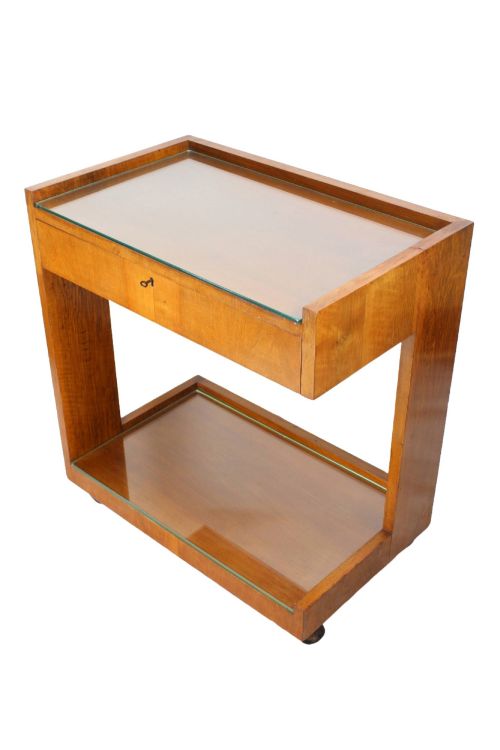
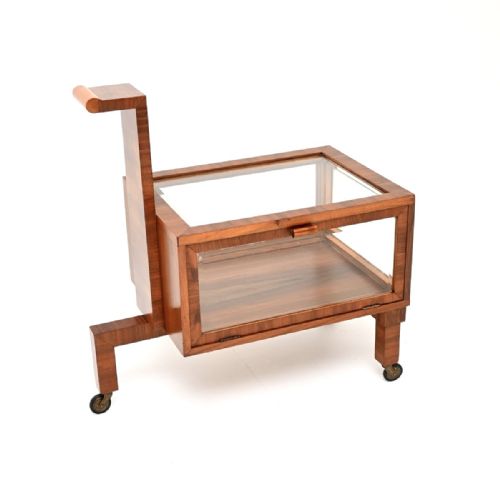
The selections found here span French mid-century sensibilities alongside classic British and continental examples, featuring tiered structures built for bottles, glassware, and barware. Walnut, mahogany, and chrome frames predominate, supporting transparent, smoked, or mirror glass surfaces that reflect light across the room.
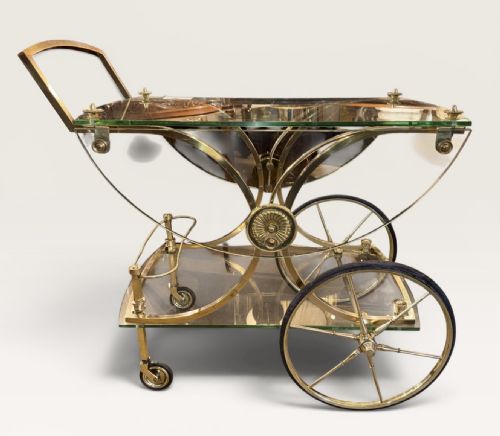
Beyond standard trolleys, the category encompasses smaller serving trays and specialised barware items like silver-plated cocktail shakers and novelty trays. Buyers meet everything from understated industrial chrome frames to high-style gilded pieces designed for prominent display.
How they were made
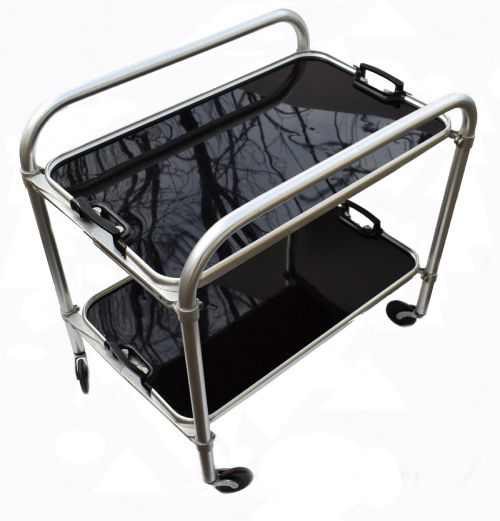
Construction relies heavily on the juxtaposition of tubular or cast metal frames with inset glass panels, utilising chrome, brass, aluminium, and silver plate for structural rigidity and polished brilliance. These metallic elements provide the characteristic sheen associated with the period.
Wood elements such as walnut and mahogany undergo precise joinery to form sturdy tiers and display cases, often finished with polished veneers that complement the cold gleam of steel and chrome. Glass shelves are cut to fit snugly within metal galleries or wooden surrounds, occasionally incorporating smoked or mirror finishes.
Listings feature items from the 1920s, 1930s, and 1940s, utilising chrome, walnut, brass, and smoked glass.
What varies in quality
Quality differentiates through the integrity of the metal plating, the depth of the wood grain, and the precision of the tier assembly. Superior examples maintain unblemished chrome or heavy silver plate, whereas lesser pieces exhibit pitting or worn finishes on the structural supports.
The weight and clarity of the glass panels also dictate grade, with thick mirror glass or smoked panes showing superior substance compared to thin replacements. Furthermore, the presence of original wheels, branded maker attributions, and intact gallery rails elevates a piece above standard utility items.
Maison Bagues
The Art Deco Glass Cart Glossary
- Art Deco
- A design style characterised by streamlined forms, geometric patterns, and modern industrial materials that emerged in the interwar period. It dominated decorative arts throughout the 1920s and 1930s.
- Hostess Trolley
- A mobile serving cart equipped with multiple tiers specifically intended for transporting food, drinks, and glassware during social gatherings. These units often feature castors for easy movement across carpets and wooden floors.
- Smoked Glass
- A darkened, translucent glass variety produced by adding colorants to the molten mixture, popular in modernist furniture for its subtle, moody reflection. It reduces glare while maintaining a sleek aesthetic.
- Gallery Rail
- A raised metal or wooden border encircling the edge of a tray or trolley tier to prevent glassware and bottles from sliding off during transit. It combines practical security with decorative linear accentuation.
Art Deco Glass Cart: Frequently Asked Questions
What is an art deco glass cart?
An art deco glass cart is a mobile serving trolley featuring glass shelves and metal or wooden framing, designed during the 1920s and 1930s for entertaining guests.
These pieces typically incorporate two tiers to hold bottles, cocktail shakers, and glassware while moving easily on small wheels.
How were these carts used historically?
Hostess trolleys and bar carts served as portable cocktail bars during the interwar cocktail renaissance, allowing hosts to mix and serve drinks directly in living areas.
They functioned both as practical serving vessels and as status symbols displaying fashionable modern home entertaining habits.
How do I style a bar cart?
Living with these pieces involves balancing functional barware like crystal decanters and cocktail shakers with decorative trays and glassware.
Keep frequently used bottles on the lower tier to maintain stability while displaying your finest pieces on the top glass surface.
How do I date an art deco trolley?
Dating relies on identifying material combinations like chrome paired with black glass, or specific stylistic flourishes typical of the 1930s.
Construction methods, such as the use of aluminium or specific wood veneers like walnut, also help narrow down the decade of manufacture.