




Art Deco Hanging Lamp
An art deco hanging lamp brings striking geometric form and diffused light to a room, drawing the eye upwards with period style.
Art Deco Hanging Lamp
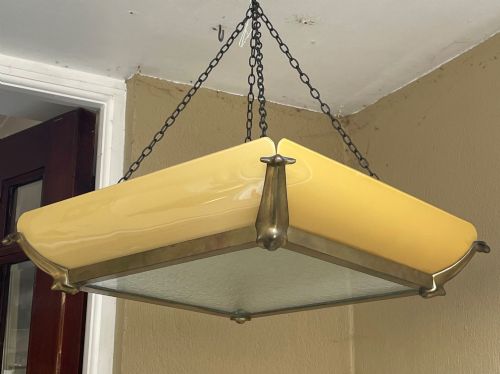
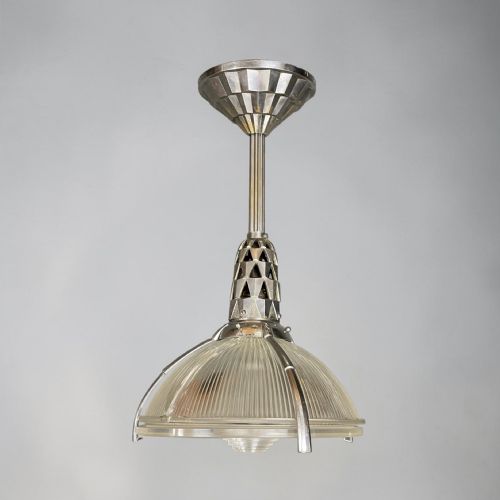
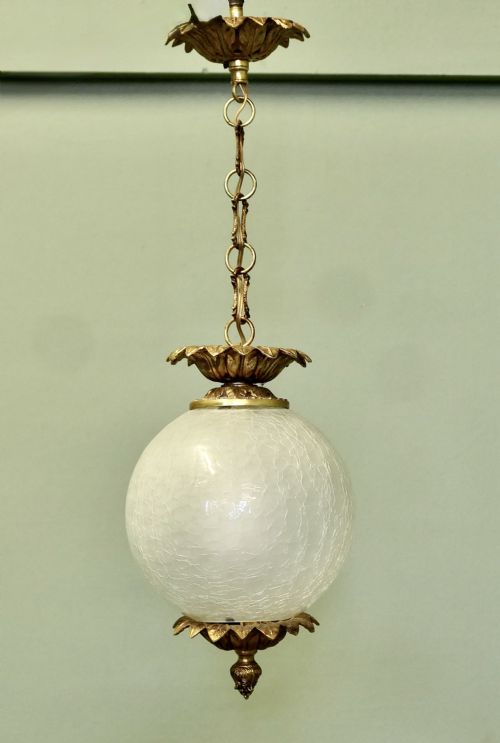
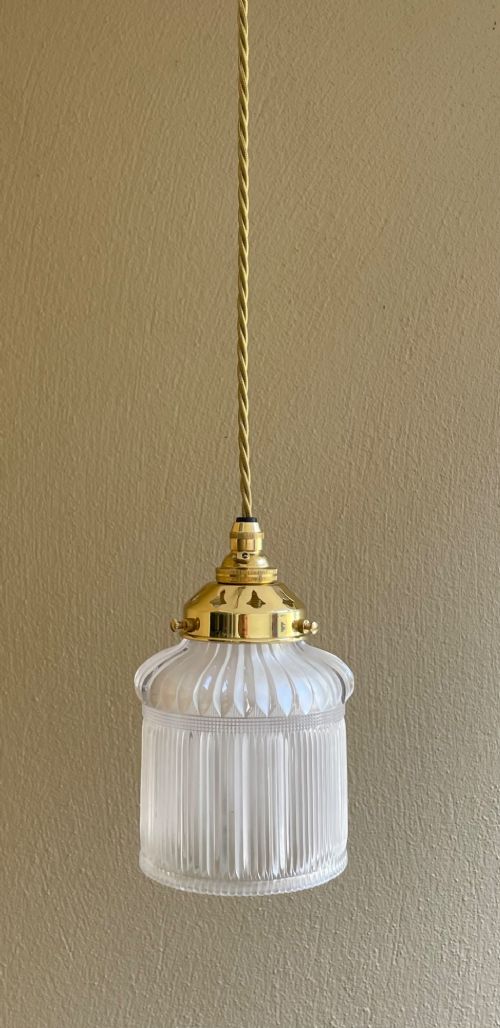
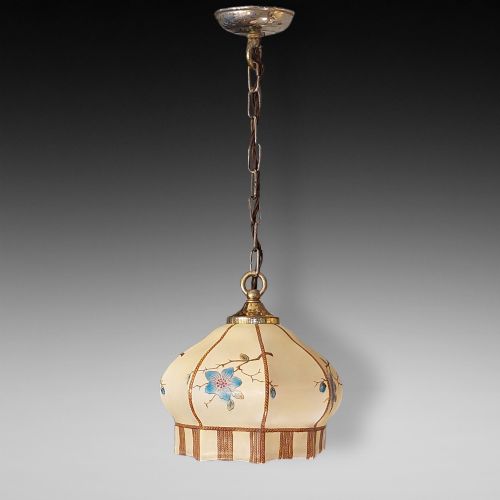
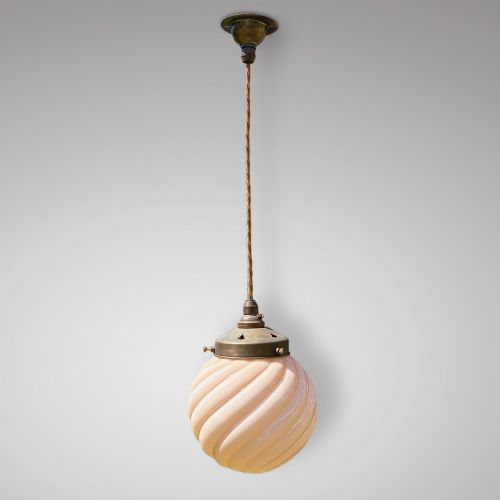
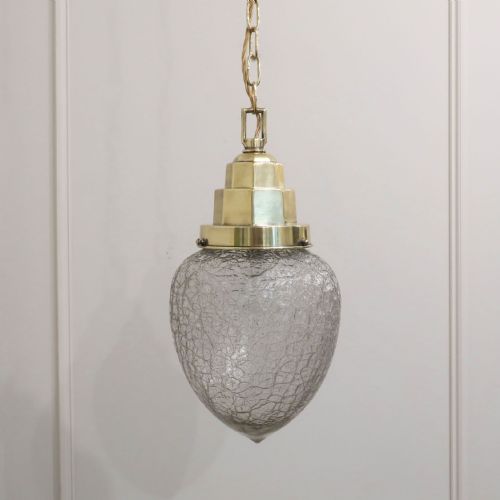
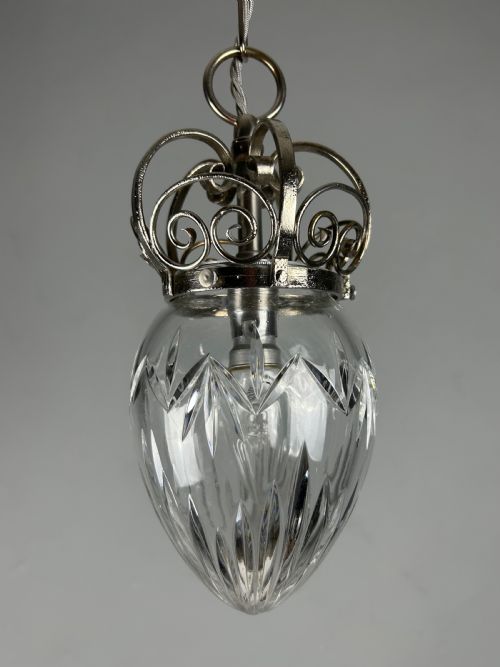
When searching for an art deco hanging lamp, buyers encounter pendant lights, ceiling lights, and chandeliers primarily from the 1920s and 1930s. These fixtures suspend from ceilings to illuminate spaces with distinct period character.
The selections span styles from standard Art Deco and 1920s Art Deco to Industrial, Industrial Art Deco, Mid-Century Modern, and Amsterdam School. Pieces range from simple globes to elaborate multi-material lanterns.
Opaline glass, frosted glass, cut glass, and mirrored glass shades appear frequently, paired with metalwork structures. Origins include French designs and broader European workshops.
How they were made
Glass production for these lamps involved moulding, blowing, or cutting, yielding opaline, frosted, crackle, fish scale, and mercury mirrored finishes. Hand-painted decoration and alabaster also occur.
Metal structures rely on brass, chrome, copper, steel, bronze, and wrought iron. Makers formed these materials into galleries, frames, and chains to support the heavy glass shades securely.
Some glass shades wear fish scales like they are ready to swim away from the ceiling.
What varies in quality
Quality rests in the weight and clarity of the glass, whether standard opaline, heavy cut glass, or moulded frosted panels. Finer pieces demonstrate precise moulding and sophisticated optical properties.
The underlying metalwork creates distinction, moving from basic pressed metal to substantial brass, bronze, copper, or chrome galleries. The integration of metal and glass determines the structural success of the fixture.
Émile-Jacques Ruhlmann·Jean Gauthier
The Art Deco Hanging Lamp Glossary
- Opaline glass
- A milky, semi-translucent glass used to diffuse light softly across a room. It appears frequently in spherical and conical pendant shades.
- Plafonnier
- A ceiling-mounted lighting fixture that sits flush or very close to the ceiling surface. These often feature large glass bowls held by metal mounts.
- Gallery
- The metal ring or fitting that grips the upper rim of a glass shade and connects it to the suspension rod or chain. Galleries often match the primary metal of the lamp.
- Amsterdam School
- An architectural and design style originating in the Netherlands, known for expressive brickwork and rich metal detailing. Pieces from this movement often utilise square brass frames.
Art Deco Hanging Lamp: Frequently Asked Questions
How do I hang an art deco hanging lamp?
Suspension relies on the original chain, rod, or cord attached to the metal gallery of the light. Professional electrical installation ensures the weight distributes safely from the ceiling.
Heavier lanterns and chandeliers require secure ceiling joist fixings rather than standard plasterboard anchors.
What rooms suit an art deco hanging lamp?
Hallways, dining areas, and living rooms accommodate pendant lights and lanterns effectively. Smaller globes fit compact entryways while large chandeliers anchor larger spaces.
Ceiling heights dictate whether a flush plafonnier or a suspended pendant works best for the room.
How do I identify a 1920s art deco hanging lamp?
Look for characteristic geometric forms, stepped motifs, and symmetrical metalwork. Materials like chrome, brass, and opaline or frosted glass dominate pieces from this decade.
French pieces often incorporate moulded signature glass shades held by elaborate bronze or copper frames.
Are these lamps rewired for modern use?
Many fixtures arrive rewired with modern flex to meet current electrical standards while retaining their vintage appearance. Original galleries and lamp holders are preserved wherever possible.
Checking the internal wiring with a qualified electrician guarantees safe operation in modern homes.