



1930s Pendant Ceiling Light
A 1930s pendant ceiling light brings architectural presence and diffused illumination to a room, drawing the eye upward with period geometry.
1930s Pendant Ceiling Light
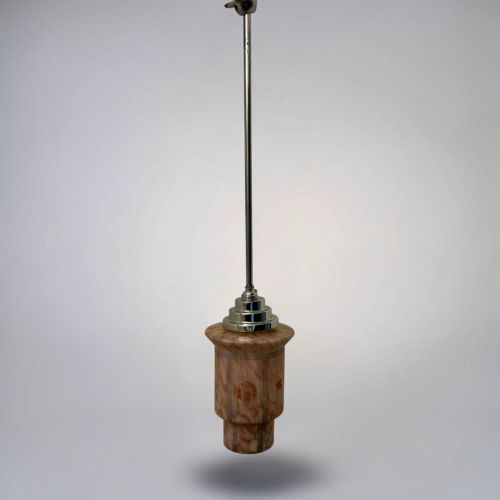
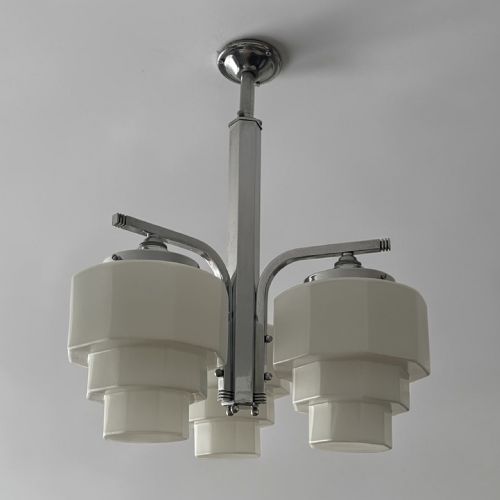
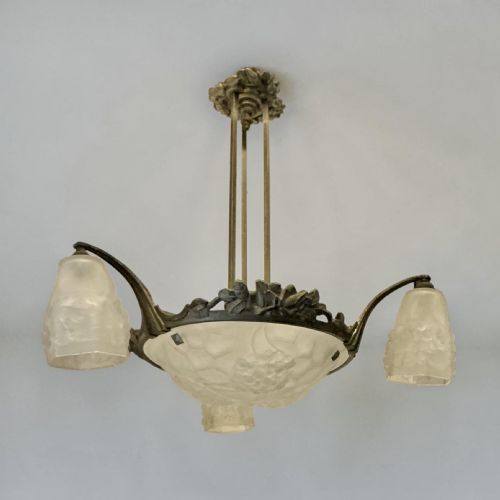
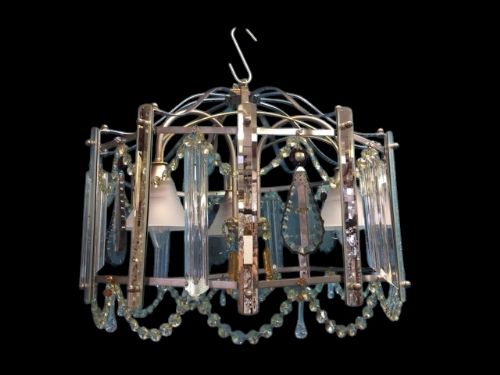
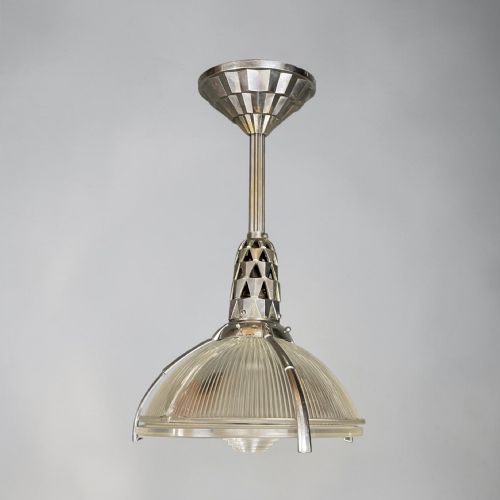
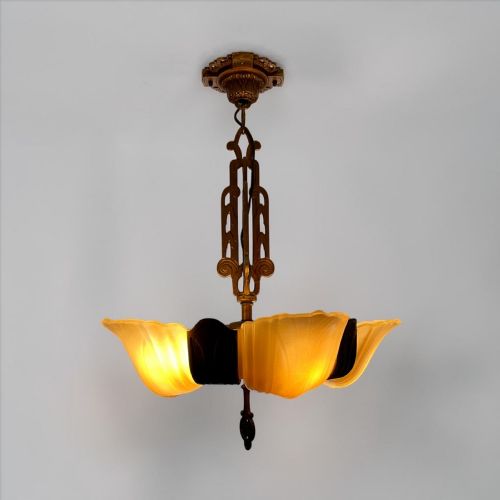
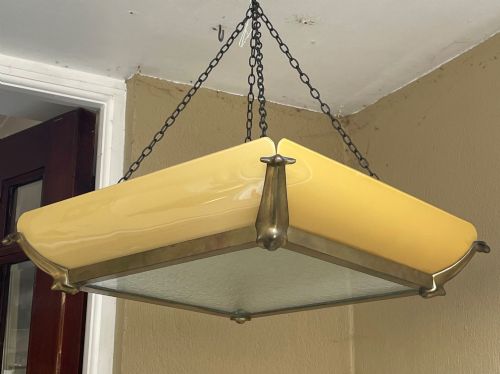
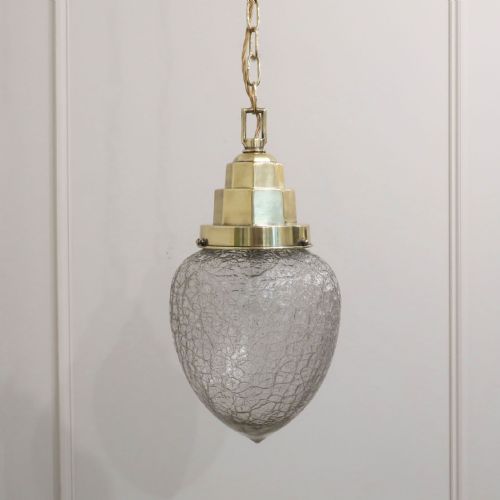
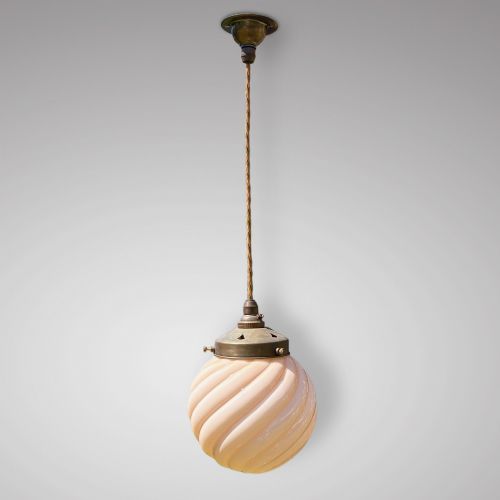
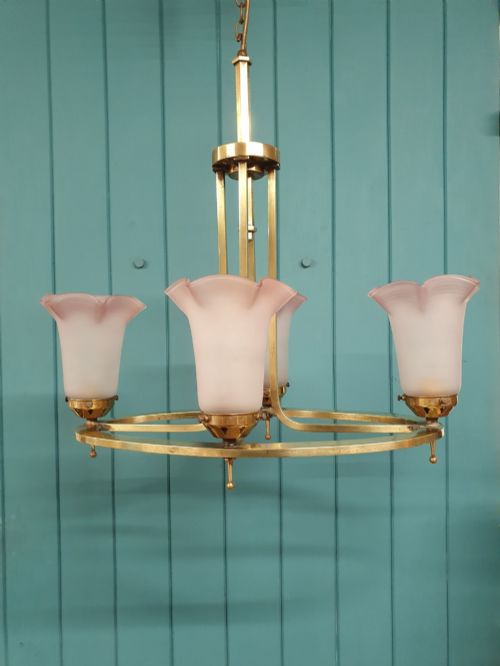
A 1930s pendant ceiling light encompasses hanging fixtures, chandeliers, hall lanterns, and single drop lamps suspended to illuminate interior spaces. The selection on this page leans heavily toward Art Deco forms, alongside French Country, Highland Lodge, and Dutch Revival examples from the period.
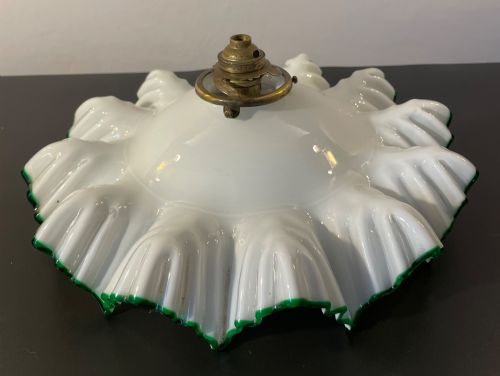
The common iterations take the form of single-bulb opaline or frosted glass shades, multi-arm chandeliers in brass and chrome, and heavy moulded glass slip shade configurations. These designs originate from domestic, commercial, and industrial settings, showing considerable variety in scale from small hallway fixtures to monumental chandeliers.
What separates the tiers
Quality rests in the weight and substance of the metalwork and the complexity of the glass production, distinguishing standard commercial production from architecturally significant pieces. Thick, heavy glass shades with deep relief moulding or intricate acid-etched patterns indicate higher ambition than thin, plain pressings.
The integrity of the original hardware, including matching metal galleries, suspension chains, and specialised shade fitters, separates complete fixtures from assembled or altered examples. Designer attribution and factory provenance, such as identifiable French pressed glass or marked industrial reflectors, elevate certain pieces above anonymous domestic lighting.
1930s Pendant Ceiling Light Retail Price Guide 2026
Typical asking prices for 1930s pendant ceiling light among the pieces listed under this phrase on Sellingantiques today, from the lower quarter to the upper quarter. They describe what is for sale here now, not the wider market.
Listings span the 1920 and 1930 periods, incorporating brass, chrome, copper, crystal, and multiple varieties of glass.
Émile-Jacques Ruhlmann·Jean Gauthier·Gecoray·Holophane
The 1930s Pendant Ceiling Light Glossary
- Pendant light
- A hanging lighting fixture suspended from the ceiling by a cord, chain, or metal rod. These units focus downward illumination into a specific zone of a room.
- Slip shade
- A type of glass shade designed to slide into a metal frame or basket on a chandelier or wall sconce. Multiple slip shades typically lock together to form a cohesive bowl or shade around the central bulb cluster.
- Opaline glass
- A milky, semi-translucent glass that diffuses light evenly without harsh glares. It appears frequently in twentieth-century lighting for its soft white or tinted glow.
- Plafonnier
- A ceiling-mounted lighting fixture sitting flush or very close to the ceiling surface rather than hanging on a long drop. This French term describes shallow bowl shades held directly against the plaster.
- Mercury glass
- A double-walled blown glass coated on the inside with a silvering liquid to create a reflective mirror-like sheen. Industrial pendants frequently used this material to maximise light projection.
1930s Pendant Ceiling Light: Frequently Asked Questions
How do I hang a heavy antique chandelier safely?
Heavy fixtures require direct anchoring into ceiling joists or the use of a rated structural hook capable of supporting the combined weight of metal and thick glass.
Professional electrical installation is recommended to ensure the internal wiring and ceiling junction box can safely bear the load.
Can I adjust the drop height of these pendants?
The suspension method determines whether adjustment is possible, as chain-hung fixtures allow links to be removed while rigid metal rods or fixed tubes do not.
Altering fabric-covered cords is straightforward during rewiring, but original drop lengths often preserve the intended visual proportion of the shade.
What bulb type should I use in vintage glass shades?
Modern LED bulbs work well because they generate significantly less heat than traditional incandescent lamps, protecting fragile vintage glass and old internal wiring.
Selecting a warm colour temperature preserves the soft amber or diffused glow originally intended by the period design.
How do I clean opaline and frosted glass shades?
Washing glass components in lukewarm water with mild soap removes accumulated dust and grime without damaging delicate surface textures or etched patterns.
Harsh chemical cleaners and abrasive scouring pads must be avoided to prevent scratching the glass or stripping applied finishes.