
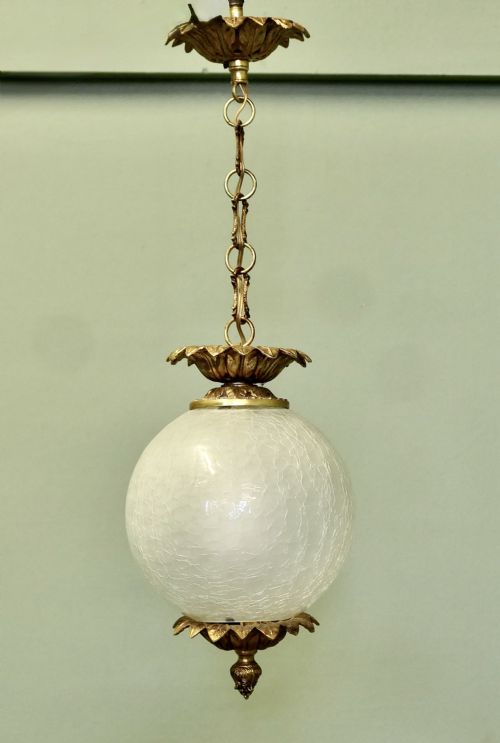
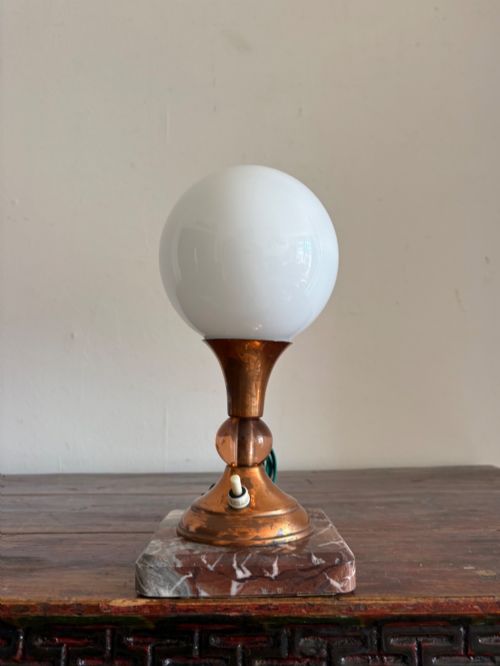

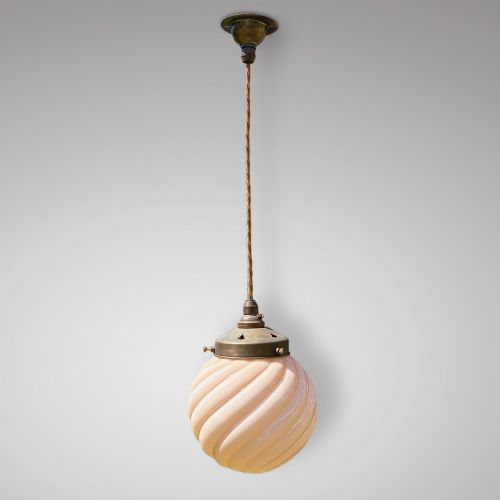


Art Deco Glass Globe
An art deco glass globe brings geometric elegance to a room, casting soft illumination through milky opaline or frosted surfaces.
Art Deco Glass Globe
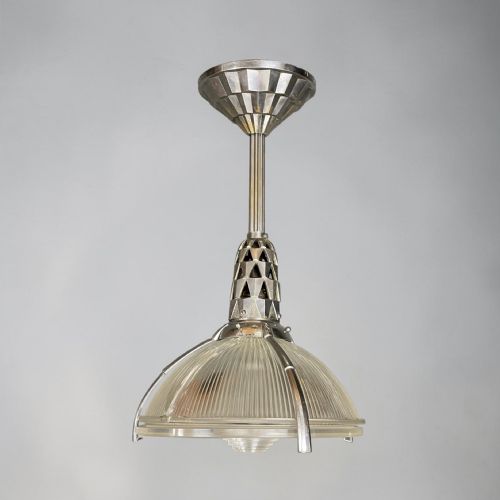
An art deco glass globe encompasses spherical light shades and decorative vessels produced during the interwar period. These items typically emerge as hanging pendant lights, ceiling fixtures, or perfume bottles.
The version most frequently met on this page is the hanging pendant light or ceiling globe utilising opaline or frosted glass. French origins dominate these hemispherical and spherical lighting forms.
Materials and construction
Glass forms the primary body, shaped into spheres or globes using moulding and blowing techniques. Frosted and opaline finishes diffuse the light evenly across the surface.
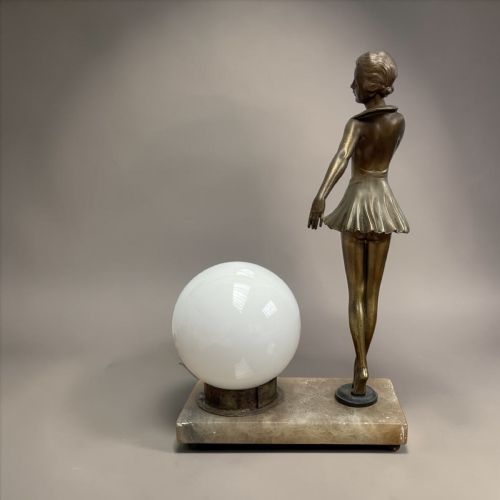
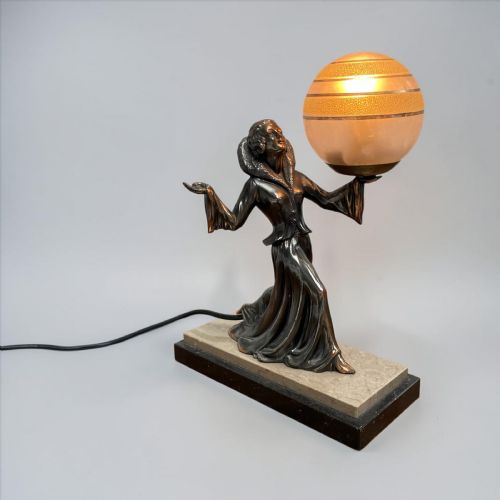
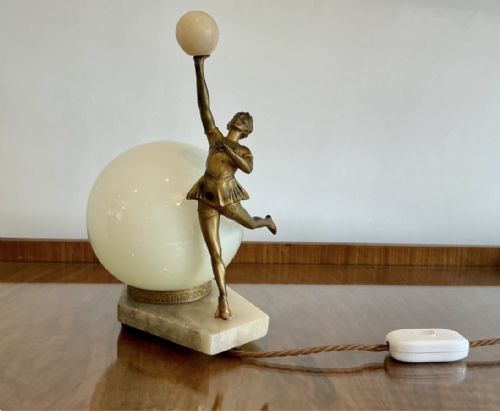
Metal mounts in chrome, brass, bronze, and copper anchor the glass elements. Bases frequently incorporate marble, granite, or spelter to provide sturdy foundations for figural lamps.
Materials span glass, marble, chrome, frosted glass, spelter, bronze, opaline glass, and brass across the nineteen-twenties, thirties, and forties.
Distinctions in quality
The weight and purity of the glass dictate the calibre of the vessel or shade. Thick opaline or evenly frosted crystal displays superior light diffusion compared to thinner alternatives.
The integration of the metal components with the stone or marble bases separates standard production from finer pieces. Cast bronze or detailed spelter figures paired with solid marble indicate higher craftsmanship.
Émile-Jacques Ruhlmann·Karl Palda·Heal's
The Art Deco Glass Globe Glossary
- Opaline glass
- A milky, semi-translucent glass that diffuses light softly. It appears frequently in period pendant lights and globes.
- Spelter
- A zinc alloy commonly cast into figural sculptures for lamp bases. It serves as a more affordable alternative to bronze.
- Torchiere
- An indirect floor lamp designed to direct light upwards towards the ceiling. These fixtures often utilise glass globes or bowls.
- Bakelite
- An early synthetic phenol-formaldehyde plastic utilised for electrical components and lamp bodies. It defines many interwar electrical fittings.
Art Deco Glass Globe: Frequently Asked Questions
How do I clean an opaline glass globe?
Wash the glass gently in lukewarm water using mild soap. Avoid harsh chemical cleaners that might damage the vintage surface.
Dry thoroughly with a soft cloth before rehanging or mounting the shade.
Were these globes originally wired for electricity?
Most pieces from this era were manufactured to accommodate period electrical wiring. Many survive with updated flex suitable for modern domestic standards.
Qualified electricians should inspect older internal fittings prior to installation.
How do I distinguish French pieces?
French examples often combine heavy marble bases with patinated spelter or bronze figures. The glasswork frequently exhibits finer moulding and distinct opaline or etched finishes.
Many of these lighting fixtures originated from Parisian workshops during the nineteen-twenties.
Can these ceiling lights be hung low?
Pendant lights operate effectively over dining tables or in hallways where clearance permits. Adjusting the suspension chain alters the drop height to suit the room.
Ceiling-mounted globes remain better suited for spaces with standard ceiling heights.