



Retro White Pendant Light
A retro white pendant light brings clean illumination and mid-century character directly into your interior.
Retro White Pendant Light
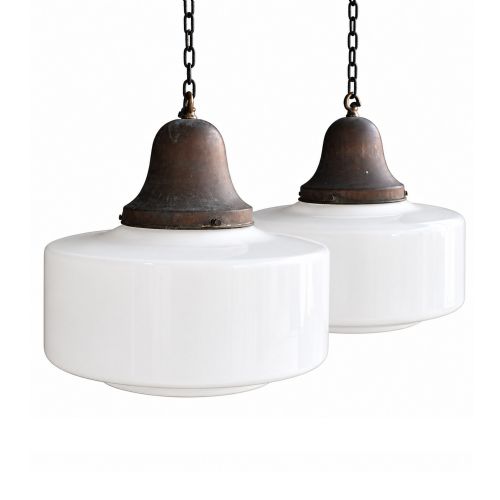
When you search for a retro white pendant light, you encounter ceiling fixtures originating primarily from the early twentieth century through the mid-century decades. These pieces span industrial designs, Art Deco forms, and mid-century styles, functioning as suspended lighting sources for rooms and hallways.
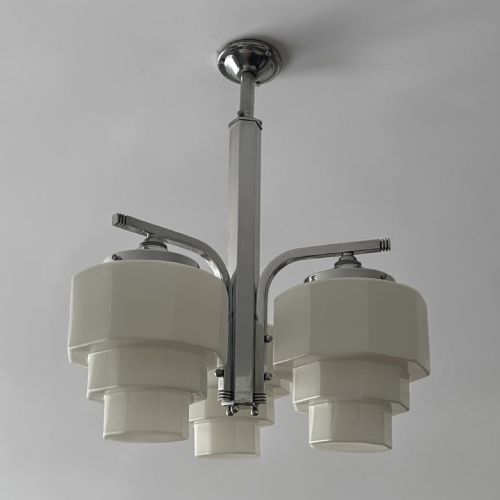
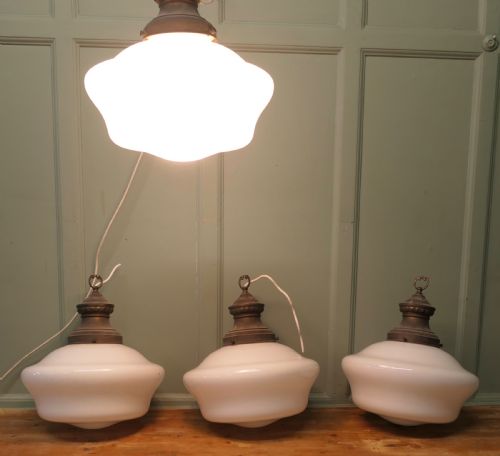
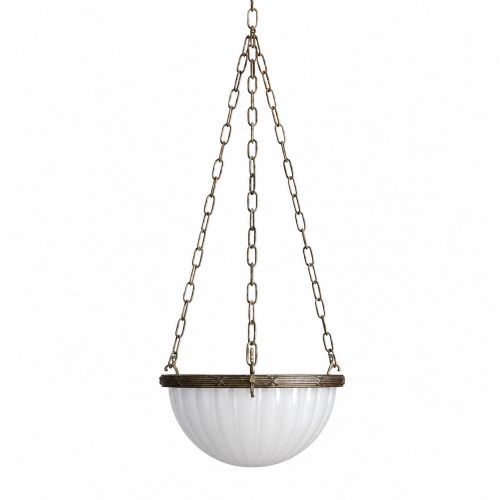
The most common versions on this page are opaline and opal glass pendant lights and ceiling shades, often featuring conical, pear-shaped, fish scale, or dish silhouettes. They combine glass diffusers with brass, chrome, or metal hardware, originating from periods such as the 1920s, 1930s, and 1940s.
How they were made
These fixtures utilise blown or moulded opaline and opal glass to create diffused, soft illumination, shaped into cones, spheres, and reeded profiles. Glassmakers worked molten material to achieve the characteristic milky white opacity.
The glass shades are paired with metalwork components cast or spun from brass, chrome, and other metals. Industrial variants integrate robust metal fixtures built for commercial or trade environments, whilst domestic examples incorporate refined fittings appropriate for hallways and living spaces.
Retro White Pendant Light Retail Price Guide 2026
Typical asking prices for retro white pendant light among the pieces listed under this phrase on Sellingantiques today, from the lower quarter to the upper quarter. They describe what is for sale here now, not the wider market.
Current listings feature ceiling lights and pendant lighting from the 1920s, 1930s, and 1940s, executed in opaline glass, brass, and chrome.
What varies in quality
The distinction between tiers rests upon the subtlety of the glassblowing and the integrity of the original metal hardware. Superior examples display even milkiness in the opaline glass, clean moulding lines, and well-proportioned reeded or conical geometries.
Quality also manifests in the retention of original brass or chrome components and the sophistication of period styling, such as Art Deco or early industrial detailing. Finer pieces maintain their authentic fitter galleries and uncompromised shade surfaces.
The Retro White Pendant Light Glossary
- Opaline Glass
- A type of semi-opaque glass with a milky white appearance, frequently utilised in lighting to diffuse glare evenly. It allows light to pass through while concealing the bulb within.
- Pendant Light
- A light fixture suspended from the ceiling by a cord, chain, or metal rod. These fixtures hang down to direct illumination over specific areas or rooms.
- Art Deco
- A design style prevalent in the 1920s and 1930s characterised by sleek geometric shapes and stylised motifs. It influences the clean lines found in many pendant shades of the period.
- Reeded Design
- A surface pattern consisting of parallel convex mouldings or ridges. In glass shades, this texture adds visual depth and refracts the emitted light.
- Conical
- A geometric shape tapering smoothly from a flat circular base to a point at the top. Conical pendant lights direct their illumination downwards.
Retro White Pendant Light: Frequently Asked Questions
What periods do these pendant lights come from?
The lighting fixtures listed here originate predominantly from the early twentieth century, spanning the 1920s, 1930s, and 1940s. They encompass Edwardian, Art Deco, and mid-century industrial design movements.
Production methods and material choices evolved across these decades, shifting from utilitarian trade and industrial applications to domestic decorative hallway and ceiling lighting.
How were these ceiling lights originally used?
These fixtures served as functional overhead lighting in homes, commercial buildings, and industrial spaces. Trade sign lights and large ceiling fixtures illuminated workspaces, whilst smaller opaline pendants lit hallways and domestic rooms.
Their suspended drop design placed the light source at an optimal height to illuminate specific zones within a room effectively.
What materials are used in these pendants?
The primary material for the shades is opaline or opal glass, valued for its ability to soften and diffuse light. This is combined with metal components including brass, chrome, and standard metal hardware.
Different fixtures pair the milky glass body with either industrial metal galleries or polished fittings, depending on their intended domestic or commercial environment.
How do I identify an Art Deco pendant light?
Art Deco pendant lights from the 1930s typically feature geometric symmetry, streamlined silhouettes, and clean, unpretentious lines. They often utilise opaline glass moulded into specific geometric forms like cones or stepped profiles.
These pieces reflect the modernist design philosophies of the interwar period, avoiding excessive ornamentation in favour of functional elegance.