





Opaline Glass Globe Light
An opaline glass globe light brings a soft, diffused glow to a room through its milky, translucent shade.
Opaline Glass Globe Light
An opaline glass globe light is an illuminating fixture defined by its milky, translucent glass sphere, which softens and diffuses the bulb's output evenly across a space. When you search for an opaline glass globe light, you encounter pieces spanning the Victorian era through the Art Deco period and the early twentieth century.
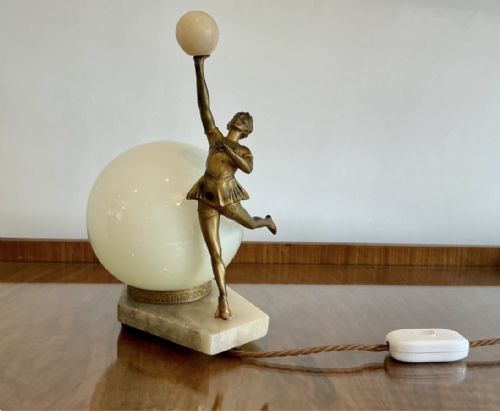
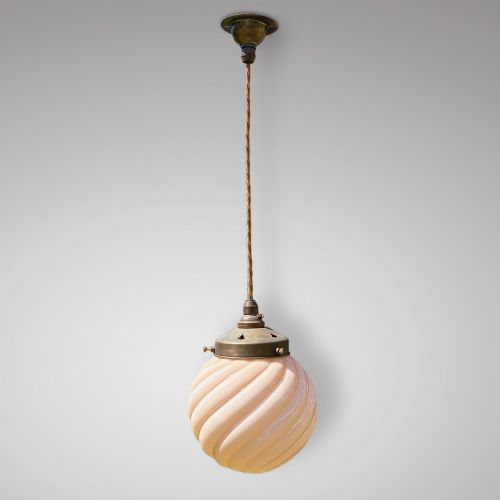
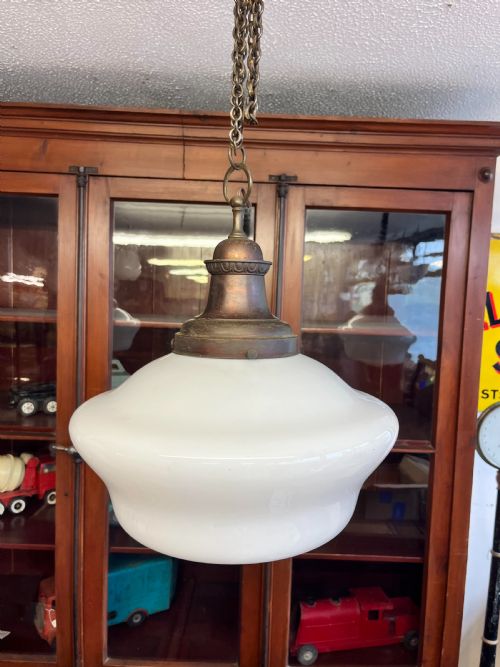
These fixtures take several forms, including hanging pendant lights, ceiling lights, hallway lanterns, and converted table or oil lamps. French Art Deco globes and Edwardian brass fittings frequently appear alongside Victorian examples.
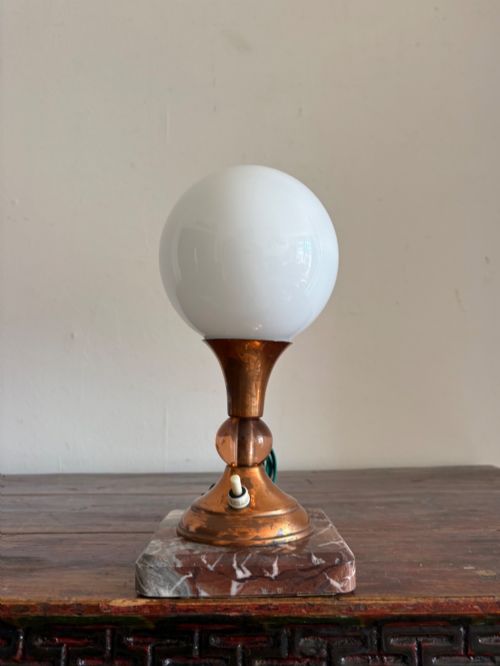
The materials paired with the glass shape the character of each piece, ranging from brass and copper mounts to marble bases and gilt bronze. Whether you need a small night light or a large chapel light, the selection encompasses diverse scales and mounting styles.
How they were made
The manufacture of these pieces relies primarily on opaline glass, a translucent material shaped into globes, spheres, and half-globes through specialised glassblowing techniques. This glass varies from smooth surfaces to fish scale and mottled textures.
Metal components such as brass, copper, and gilt bronze provide the structural galleries, chains, and mounting hardware that suspend or support the glass globes. Some table and night lights incorporate solid bases of marble or granite to anchor the weight of the metal and glass.
Opaline Glass Globe Light Retail Price Guide 2026
Typical asking prices for opaline glass globe light among the pieces listed under this phrase on Sellingantiques today, from the lower quarter to the upper quarter. They describe what is for sale here now, not the wider market.
An Art Deco night light exists specifically to guide nocturnal journeys under the watchful eye of a brass seagull.
What varies in quality
The distinction between standard examples and the finest pieces lies in the weight and translucency of the opaline glass, alongside the refinement of the metalwork. Maker attributions, such as work by Perry & Co, elevate the standing of a Victorian lantern.
Subtleties in the hardware, including heavy copper galleries, detailed brass castings, and robust marble or granite bases, separate ordinary utility lighting from superior decorative examples.
Perry & Co
The Opaline Glass Globe Light Glossary
- Opaline Glass
- A translucent, milky glass developed to diffuse light evenly while obscuring the internal bulb.
- Gallery
- The metal ring or collar that grips the top of a glass shade to suspend it from a fitting or chain.
- Spelter
- An alloy of zinc and other metals frequently used for decorative figural bases and mounts on lamps.
- Gilt Bronze
- Bronze metal coated with a layer of gold, often found on high-end Victorian and Edwardian mounts.
Opaline Glass Globe Light: Frequently Asked Questions
How do I hang a pendant light?
Pendant lights suspend from ceilings using chains, flex, or rigid rods attached to a ceiling rose. Ensure the mounting surface and wiring can safely support the combined weight of the glass globe and metal gallery.
Professional installation by a qualified electrician is recommended to secure the fixture safely and ensure the electrical components meet current standards.
Can converted oil lamps be wired?
Many oil lamps from the Victorian and Edwardian periods are adapted for electricity while retaining their original brass or ceramic bodies. This conversion allows historic pieces to function as modern table lamps.
Rewired lamps should be checked for electrical safety and fitted with appropriate bulb holders that suit the interior measurements of the opaline shade.
How do I clean opaline glass?
Clean opaline glass gently using warm water and a mild detergent with a soft cloth. Avoid harsh abrasive pads or strong chemical cleaners that can scratch the surface or damage historic metal galleries.
Dry the glass thoroughly after washing to prevent water spots and inspect the metal mounts to ensure they remain dry and protected from moisture.
What periods do these lights come from?
The lighting fixtures span from the Victorian and Edwardian eras into the early twentieth century and the 1930s Art Deco period. Each era introduces distinct design characteristics in the metalwork and glass form.
Art Deco pieces often feature geometric mounts and smooth spheres, whereas Victorian and Edwardian examples frequently incorporate elaborate brass oil lamp conversions or gilt bronze lanterns.