



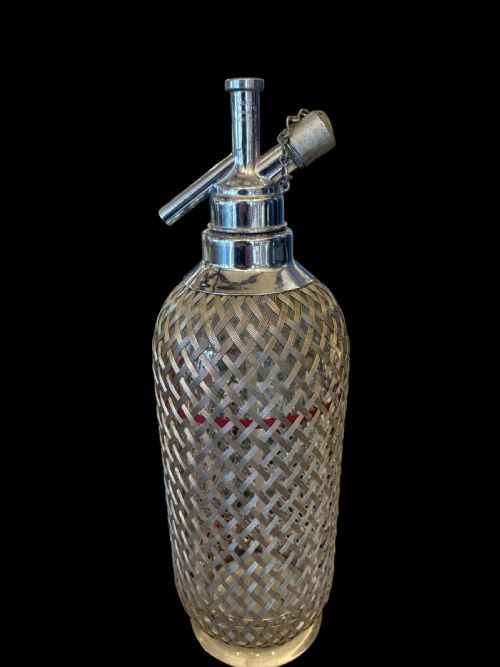


Art Deco Glass Bottle
An art deco glass bottle brings geometric precision and bold colour to a dressing table or bar, combining period craftsmanship with striking modernist design.
Art Deco Glass Bottle
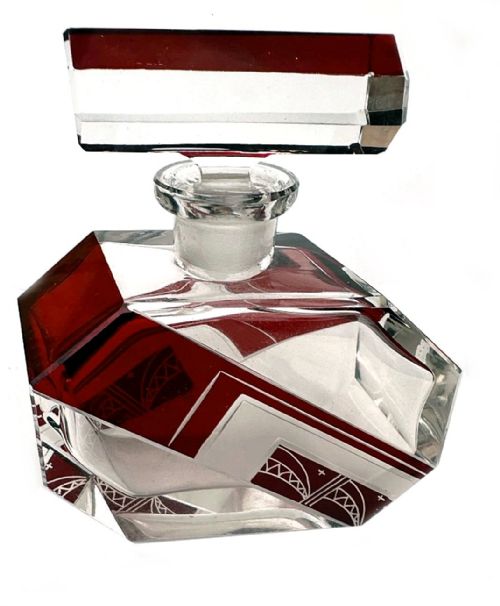
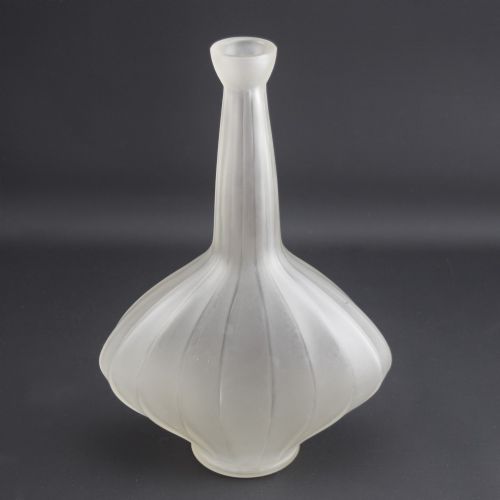
An art deco glass bottle encompasses perfume atomisers, scent bottles, and decanters produced primarily during the 1920s and 1930s. These vessels range from French moulded pieces to heavy Bohemian cut glass and English tablewares.
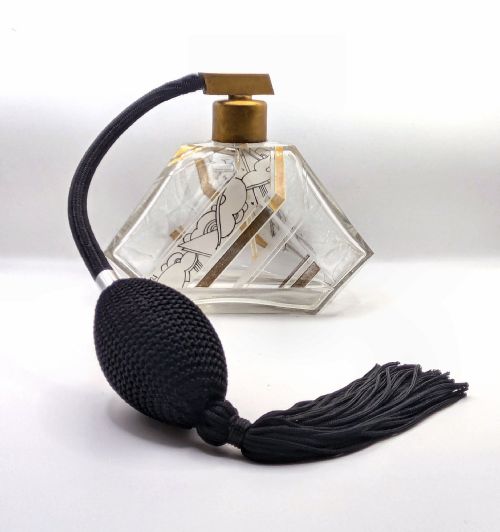
Perfume bottles dominate the selection, often featuring matching stoppers, atomiser bulbs, or silver collars. Decanters and cruet sets provide larger functional forms sharing the same stylistic vocabulary.
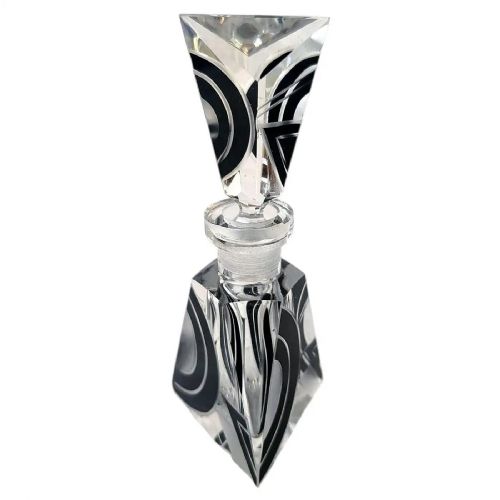
Origins stretch across France, Czechoslovakia, and England, reflecting distinct regional manufacturing traditions within the broader art deco movement. Czech workshops frequently utilised vibrant enamels and geometric cutting, while French makers focused on moulded figural designs.
How They Were Made
Production combined free-blown or mould-blown glass bodies with metalwork mounts, employing sterling silver, chrome, and enamel. Artisans applied geometric cuts, acid etching, and staining to colour the surfaces.
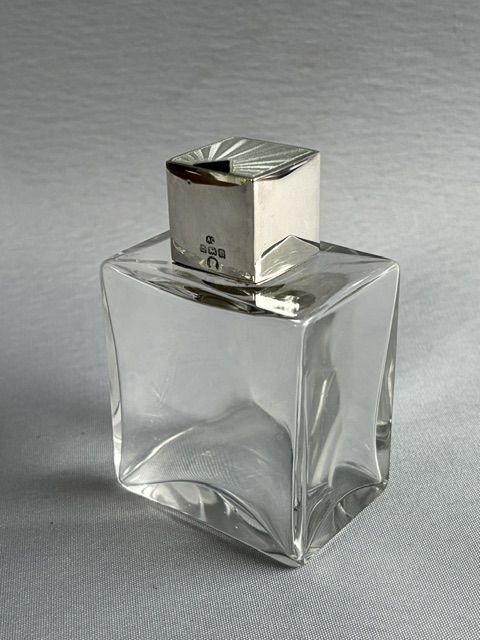
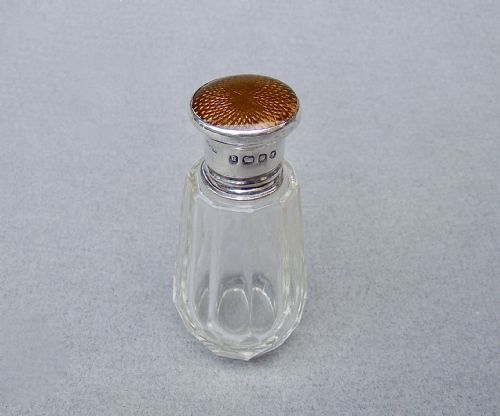
Silver collars, hinged caps, and guilloche enamel details were added by specialist metalworkers in Birmingham and London. Atomiser hardware integrated rubber bulbs and metal tubes into the glass necks.
Art Deco Glass Bottle Retail Price Guide 2026
Typical asking prices for art deco glass bottle among the pieces listed under this phrase on Sellingantiques today, from the lower quarter to the upper quarter. They describe what is for sale here now, not the wider market.
Materials recorded across the inventory include sterling silver, cut glass, frosted glass, enamel, chrome, crystal, and fabric.
What Varies in Quality
Quality rests in the weight of the crystal, the crispness of the wheel-cut facets, and the preservation of delicate enamel work. Superior pieces display precise symmetry and harmonious proportions between the glass body and metal mounts.
The integrity of maker signatures, original atomiser hardware, and matching stoppers elevates the standing of individual items. Heavy lead crystal and flawless coloured glass distinguish master workshops from standard commercial output.
Rene Lalique·Karl Palda·Henry Perkins·Hukin and Heath Ltd·Adie Brothers Ltd·Moser
The Art Deco Glass Bottle Glossary
- Atomiser
- A perfume bottle fitted with a spray mechanism and squeeze bulb. This device disperses liquid fragrance in a fine mist.
- Guilloche
- A decorative mechanical engraving technique producing precise, intricate repeating patterns beneath translucent enamel. It appears frequently on silver bottle caps.
- Moulded glass
- Glass shaped by pressing molten material into a metal or wooden matrix. This technique allowed makers to achieve high-relief sculptural motifs.
- Malachite glass
- Pressed glass coloured with green minerals to resemble the banded semi-precious stone. Makers utilised this opaque material for figural scent bottles.
- Latticinio
- A glassworking technique incorporating fine white or coloured glass threads within clear glass. Venetian workshops employed this method for decorative bands.
Art Deco Glass Bottle: Frequently Asked Questions
How do I identify a Czech piece?
Czech examples often feature heavy geometric cutting, vibrant coloured glass such as amber or green, and hand-painted enamel decorations. Many of these originate from workshops in Bohemia dating from around nineteen thirty.
Look for contrasting colour overlays and characteristic metal mounts that distinguish Central European output from French or English designs.
Were all bottles used for perfume?
While the majority function as scent bottles or dressing table atomisers, larger vessels serve as decanters or form part of matching barware and cruet sets. Cologne bottles and vanity sets share the same period aesthetic.
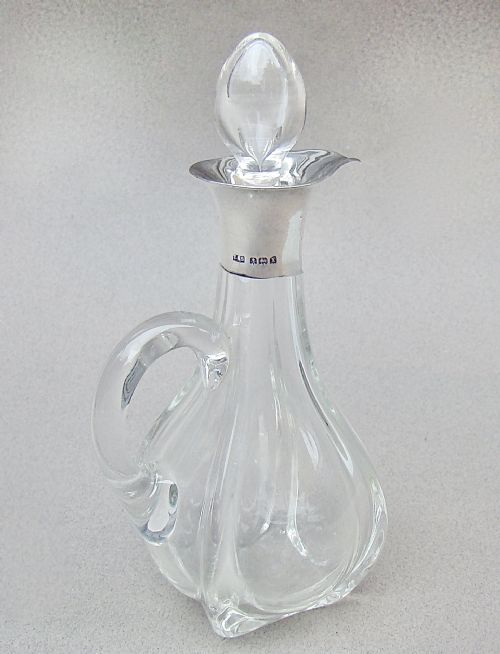
Function dictated the scale and hardware, with bar decanters omitting spray mechanisms in favour of fitted glass stoppers and silver mounts.
What metals accompany the glass?
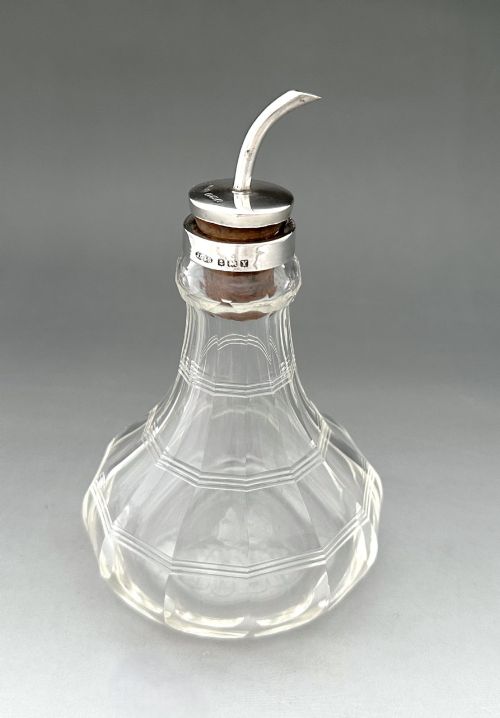
Sterling silver, silver gilt, and chrome frequently form the collars, caps, and stands of these pieces. Birmingham and London silversmiths added hallmarked mounts to secure the glass necks.
Enamel, tortoiseshell, and mother-of-pearl inlays frequently enhance the metal components, particularly on dressing table accessories from the nineteen twenties.
How should I clean my bottle?
Clean glass bodies gently with warm water and mild soap, avoiding harsh abrasives that might damage applied enamel or acid-etched surfaces. Metal mounts require careful polishing to preserve hallmarked silver and guilloche patterns.
Keep moisture away from vintage atomiser bulbs and interior cork seals to maintain the structural integrity of the hardware.