


Art Deco Geometric Pin
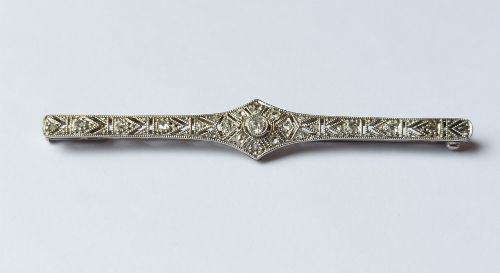
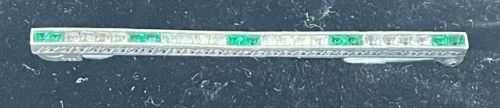
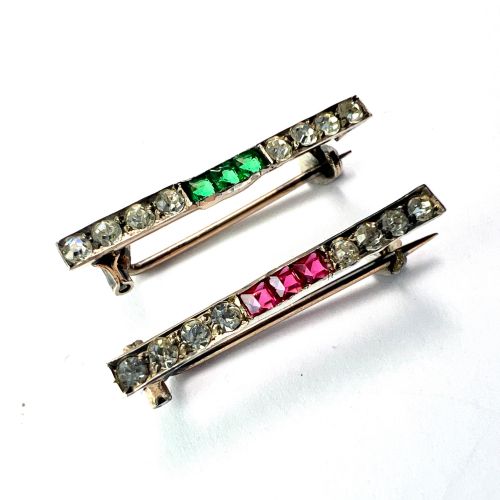
An art deco geometric pin delivers the sharp, clean lines and architectural motifs that define the era.
Art Deco Geometric Pin
An art deco geometric pin embodies the symmetrical shapes and linear designs typical of the 1920s and 1930s, though pieces span from the 1890s through to the mid-century. The most common forms on this page are brooches and bar brooches, alongside fob watches and occasionally ashtrays.
The aesthetic relies on triangles, rectangles, and diagonal arrangements that echo industrial modernity and architectural trends. Collectors seek these items for their distinct period character and precise metalwork.
Materials and construction
Makers utilised precious metals such as platinum, 18ct gold, and silver, often combining them to mount stones securely. Diamonds, onyx, and glass feature prominently alongside paste and paste glass for accessible brilliance.
Gemstones receive old cut treatments and flush or channel settings that emphasise the rigid geometry of the frame. Fabrication relies on hand-assembly, soldering, and stone-setting techniques characteristic of early twentieth-century workshop practice.
Someone decided that smoking accessories needed strict geometry, resulting in solid silver art deco ashtrays.
Assessing quality in geometric pins
The distinction between tiers rests on the calibre of the stones and the precision of the metalwork. Higher quality pieces display well-matched diamonds and cleanly cut onyx panels integrated seamlessly into the platinum or gold chassis.
Execution of the geometric motif dictates the overall success of the piece. Crisp angles, secure prongs, and balanced proportions separate finer atelier items from standard commercial production.
John Grinsell & Sons·Jakob Bengel·Mappin & Webb
The Art Deco Geometric Pin Glossary
- Bar brooch
- A brooch featuring a narrow horizontal metal bar, often set with stones along its length. This form provides a slender profile suited to lapels.
- Old cut
- A diamond cutting style predecessor to the modern brilliant, featuring a smaller table and larger culet. This cut produces distinctive light refraction under low-level illumination.
- Paste
- Hand-cut glass used to imitate gemstones. It offers high clarity and was widely utilised in period jewellery.
- Platinum
- A dense, durable white metal favoured for fine jewellery during the period because it holds delicate settings securely without adding bulk.
Art Deco Geometric Pin: Frequently Asked Questions
What materials make up an art deco geometric pin?
Pieces typically combine precious metals like platinum, 18ct gold, and silver with diamonds, onyx, and glass. Paste and paste glass also appear as alternatives to precious gemstones.
Settings often mix white metals to enhance the brilliance of the stones while maintaining a strict linear framework.
How do I care for my pin?
Store the item in a dedicated box to prevent scratches to softer materials like paste or glass. Avoid chemical cleaners that might affect the integrity of the metal or loosen stone settings.
Gentle cleaning with a soft brush and warm water suffices for most platinum and diamond examples.
Were these pins worn daily?
Owners fastened them to lapels, hats, and dresses as primary decorative accessories during the interwar years. Their robust metal construction suited regular social use.
Modern wearers continue to utilise them on coats, scarves, and formal wear.
How are periods identified?
Dating relies on hallmarks, metal choices, and stone-cut characteristics typical of specific decades. Platinum dominance and intricate piercing often point to the nineteen-twenties.
Broader geometric forms and modernist influences align with slightly later 1930s production.