


Art Deco Enamel Pendant
An art deco enamel pendant brings brilliant colour and geometric line to the neck, prized for its miniature scale and sharp period design.
Art Deco Enamel Pendant
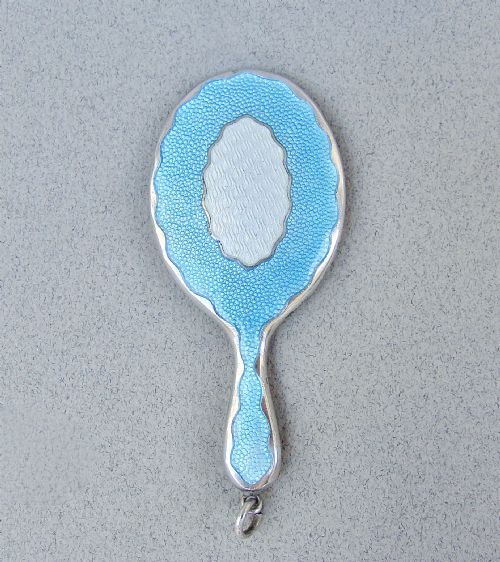
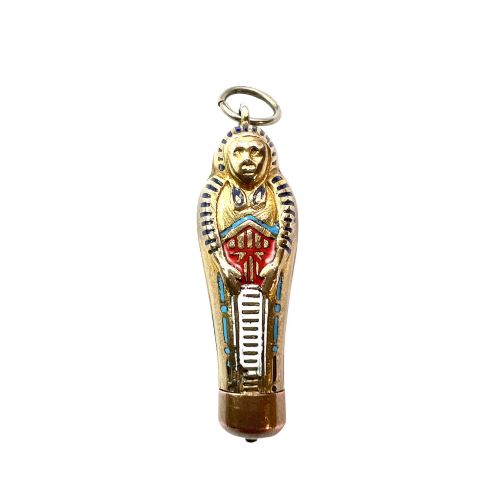
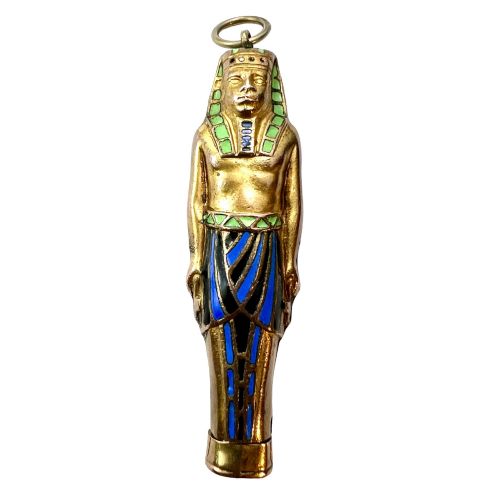
Buyers will encounter items ranging from silver and guilloche enamel compacts and purses adapted for wear to gold bird and dice charms. The common thread is the fusion of metalwork with vibrant coloured enamel, spanning British silver and continental gold pieces.
How they were made
Makers fused vitreous enamel onto surfaces of sterling silver, 9ct gold, 18ct gold, and gilt metal, often employing intricate guilloche engine-turning beneath translucent layers to catch the light. This technique required precise firing to bond powdered glass to the metal base without scorching or bubbling.
Many items incorporate hinged components, tiny propelling pencils, or hand-painted details requiring steady craftsmanship. Silver plating and chrome also appear alongside solid precious metals, reflecting the varied manufacturing budgets of the period.
What varies in quality
The distinction between standard production and superior work lies in the crispness of the enamel and the precision of the metal chassis. Finer examples display flawless glass surfaces free from hairline fractures, paired with deeply cut engine-turning that creates a rich moire effect beneath the translucent colour.
Makers' marks and Birmingham assay office hallmarks elevate the standing of British silver pieces, while French 18K gold charms demonstrate exceptional miniature sculptural detail. Pieces retaining their original gilding and tight mechanical hinges sit firmly at the upper end of the scale.
Henry Williamson·Henry Matthews·Henry Perkins and Sons·Charles Horner
The Art Deco Enamel Pendant Glossary
- Guilloche enamel
- A decorative technique where a mechanical lathe cuts a precise repetitive pattern into metal before transparent enamel is applied over the top. This allows light to reflect through the colour in geometric waves.
- Vitreous enamel
- A material made by fusing powdered glass to a substrate by firing, usually between 750 and 850 degrees Celsius. The resulting compound is a durable, smooth glass coating.
- Egyptian Revival
- A style of decoration that drew heavily on motifs from ancient Egypt, surging in popularity after the discovery of Tutankhamun's tomb in 1922. It frequently utilised pharaohs and sarcophagi forms.
- Propelling pencil
- A pencil featuring a mechanical mechanism that advances a lead core from a protective metal casing. Miniature versions frequently served as functional fob pendants during the period.
- Charm pendant
- A small decorative ornament suspended from a loop or bail, often designed with moving parts or symbolic meaning. These pieces were worn clustered on bracelets or singly on necklaces.
Art Deco Enamel Pendant: Frequently Asked Questions
What is an art deco enamel pendant?
An art deco enamel pendant is a small wearable ornament from the interwar decades that combines precious metals with fired glass enamelling. They often take geometric, figurative, or novelty forms influenced by modernist design.
These pieces were produced across Britain and continental Europe, ranging from simple silver charms to intricate gold vanity items.
How do I date an art deco enamel pendant?
Dating relies heavily on hallmarks stamped into the metal, maker signatures, and stylistic cues such as Egyptian Revival motifs or modernist geometry. Pieces from this category typically originate between 1920 and 1940.
Assay office marks on British silver can pinpoint the exact year of manufacture down to the single digit.
Are these pendants meant to be worn daily?
While sturdy enough for occasional wear, the vitreous enamel surfaces require care to prevent sharp impacts against hard objects. Glass enamels can chip or crack if dropped or heavily knocked.
Keeping them on appropriate chains and storing them separately from harder jewellery helps preserve the fragile glass work.
What materials were used in these pendants?
Makers utilised sterling silver, 9ct gold, 18K yellow gold, gilt metal, and chrome as structural bases for coloured glass enamels. China inserts and glass components also appear in select designs.
Precious metal marks help verify the material quality of the chassis supporting the enamel work.