



Art Deco Drawer Table
An art deco drawer table brings architectural geometry and striking timber grain into a room, offering practical storage disguised in clean twentieth-century lines.
Art Deco Drawer Table
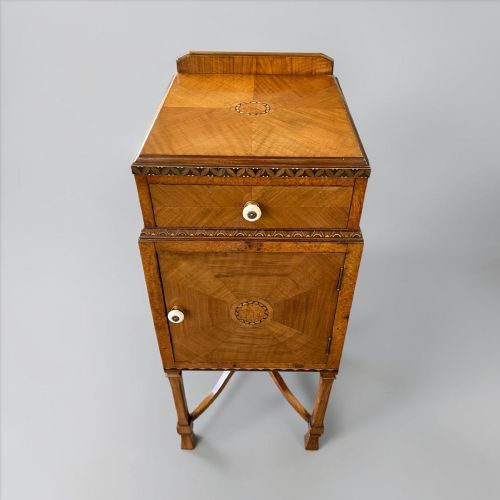
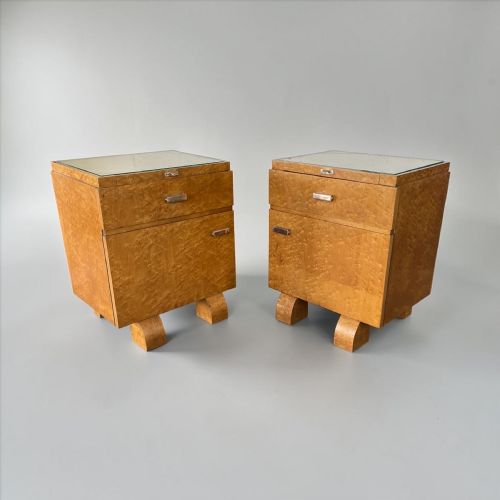
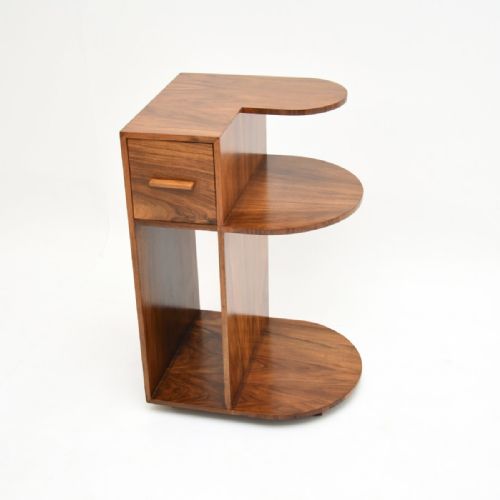
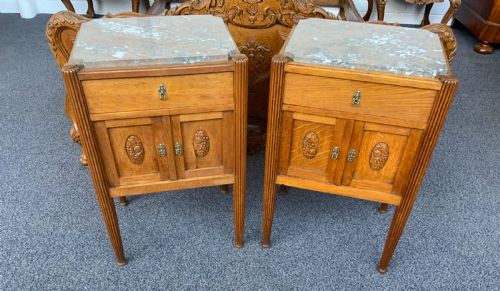
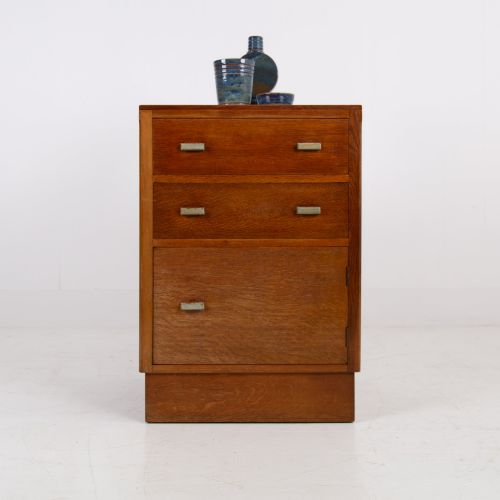
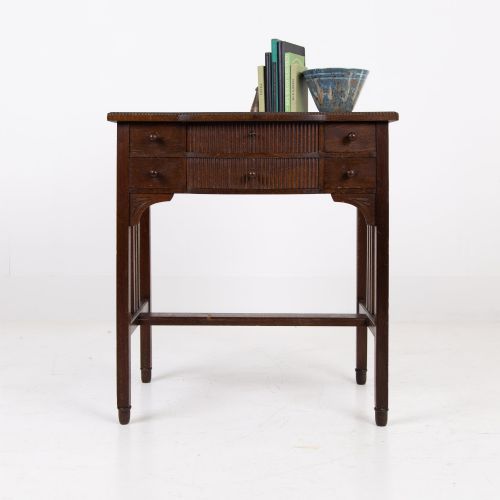
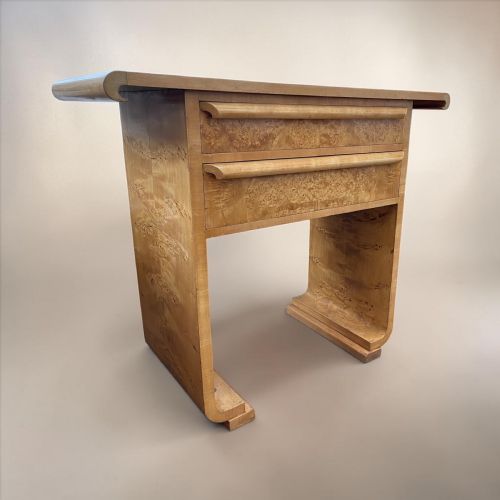
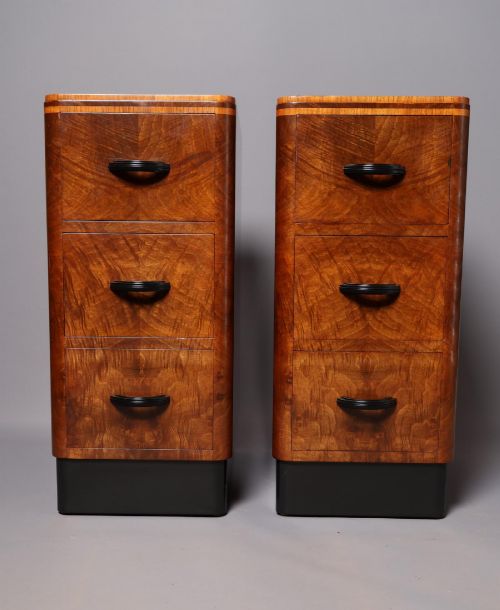
An art deco drawer table combines the linear clarity of the interwar period with functional storage, appearing most frequently as bedside cabinets, side tables, or compact chests of drawers. These pieces date predominantly from the nineteen-thirties and nineteen-twenties, reflecting the widespread embrace of modernist design across domestic furniture.
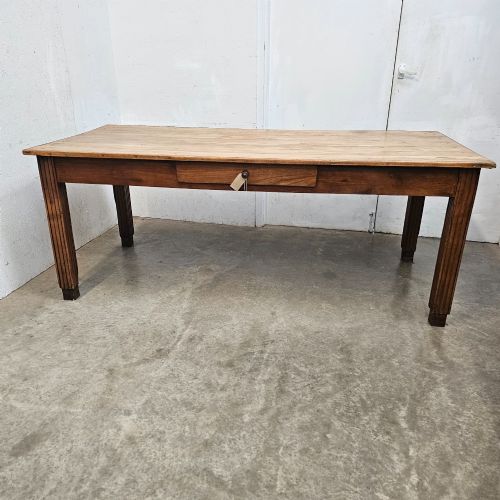
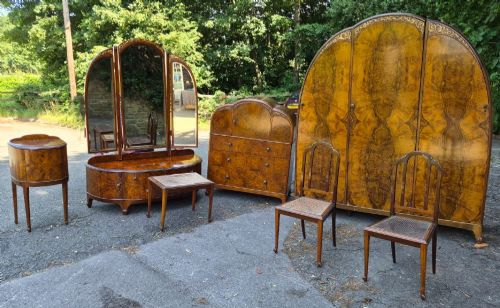
The selection ranges from small lamp tables and bedside chests to larger dining tables, desks, and console serving tables. Walnut and oak dominate the forms, often enriched with figured veneers or paired with contrasting materials.
English and French examples appear alongside one another, showing how different makers interpreted the style through local timbers and regional aesthetic preferences.
How they were made
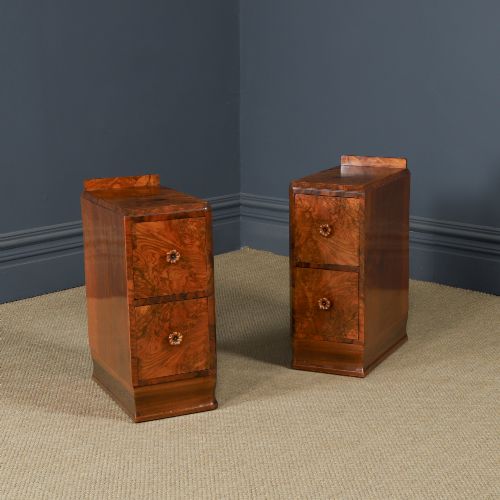
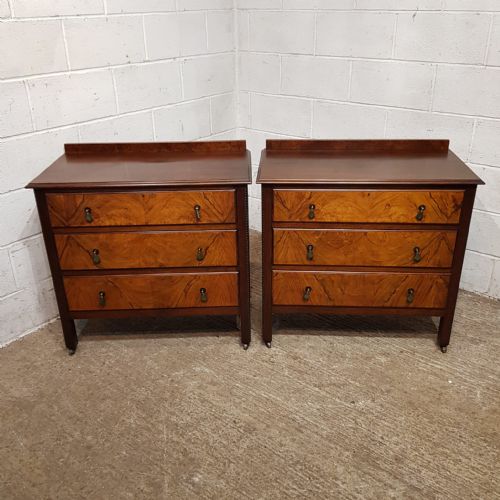
Cabinet makers utilised choice hardwoods such as walnut, burr walnut, oak, satinwood, and fruitwood, frequently laying decorative veneers over sturdy carcases to display dramatic natural grain patterns. Marquetry details and contrasting edgings highlight the geometric precision demanded by the style.
The listings span three distinct decades, with the vast majority originating from the nineteen-thirties alongside examples from the twenties and forties.
What varies in quality
The distinction between standard production and exceptional work rests on the selection and matching of timber veneers, particularly figured and burr walnut. Superior pieces display continuous grain patterns across drawer fronts and harmonious borders.
Construction methods and hardware integration also set pieces apart, from simple utility builds to fully fitted bedroom suites bearing makers' labels and thoughtful internal configuration.
Gomme·Frank Taylor and Co·Fortnum and Mason·Maurice Adams·The Bowman Brothers·B Cohen and Sons
The Art Deco Drawer Table Glossary
- Burr walnut
- A figured timber obtained from the wart-like growths on walnut trees, prized for its swirling, highly decorative grain patterns. Makers applied it as veneer to prominent surfaces like drawer fronts and tabletops.
- Art Deco Modernist
- A strand of the twentieth-century design movement that stripped away traditional ornamentation in favour of stark geometric forms and clean industrial lines. Pieces in this style emphasise utility and unadorned surfaces.
- Bedside cabinet
- A small enclosed storage item fitted with a drawer and a cupboard door, designed to sit beside a bed. These often mirror the finish of larger bedroom furniture suites.
- Console table
- A wall-mounted or freestanding table designed for placement against a wall, frequently used for serving or display in hallways and living rooms.
- Serpentine
- A curved contour that dips inward centrally and arches outward at the sides, creating a flowing, wave-like shape on cabinet fronts and tabletops.
Art Deco Drawer Table: Frequently Asked Questions
How do I date an art deco table?
Most pieces date from the interwar decades, primarily the nineteen-twenties and nineteen-thirties, though production extended into the nineteen-forties. Examining construction methods, handles, and timber choices helps establish the era.
Maker labels and stamps provide definitive proof of origin, while revival styles like Georgian or Queen Anne elements indicate historical cross-currents.
What rooms suit an art deco drawer table?
These tables adapt easily to bedrooms as bedside chests, or to living areas as side and lamp tables. Their compact footprints and built-in drawers offer practical storage without dominating a space.
Larger console and dining tables anchor hallways or dining rooms, bringing period character and surface space to modern interiors.
How do I care for walnut veneer?
Protect polished walnut surfaces from direct sunlight to prevent fading and keep timber veneers stable. Dust regularly with a dry cloth and avoid placing hot items directly on the wood.
Occasional application of appropriate wax maintains the lustre of the finish without building up heavy residues.
What is the difference between French and English pieces?
French examples often utilise fruitwoods or exotic timbers and lean towards dramatic, fluid shapes. English pieces tend to favour walnut and oak with structured, architectural lines.
Both traditions embrace the geometric spirit of the era but express it through distinct regional preferences in timber and hardware.