
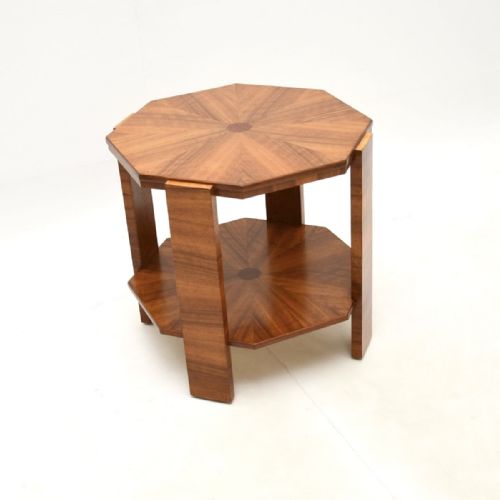
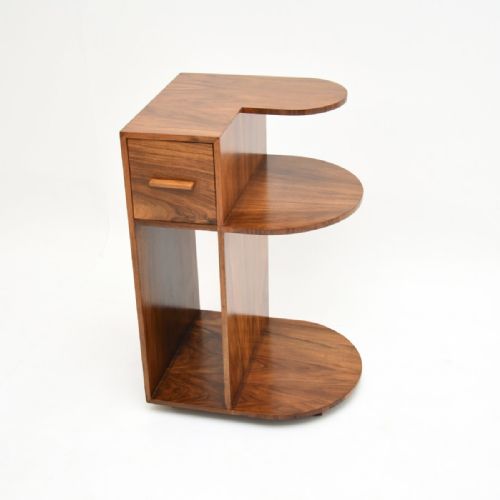
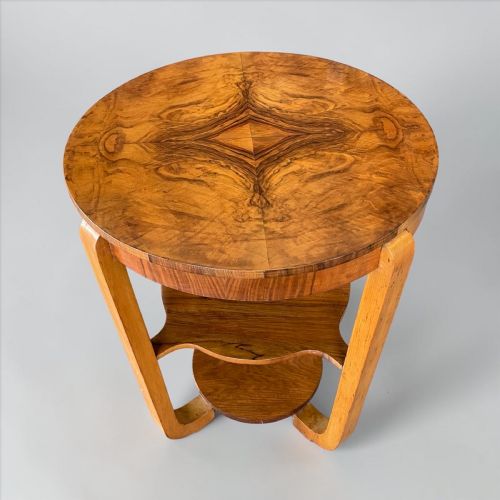
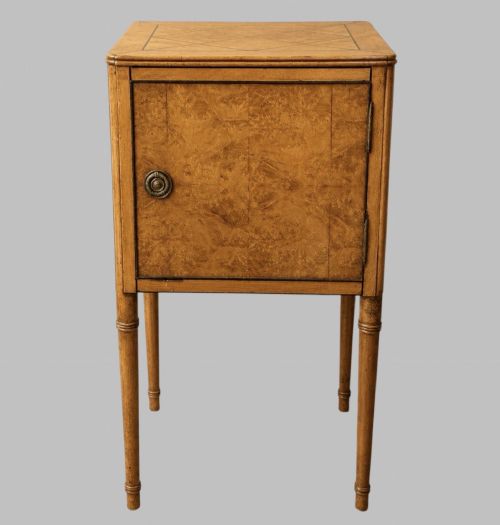



1930s Walnut End Table
A 1930s walnut end table brings striking geometric grain and compact practicality to a room.
1930s Walnut End Table
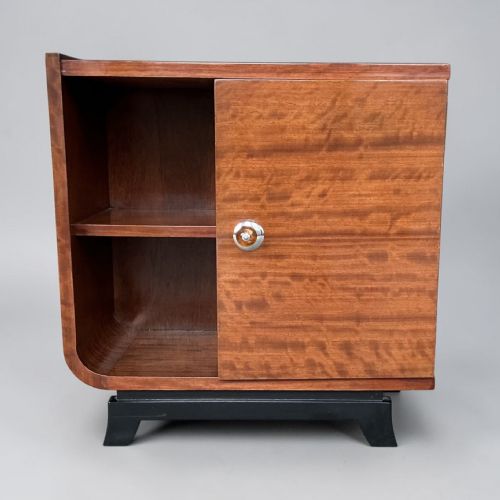
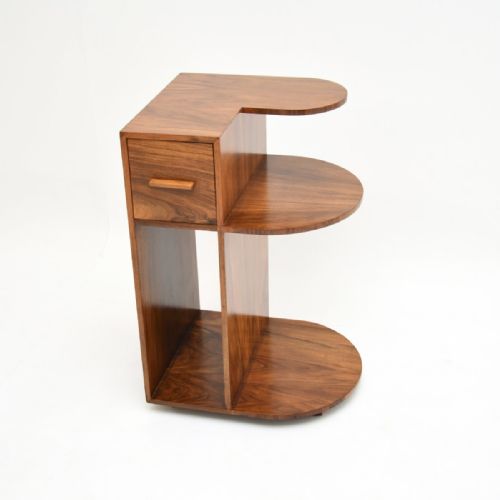
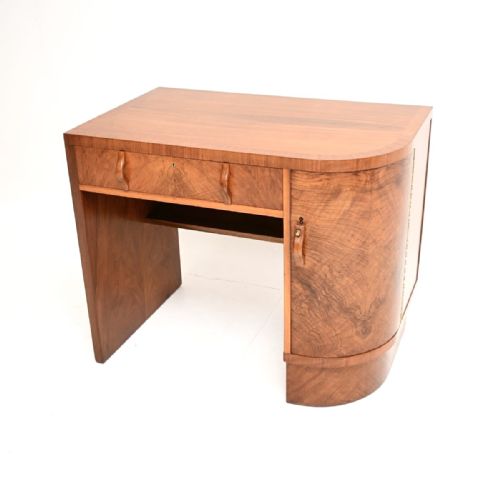
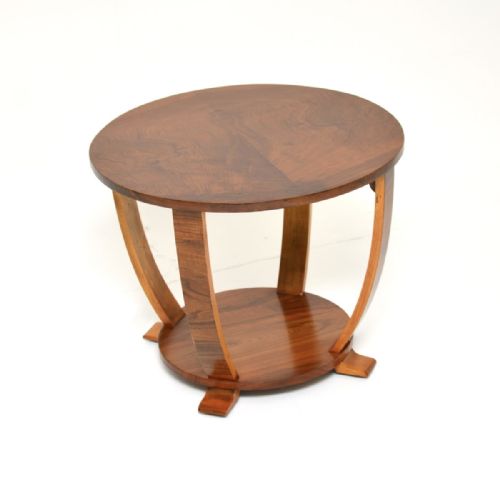
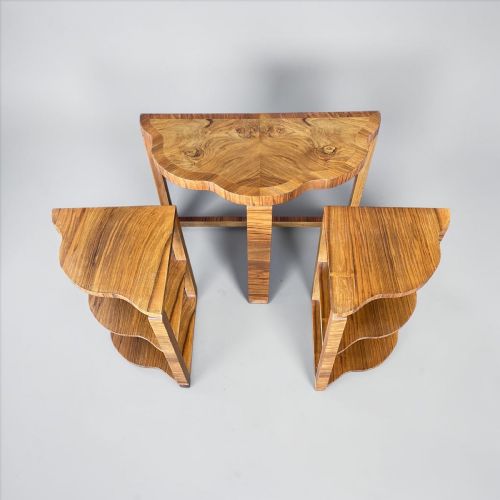
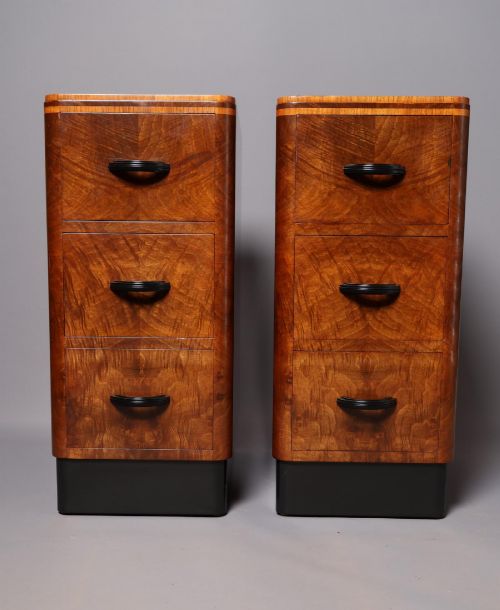
When you search for a 1930s walnut end table, you encounter compact side furniture designed for the interwar home, predominantly shaped by the Art Deco style. These pieces serve as functional surface areas beside sofas or beds, taking the form of occasional tables, coffee tables, bedside cabinets, and multi-tiered nests.
The pieces appearing on this page span the 1920s to the 1940s, originating from English and French workshops. You are most likely to meet circular, octagonal, or rectangular occasional tables featuring figured walnut grain and occasional tiered shelving.
Materials and construction
Cabinet makers utilised solid woods and applied walnut, burr walnut, and wood veneers across frames to showcase striking natural grain patterns. Contrasting details in maple, ebony, ebonised wood, chrome, and brass frequently accent the primary timber.
Construction techniques in these decades relied on stability and surface display, sometimes incorporating glass mirror tops, casters for mobility, or illuminated elements within tiered modern structures.
Some tables include illuminated tops, proving that interwar designers liked their evening reading light built directly into the furniture.
Assessing quality and craftsmanship
The distinction between standard production and top-tier pieces rests upon the selection of veneer and the precision of the joinery. Figured and burr walnut selections display deliberate grain matching across table tops, creating symmetrical visual patterns that simpler boards lack.
Superior execution shows in the integration of secondary materials such as chrome plating, solid ebony stringing, or maple borders. Maker attribution and refined proportions separate standard occasional items from high-end console and tiered designs.
Walter Carter Harrods·Gilbert Rohde·Maurice Adams·Hille
The 1930s Walnut End Table Glossary
- Burr walnut
- A prized timber harvested from tree growths, yielding highly swirling and mottled grain patterns. It is typically sliced into thin veneers for decorative table tops.
- Art Deco
- A design movement spanning the 1920s and 1930s characterised by clean geometric lines, streamlined forms, and stylised motifs. This aesthetic defines the majority of the occasional tables listed here.
- Veneer
- A thin layer of superior wood adhered to a base wood core to provide an ornamental surface without warping. Figured walnut veneer is typical for these side tables.
- Occasional table
- A small, movable table designed for intermittent use in a sitting room or bedroom. They appear here in multi-tier, tulip, and nest configurations.
1930s Walnut End Table: Frequently Asked Questions
How do I identify a 1930s table?
Look for characteristic Art Deco geometric forms combined with figured walnut veneers and contrasting details in ebony, chrome, or brass. The construction methods and proportions align with interwar design standards.
examine the underside and interior woods for period-appropriate materials and construction signatures.
Where should I place an end table?
These compact tables fit readily beside sofas, armchairs, or beds as functional surfaces for lamps and small objects. Multi-tiered and nest configurations work well where surface area needs to adapt.
Ensure the height of the table matches the arm or surface level of your seating.
Are these tables solid walnut?
Most examples utilise walnut veneers over stable secondary wood cores to display decorative grain patterns effectively without excessive weight. Solid timbers appear alongside veneers in framing elements.
Examining the edges and grain continuity reveals how the wood has been applied.
What maintenance do walnut tables need?
Protect the polished wooden surfaces from direct moisture and heat by using coasters and mats. Regular dusting with a soft cloth maintains the finish of the walnut veneer.
Avoid abrasive cleaners that might degrade the original polish or timber grain.