

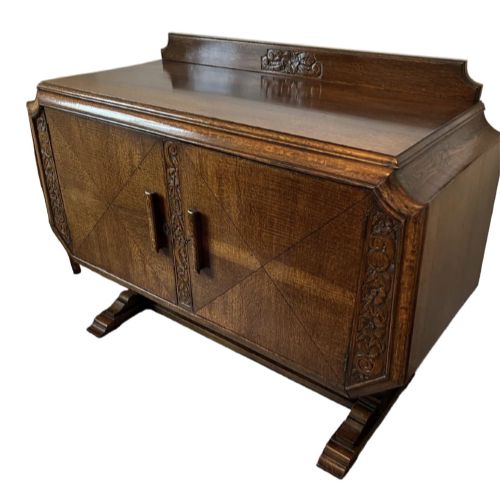
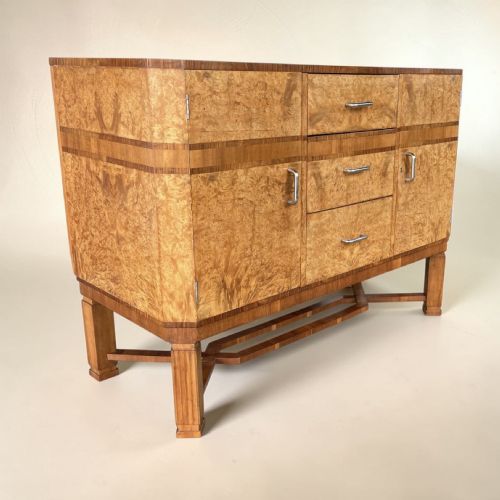

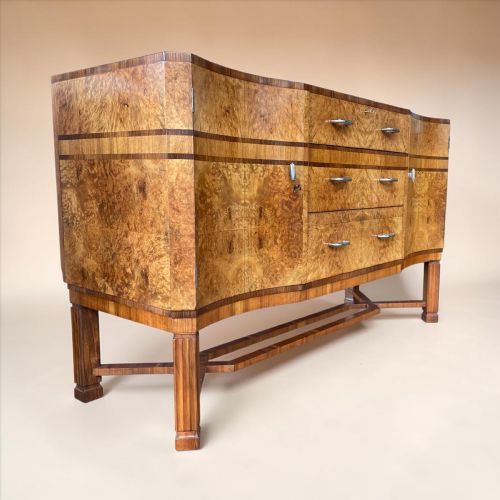
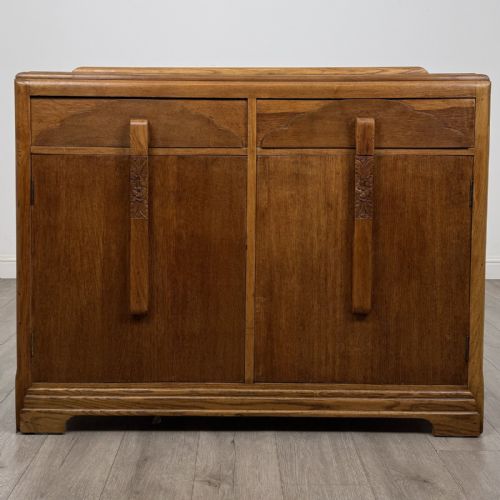
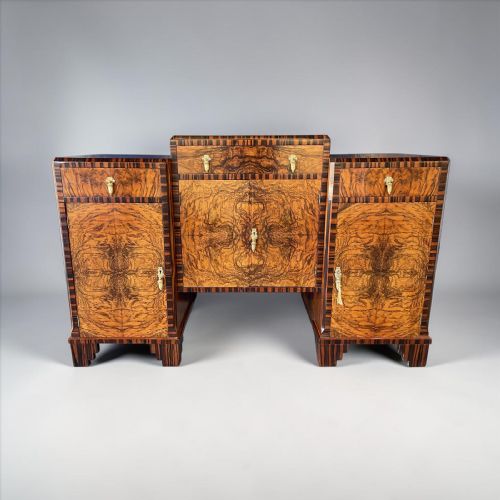
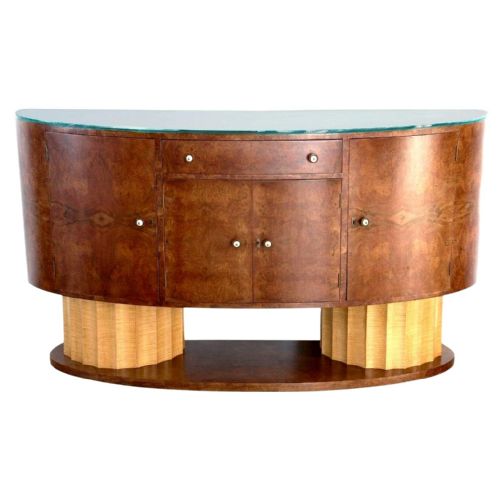
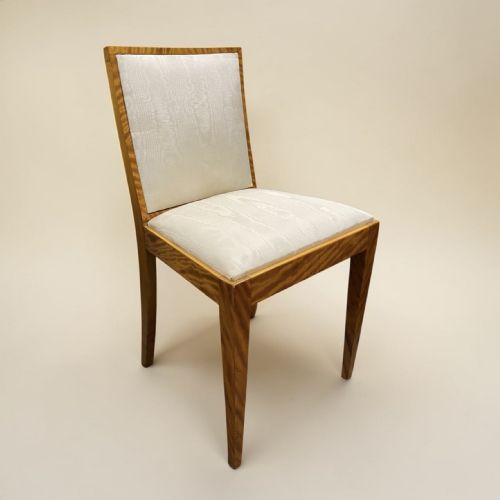


Art Deco Dining Cabinet
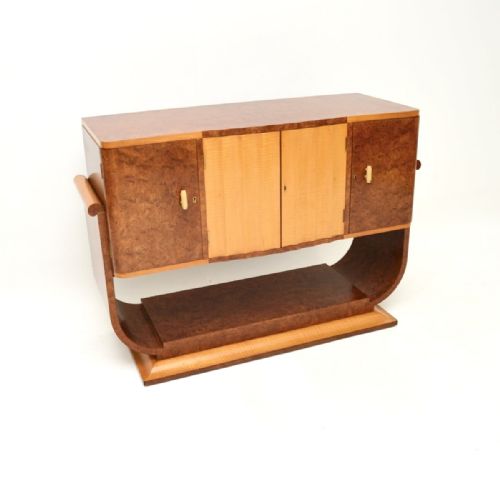
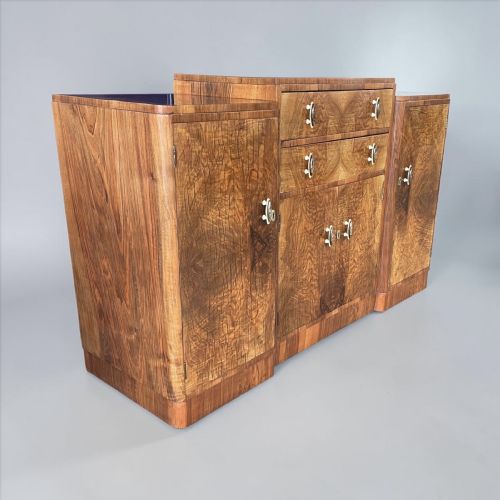
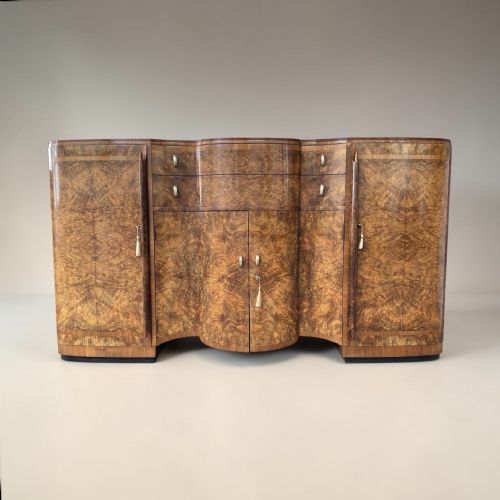
An art deco dining cabinet brings serious architectural presence to a room, offering bold geometric lines and striking figured woods.
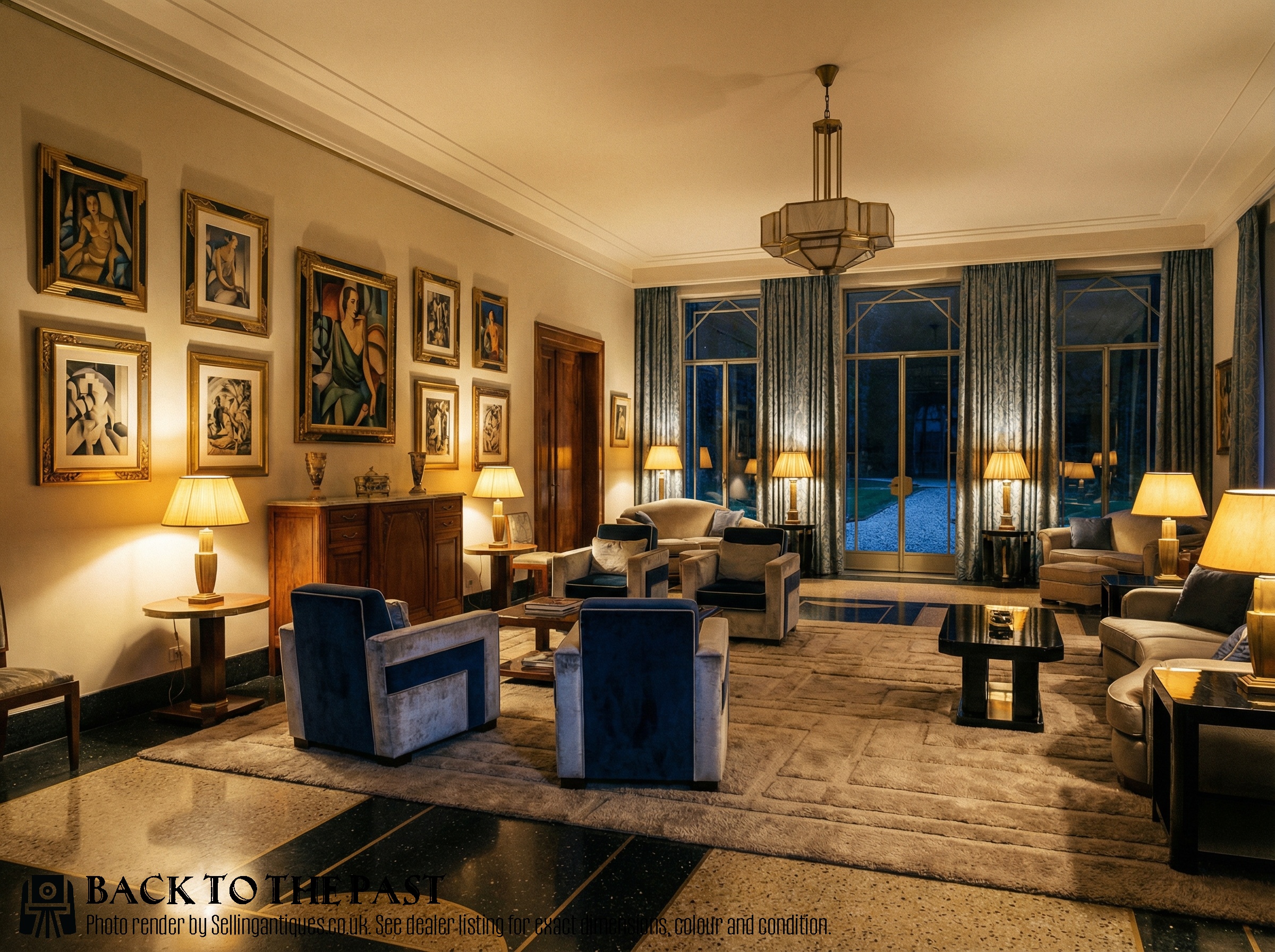
Art Deco Dining Cabinet
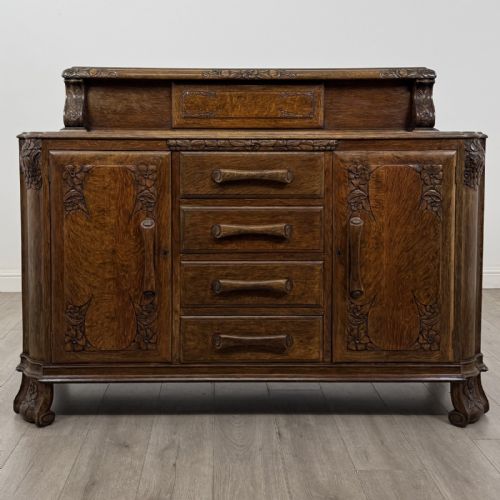
An art deco dining cabinet most commonly takes the form of a substantial sideboard, buffet, or credenza designed for hosting spaces. These pieces emerge predominantly from the nineteen twenties and nineteen thirties, anchoring the dining room with generous proportions and fitted storage.
Beyond the standard sideboard, the selection includes specialised cocktail cabinets and fitted cutlery canteens created to match the dining aesthetic. The typical piece encountered here originates from British and continental workshops, reflecting the international spread of the style.
How they were made
Cabinet makers utilised choice timbers such as burr walnut, plain walnut, oak, and mahogany as foundations, often applying decorative veneers to large curved surfaces. Sycamore and maple frequently appear as contrasting interior elements or stringing details.
Metal components played a crucial role in the construction, incorporating brass and occasional bakelite for handles, hinges, and decorative mounts. Glass doors and mirrored interior panels completed the manufacturing vocabulary of these storage pieces.
Art Deco Dining Cabinet Retail Price Guide 2026
Typical asking prices for art deco dining cabinet among the pieces listed under this phrase on Sellingantiques today, from the lower quarter to the upper quarter. They describe what is for sale here now, not the wider market.
Listings feature extensive use of burr walnut, walnut veneer, and oak, alongside functional brass and bakelite hardware from the interwar period.
What varies in quality
The choice of veneer grain arrangement dictates the visual success of the piece, with book-matched burr walnut creating symmetrical patterns across wide drawer fronts and doors. Master workshops selected timber with intense figuring, whereas standard production used plainer cuts.
Construction methods distinguish standard commercial output from bespoke commissions, particularly in the complexity of curved fronts and the precision of internal drawer joinery. The weight and finish of the brass hardware further separate high workshop output from simpler items.
Maurice Adams·Gomme·Hille·Bath Cabinet Makers·Heals of London·Harry and Lou Epstein·Hamptons of Pall Mall London
The Art Deco Dining Cabinet Glossary
- Burr walnut
- A prized timber harvested from tree growths, yielding intricate, swirling grain patterns that define high-end cabinet fronts. It requires expert application to prevent splitting across large surfaces.
- Veneer
- A thin slice of decorative wood applied to a stable secondary timber carcass. This technique allowed makers to display dramatic grain patterns without using solid luxury wood.
- Sideboard
- A low storage unit placed in a dining room for serving food and housing tableware. During this period, they often featured central cupboards flanked by deep curved drawers.
- Cocktail cabinet
- A dedicated drinks storage unit featuring mirrored interiors, glass shelves, and pull-down mixing slides. These pieces formed an essential part of twentieth-century entertaining furniture.
- Canteen
- A fitted wooden chest or cabinet designed specifically to hold a complete set of cutlery. They range from standalone tabletop boxes to integrated cabinet drawers.
Art Deco Dining Cabinet: Frequently Asked Questions
What is an art deco dining cabinet?
An art deco dining cabinet is a large storage piece, usually a sideboard or cocktail cabinet, built during the interwar period with strong geometric styling.
These items were designed to serve dining rooms, offering substantial cupboards and drawers for tableware and hospitality.
How do I identify a nineteen thirties piece?
Authentication relies on examining the construction methods, timber types, and characteristic hardware designs typical of the era.
Pieces from this period frequently combine burr walnut veneers with brass accents and stepped architectural outlines.
Where were these cabinets made?
Production centred on major British furniture workshops, alongside notable contributions from French and Italian makers.
London firms and continental studios supplied the dominant designs found in modern collections.
How should I care for burr walnut?
Burr walnut requires protection from direct sunlight and excessive humidity changes to prevent the veneer from drying or cracking.
Regular dusting with a soft, dry cloth maintains the polished finish without building up heavy wax residues.