

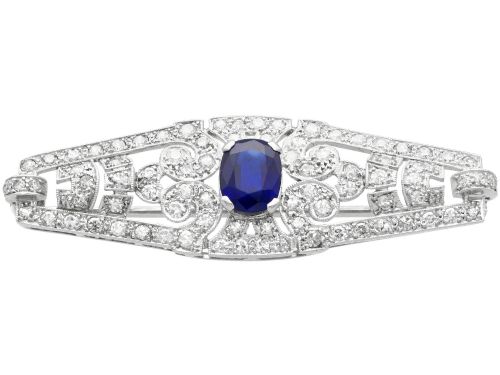

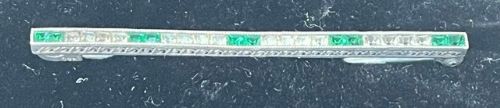


Art Deco Diamond Bar Pin
An art deco diamond bar pin brings geometric clarity and brilliant stones to a lapel or collar.
Art Deco Diamond Bar Pin
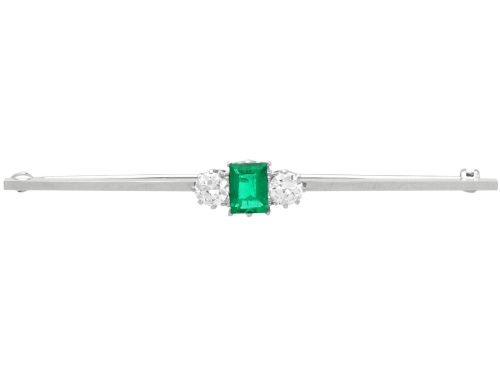
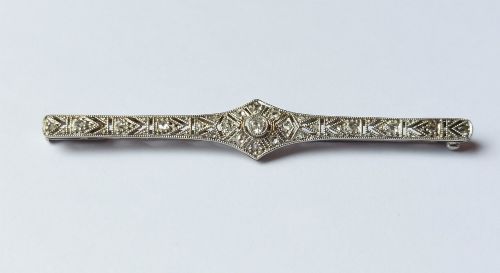
An art deco diamond bar pin is a linear brooch designed to sit flat and secure against fine fabrics. The pieces on this page span the 1890s through to the 1960s, though the defining pieces emerge straight from the 1920s and 1930s.
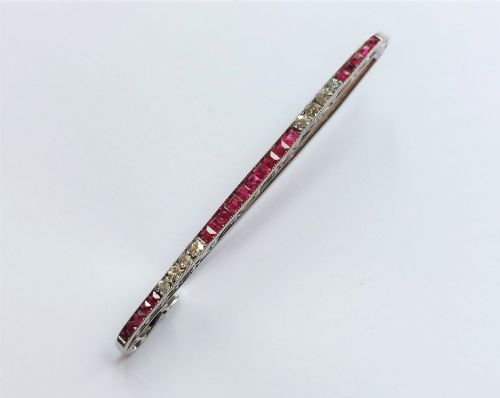
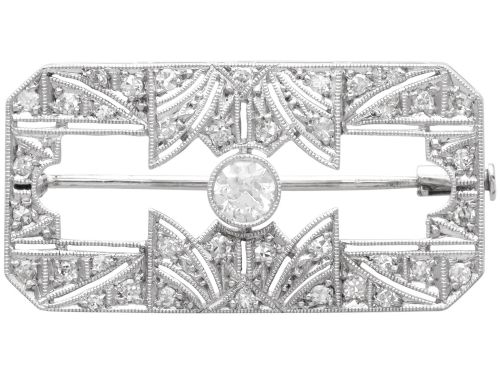
Most examples take the form of an elongated horizontal mount set with sparkling diamonds, often accompanied by calibrated rubies, sapphires, pink pearls, or black onyx. These jewels capture the clean lines and symmetrical motifs characteristic of the period.
How they were made
Makers utilised platinum alongside 18ct gold, 18kt white gold, yellow gold, and silver to build these slender frames. Platinum offered the strength needed to hold delicate stone settings without adding heavy bulk.
Art Deco Diamond Bar Pin Retail Price Guide 2026
Typical asking prices for art deco diamond bar pin among the pieces listed under this phrase on Sellingantiques today, from the lower quarter to the upper quarter. They describe what is for sale here now, not the wider market.
Listings feature platinum, yellow gold, white gold, and silver paired with diamonds, rubies, sapphires, onyx, and pink pearls across the 1920s and 1930s.
What varies in quality
The sophistication of the metalwork separates a standard pin from an exceptional one, particularly where pierced openwork and millegrain edging define the design. Subtlety in the transition from the central stone to the outer edges dictates the visual balance.
The choice of supporting materials also creates distinction, as genuine sapphires, rubies, and pink pearls alter the character compared to simpler diamond and onyx configurations or paste simulations.
The Art Deco Diamond Bar Pin Glossary
- Bar pin
- A narrow, horizontal brooch designed to fasten clothing with a pin mechanism running the length of the back. They were particularly popular during the early decades of the twentieth century.
- Platinum
- A dense, durable white metal prized in jewellery manufacture for its strength in secure stone settings. It allows for ultra-fine prongs and delicate galleries.
- Old cut
- A diamond cut predating modern brilliant faceting, characterised by a smaller table, higher crown, and open culet. These stones produce a distinctive softer candlelight glow.
- Millegrain
- A decorative technique featuring a row of tiny raised metal beads along the edges of a setting. It softens harsh lines and adds texture to platinum and gold mounts.
- Paste
- Hand-cut lead glass used to simulate gemstones in historical jewellery. Quality paste displays sharp facets and careful foil backs.
Art Deco Diamond Bar Pin: Frequently Asked Questions
How do I wear a bar pin safely?
Secure the pin through a sturdy weave of fabric such as a lapel, heavy knit, or scarf rather than delicate silk. Ensure the safety catch or C-clasp is fully engaged before stepping out.
Because these pieces have long histories, checking the hinge and pin tension periodically prevents accidental loss during daily wear.
What periods do these pins come from?
While the dominant style is Art Deco from the 1920s and 1930s, the selection includes pieces reaching back to the late Victorian era and forward to mid-century designs.
Design motifs shifted from organic Edwardian curves into the sharp geometric symmetry that defines the 1920s and 1930s.
Are all the stones real diamonds?
Many listings feature genuine diamonds alongside platinum and gold, paired with rubies, sapphires, pink pearls, and onyx. Some Continental examples incorporate paste as a faux diamond or faux emerald element.
Checking individual descriptions clarifies whether a piece uses natural gems or historical glass simulations.
Where were these brooches made?
Origin points span the Continent, with specific pieces noted from France and Sweden alongside broader European workshops. Each region brought distinct regional preferences to stone selection and mounting styles.
French makers frequently combined onyx with diamonds in platinum, while Swedish pieces often highlighted coloured sapphires.