

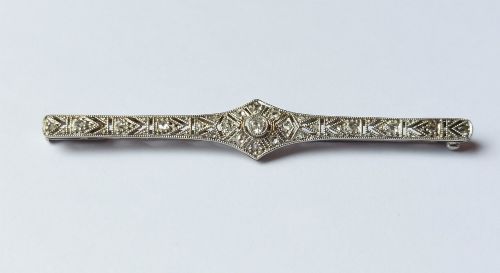
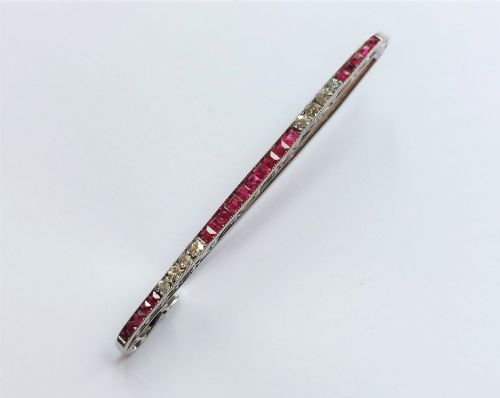


Vintage Diamond Tie Pin
These vintage diamond tie pin and brooch designs catch the light with genuine old-cut stones and precious metals, offering a touch of period elegance for modern lapels.
Vintage Diamond Tie Pin
A vintage diamond tie pin or brooch brings together precious gemstones and fine metals from periods spanning the Victorian era through the mid-twentieth century. Collectors searching this phrase usually encounter bar brooches, stick pins, and jabot pins fashioned with diamonds alongside rubies, pearls, or enamel.
Origins vary across British, French, and international workshops, reflecting the prevailing tastes of their respective decades. Buyers will find that smaller stick pins sit alongside more substantial platinum-topped dress pieces suitable for fastening cravats or lapels.
Materials and Construction
Goldsmiths utilised combinations of platinum, eighteen-carat yellow gold, and eighteen-karat white gold to provide durable settings for the gemstones. Platinum-topping became a favoured technique during the Edwardian and Art Deco periods to maximise the white brilliance surrounding the diamonds.
Stones are typically set by hand, featuring old brilliant cuts, rose cuts, and smaller accent gems secured in channel or millegrain settings. Additional colour and texture often arrive through natural pearls, calibre-cut rubies, onyx, or vitreous enamel.
Vintage Diamond Tie Pin Retail Price Guide 2026
Typical asking prices for vintage diamond tie pin among the pieces listed under this phrase on Sellingantiques today, from the lower quarter to the upper quarter. They describe what is for sale here now, not the wider market.
Listings feature platinum, gold, pearls, and rubies across Victorian, Edwardian, and Art Deco periods.
Evaluating Quality and Craftsmanship
Quality rests in the precision of the metalwork and the integration of the precious stones within the design. Superior examples display crisp millegrain edges, secure stone settings, and balanced proportions that maintain their structural integrity over the decades.
The distinction between standard workshop output and top-tier creation often lies in the pedigree of the retailer or maker, alongside the uniformity and cut quality of the diamonds. Fine retention of original enamel work and undamaged pearls further elevate a piece.
Garrard & Co·Cartier
The Vintage Diamond Tie Pin Glossary
- Bar brooch
- A narrow horizontal pin featuring gemstones mounted along a central bar. These were widely worn across necklines and lapels throughout the late nineteenth and early twentieth centuries.
- Stick pin
- A long pin topped with a decorative ornamental head, originally designed to secure neckties or cravats in place. The pin shaft is typically made of gold or base metal for strength.
- Millegrain
- A decorative jewellery technique involving a border of tiny raised metal beads along the edge of a setting. This softens the metal appearance and frames the stones.
- Jabot pin
- An ornamental pin historically used to fasten the folds of a jabot collar or cravat. They often feature two decorative ends that are visible when pinned through fabric.
Vintage Diamond Tie Pin: Frequently Asked Questions
How do I wear a vintage tie pin today?
These versatile pieces transition easily from formal lapels to securing knitwear, scarves, or modern cravats. Simply ensure the safety catch functions correctly before fastening to thicker fabrics.
For daily wear, a sturdy stick pin anchors well through heavier wool coats or tweed jackets without bending the shaft.
How do I date a diamond brooch?
Dating relies on examining the metal combinations, such as platinum-topped gold pointing to the Edwardian or Art Deco eras. Stone cuts like rose cuts or old mine cuts also indicate nineteenth-century origins.
Maker marks, hallmarks, and specific stylistic motifs like geometric Art Deco lines provide further confirmation of the period.
Are these diamonds natural?
The stones found in these period pieces are natural mined diamonds shaped by historical cutting techniques. Each gem reflects the technology and lapidary skill of its specific manufacturing era.
Examining the stones under magnification reveals the characteristic hand-cut facets typical of antique and vintage jewellery.