


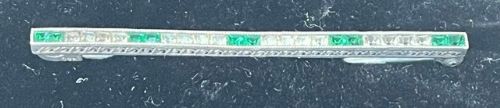


1920s Diamond Bar Pin
A 1920s diamond bar pin brings geometric symmetry and fine metalwork to a lapel, offering an accessible piece of early twentieth-century design.
1920s Diamond Bar Pin
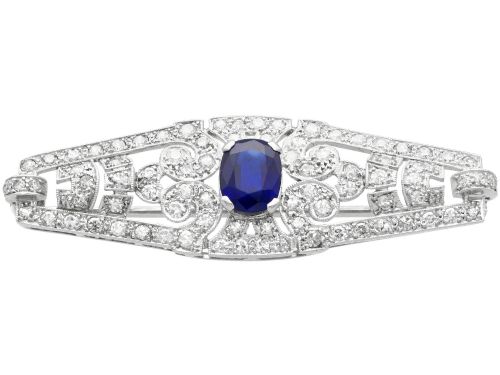
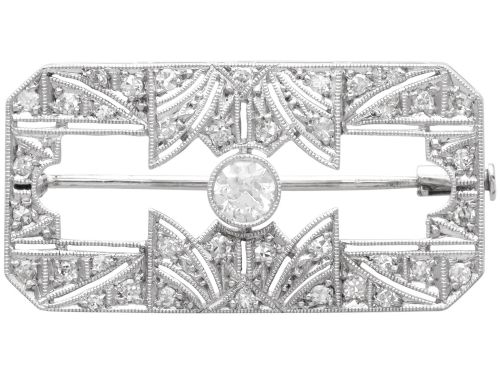
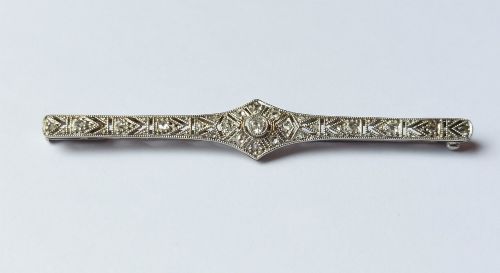
A 1920s diamond bar pin typically takes the form of an elongated horizontal brooch rooted in the geometric vocabulary of the period. The listings here comprise pieces from the Art Deco era alongside transitional examples from the Edwardian years.
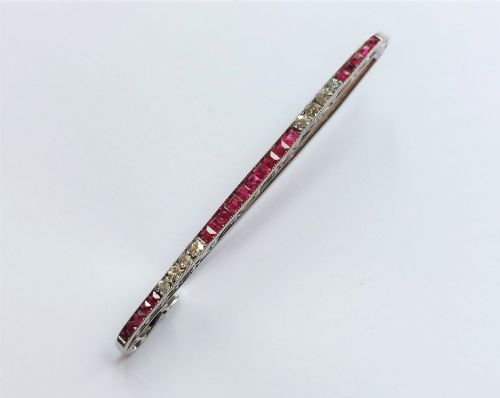
Most items on this page are structured around a central diamond or cluster set within platinum, white gold, or yellow gold mounts. Alongside diamond-only configurations, variations incorporate rubies, pearls, onyx, paste, and emerald elements.
Makers of the period favoured linear formats that sat flat against fabric, often utilising pierced openwork frames. Continental and French origins appear frequently among the surviving pieces, displaying characteristic attention to detail.
How they were made
Platinum and white gold served as the primary metals for mounting diamonds during this era, allowing for secure, delicate settings that minimised visible metal. Yellow gold and silver also supported designs, particularly in continental pieces.
Goldsmiths utilised millgraining and pierced openwork techniques to define edges and create lace-like textures across the surface of the bar. Stones were hand-set in channel, bezel, or pavé arrangements depending on the geometric demands of the motif.
1920s Diamond Bar Pin Retail Price Guide 2026
Typical asking prices for 1920s diamond bar pin among the pieces listed under this phrase on Sellingantiques today, from the lower quarter to the upper quarter. They describe what is for sale here now, not the wider market.
Current listings demonstrate a prevalence of platinum and white gold substrates paired with central diamond configurations.
What varies in quality
Quality in a 1920s diamond bar pin rests upon the precision of the metalwork and the integration of secondary stones such as rubies or pearls. Finer examples maintain crisp milgrain edges and secure, flush stone settings without excess solder.
The choice of base metal alters the character of the piece, with platinum offering greater durability for intricate piercing than softer gold alloys. The quality of the central diamonds and the balance of the overall geometric composition dictate the visual weight of the brooch.
The 1920s Diamond Bar Pin Glossary
- Bar brooch
- A brooch characterised by an elongated horizontal pin frame. They were designed to fasten cravats, collars, or lapels cleanly.
- Art Deco
- A design style spanning the 1920s and 1930s defined by geometric symmetry, clean lines, and stylised motifs. It succeeded the flowing curves of the Edwardian and Art Nouveau periods.
- Millgrain
- A decorative border of tiny raised metal beads along the edge of a setting. This technique softened the transition between metal and stone.
- Paste
- Hand-cut lead glass used as a substitute for gemstones. Period paste pieces often display high brilliance and careful hand-setting.
- Platinum
- A dense, durable white metal favoured in twentieth-century jewellery for holding fine stone settings securely. Its strength permitted delicate openwork structures.
1920s Diamond Bar Pin: Frequently Asked Questions
How do I wear a bar pin?
A bar pin secures easily to coat lapels, heavy knitwear, or structured collars using a traditional pin stem and safety catch. The elongated horizontal shape distributes weight evenly across thicker fabrics.
Ensure the pin stem fastens securely into its catch before wearing to prevent loss. Many collectors also display them mounted on fabric-covered frames when not being worn.
Are these pieces strictly from the 1920s?
The selection spans the Art Deco period with dates clustering around 1920 to 1930, alongside occasional Edwardian crossover pieces. Stylistic markers help distinguish these decades.
Edwardian items tend towards softer floral motifs in platinum and yellow gold, while 1920s examples embrace strict geometric layouts. Hallmarks and regional metal standards further clarify the production period.
What metals were used in these brooches?
Platinum and white gold dominate the settings for diamond-focused pieces from this era, offering a bright background that complemented the stones. Yellow gold and silver also appear, particularly in French and continental designs.
Makers frequently combined platinum tops with gold pin stems and backs to balance strength and flexibility. Examining the reverse of the piece often reveals this dual-metal construction.
Did these brooches always include diamonds?
While diamonds form the primary focus of most listings here, many incorporate coloured gemstones or alternatives like paste, pearls, rubies, and onyx. These additions created contrasting colour blocks characteristic of the era.
Stones were selected to complement the geometric framework rather than overpower it. Combinations of pearls with diamonds reflect lingering Edwardian tastes within early Art Deco production.