
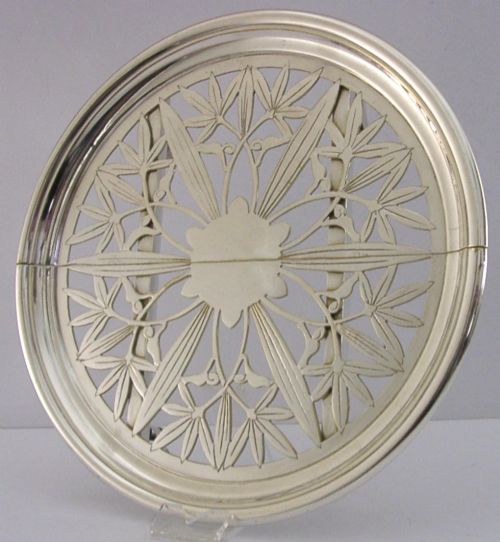


Art Deco Decorative Platter
An art deco decorative platter brings geometric symmetry and striking motifs into a room, combining the distinct modernist energy of the interwar decades.
Art Deco Decorative Platter
An art deco decorative platter encompasses shallow bowls, chargers, salvers, and serving dishes shaped during the 1920s, 1930s, and 1940s. These pieces function as ornamental centerpieces or serving vessels, carrying the characteristic design language of the period.
The selection on this page relies heavily on moulded glass works by French makers alongside earthenware pottery chargers and silver plate serving stands. Glass examples often feature opalescent finishes or sepia staining to highlight intricate raised reliefs of fish, flowers, and figures.
Forms span from large shallow bowls to wide plates and extending metal stands, originating mainly from French and British workshops. Buyers encounter both translucent glassware and high fired pottery displaying distinct pattern work from the height of the style.
How they were made
Moulded glass pieces achieve their depth through specialised pressing techniques into metal forms, allowing complex raised motifs like fish scales or floral patterns to emerge clearly. Makers then apply opalescent effects or sepia stains by hand to catch the light across the surface.
Pottery examples utilise high fired earthenware bodies finished with coloured glazes and tubelined or stamped patterns. Metalwork pieces combine silver plate over a base metal framework, engineered with extending mechanisms or sturdy trays for functional display.
Materials recorded across the inventory include opalescent glass, moulded glass, silver plate, earthenware, and applied sepia stain.
What varies in quality
Quality rests in the crispness of the moulded relief and the depth of the opalescent or sepia finish across the glass surface. Stronger examples show precise detailing in the figurative elements, such as fish or botanical motifs, without softening in the glass texture.
In pottery and metalwork, quality depends on the clarity of the maker stamps, the evenness of the high fired glaze, and the structural integrity of silver plate stands. Superior pieces maintain clean lines and well preserved finishes that reflect their original studio production.
Rene Lalique·Christofle·Sabino·Charlotte Rhead Bursley Ware
The Art Deco Decorative Platter Glossary
- Opalescent Glass
- Glass that displays a milky, iridescent quality shifting between blue and amber tones when light strikes the surface. This effect is achieved through chemical additives during the melting process.
- Sepia Stain
- A dark brown pigment applied by hand into the recessed areas of moulded glass to accentuate the carved details and provide visual contrast. It is common in works from the early twentieth century.
- Charger
- A large decorative plate or platter used traditionally for presentation rather than dining. These pieces often feature prominent artistic motifs across a wide surface.
- Salver
- A flat tray, usually made of glass or metal, designed for serving or display. In art deco pieces, these often incorporate moulded rims or handles.
- High Fired Pottery
- Earthenware subjected to elevated kiln temperatures to achieve a durable ceramic body and vitrified glaze. This technique strengthens the clay and alters the final appearance of surface colours.
Art Deco Decorative Platter: Frequently Asked Questions
What is an art deco decorative platter used for?
These items serve primarily as decorative accents on tables, sideboards, or walls rather than for everyday dining. Their detailed glass surfaces and ceramic glazes are intended for visual display.
Collectors often place them on stands or flat surfaces where ambient light can pass through the opalescent glass or highlight the patterned borders.
How do I care for antique glass platters?
Glass pieces require gentle hand washing in lukewarm water with mild soap to protect the delicate opalescent surfaces and sepia stains. Avoid abrasive sponges or harsh chemicals that can scratch the moulded relief.
Storing or displaying them away from direct heat sources and edge impacts preserves the integrity of the material over time.
How can I tell the period of a platter?
Dating relies on maker stamps, signatures etched into the glass, and stylistic markers tied to the 1920s, 1930s, and 1940s. Pottery items often feature manufacturer backstamps or registration numbers on the underside.
Glass works frequently bear signature marks associated with major French studios active during the interwar decades.