



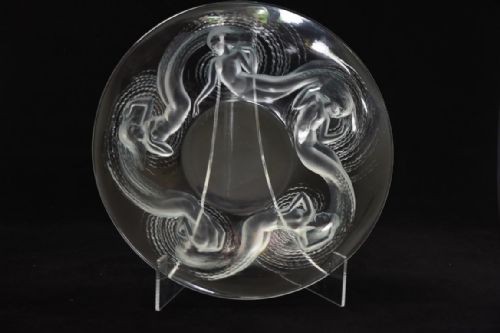


French Art Glass Charger
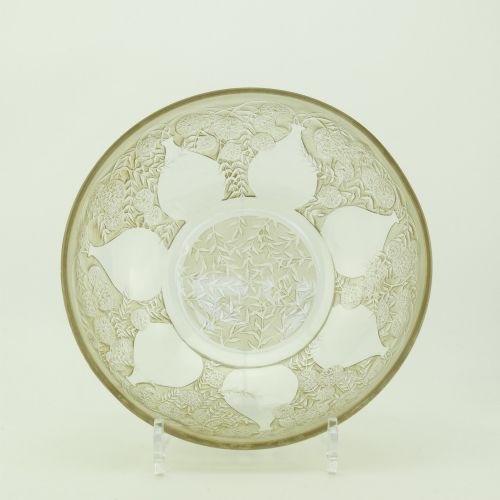
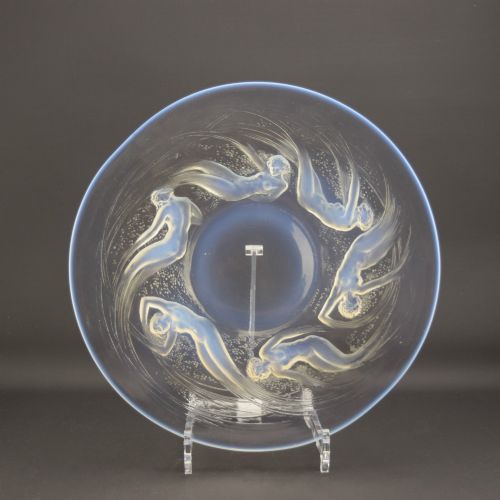
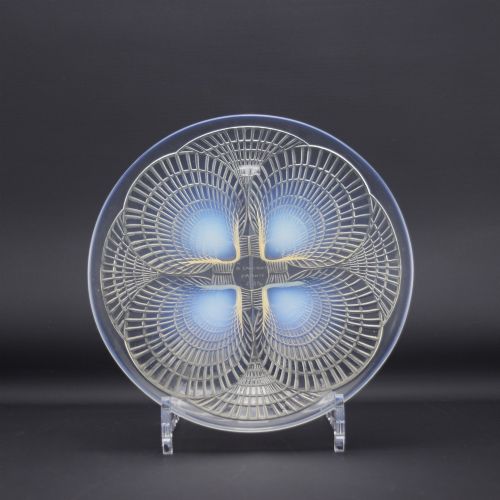
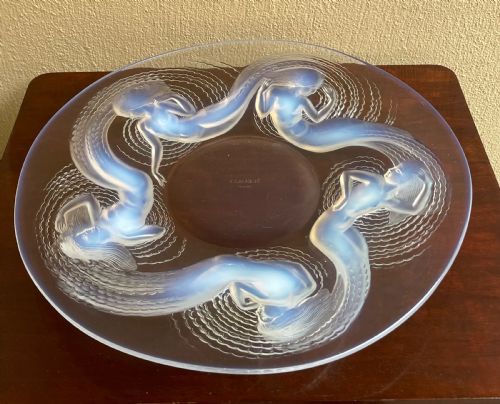
These french art glass charger pieces bring striking texture and luminous depth to a room through moulded glass and subtle staining.
French Art Glass Charger
The dominant forms you encounter on this page are decorative plates, chargers, and shallow bowls. Most examples showcase intricate moulded designs of marine life, flora, or fauna across the central well and border. These heavy glass items function as standalone decorative focal points or centrepieces within an interior.
Materials and production methods
These chargers rely on moulded glass, utilising clear, frosted, or opalescent glass to catch and scatter light. The manufacturing process involves pressing molten glass into heavy metal moulds to achieve deep relief ornamentation. Opalescent glass frequently creates a milky, blue-toned glow where the glass thickness varies.
Makers enhance the tactile relief by applying sepia stain or contrasting surface treatments to highlight the recessed details of the design. This staining accentuates the moulded motifs, bringing definition to figures of fish, flowers, or abstract patterns against the frosted ground.
Listings feature pieces dated to nineteen-twenty and nineteen-thirty, spanning the Art Deco and Art Nouveau styles.
Distinctions in quality
The distinction between average and exceptional pieces rests upon the crispness of the moulded relief and the depth of the opalescence. Superior examples exhibit precise detailing in the figures and a vibrant play of colour within the glass. Lesser pieces show softer lines and duller finish without the characteristic fire of good opalescence.
The intensity and survival of surface staining also influence the character of each piece. Original sepia staining that remains intact and even adds considerable visual depth to the motifs. The overall weight, thickness, and clarity of the glass further separate standard production from finer studio output.
Rene Lalique·Sabino·Verlys·Etling
The French Art Glass Charger Glossary
- Opalescent Glass
- Glass that diffuses light to display milky or bluish tones, particularly prominent in thicker sections of moulded pieces.
- Charger
- A large decorative plate traditionally used for presentation or as a base setting beneath other vessels.
- Moulded Glass
- Glass formed by pressing molten material into a metal or wooden matrix to create three-dimensional relief patterns.
- Sepia Stain
- A brownish pigment applied to the surface of glass and wiped back to emphasise recessed details in the design.
French Art Glass Charger: Frequently Asked Questions
How were these glass chargers used?
These pieces served as decorative objects of display within affluent homes during the nineteen-twenties and nineteen-thirties. Their substantial weight and artistic relief meant they sat securely on furniture surfaces as centrepieces.
Today, collectors use them in similar ways, placing them on stands, walls, or flat surfaces where lighting can pass through the opalescent or frosted glass.
How do I care for my glass charger?
Care involves gentle dusting with a soft, dry cloth to prevent the accumulation of dirt in the recessed moulded details. Avoid harsh cleaning agents or abrasive materials that might damage the surface finish or delicate staining.
Display the piece on a stable, flat surface away from edges where accidental knocks could cause chipping to the heavy glass rim.
How do I distinguish between periods and styles?
Pieces from this selection bridge the Art Nouveau and Art Deco styles, with the majority falling into the nineteen-twenties and nineteen-thirties bracket. Art Nouveau designs tend to favour flowing natural motifs like flora and insect wings, while Art Deco pieces often display more geometric or stylised animal and human figures.
The manufacturing techniques, such as the use of opalescent glass and sepia staining, remain consistent across these adjacent decades.