


Art Deco Cutlery Set
An art deco cutlery set brings geometric flair and polished elegance to the table, offering complete fitted service for modern dining.
Art Deco Cutlery Set
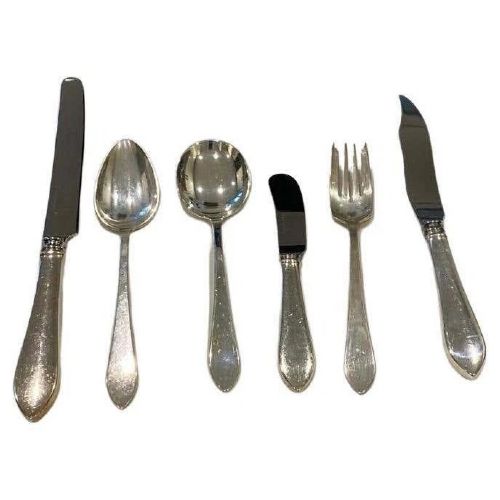
An art deco cutlery set comprises matched forks, knives, spoons, and serving implements designed during the 1920s, 1930s, and 1940s, alongside related Edwardian and 1950s examples.
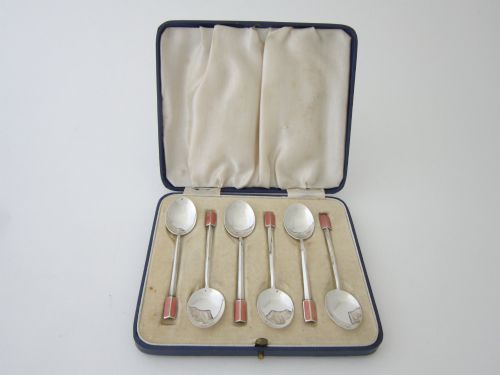
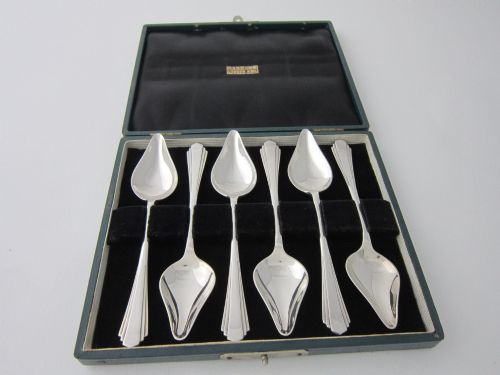
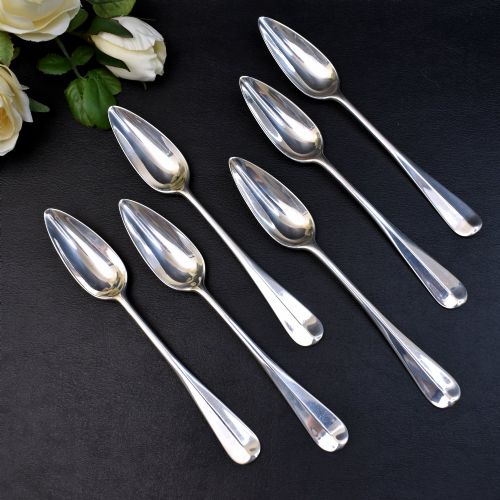
Buyers frequently encounter cased sets of teaspoons, coffee spoons, grapefruit spoons, and lobster picks, as well as large canteens containing over one hundred pieces.
The selections span solid sterling silver, silver plate, and specialised items incorporating enamel, mother-of-pearl, and Bakelite handles housed within fitted velvet, silk, or leatherette boxes.
Materials and construction methods
Silversmiths utilised sterling silver and silver plate as foundational metals, applying gilding and polychrome enamel to highlight geometric motifs and decorative terminals.
Manufacturers integrated natural and early synthetic materials like mother-of-pearl, Bakelite, satin, and leatherette for handles and presentation cases.
Craftsmen shaped specialised implements including cake forks, seafood picks, and bridge spoons to meet specific dining requirements of the period.
Listings feature items spanning the Edwardian period through the 1950s, with a strong concentration of pieces dated to the 1920s, 1930s, and 1940s.
Factors of quality and execution
Quality rests upon the weight and gauge of the silver or silver plate, the crispness of the hallmark stamps, and the integrity of applied enamel work.
The presence of the original fitted case lined in silk, velvet, or satin elevates a set, particularly when the interior fittings secure every individual piece.
Maker attribution to known firms like Hamilton & Inches, Tiffany, Suckling Ltd, Walker and Hall, or Alexander Clark distinguishes standard production from distinguished manufacture.
Hamilton & Inches·Tiffany·Suckling Ltd·Waring & Gillows·Walker and Hall·Alexander Clark
The Art Deco Cutlery Set Glossary
- Sterling silver
- A silver alloy containing 92.5 percent pure silver by mass, standard for high-quality antique flatware.
- Silver plate
- A base metal coated with a layer of pure silver, offering an accessible alternative to solid silver sets.
- EPNS
- Electro-plated nickel silver, a common base material found beneath silver plating on twentieth-century cutlery.
- Hallmark
- An official stamp applied to precious metals indicating the standard of purity, maker, and assay office.
- Canteen
- A fitted box or cabinet designed specifically to store a complete set of cutlery securely.
Art Deco Cutlery Set: Frequently Asked Questions
What is in an art deco cutlery set?
Sets range from small specialised groupings of six teaspoons, coffee spoons, or grapefruit picks to large canteens containing over one hundred table pieces.
Many survive in their original fitted presentation cases lined with velvet, silk, or leatherette.
How do I clean antique silver cutlery?
Wash pieces gently in warm soapy water and dry them immediately with a soft cloth to protect the metal.
Avoid harsh abrasive dips, particularly on pieces featuring delicate enamel, mother-of-pearl, or Bakelite handles.
Are these sets safe for daily use?
Solid silver and silver plate handle regular dining use well if washed by hand rather than placed in an automatic dishwasher.
Set containing enamel or early plastics require extra care to preserve the surface finish.
How do I identify the period?
Examine the metal stamps for official hallmarks, which record the assay office, date letter, and maker's mark.
Stylistic cues such as linear geometry and specific handle materials help distinguish 1920s and 1930s production from Edwardian or 1950s pieces.