

Art Deco Club Armchairs
Art deco club armchairs are heavy, deep-seated lounging seats defined by twentieth-century streamline forms and substantial proportions.
Art Deco Club Armchairs
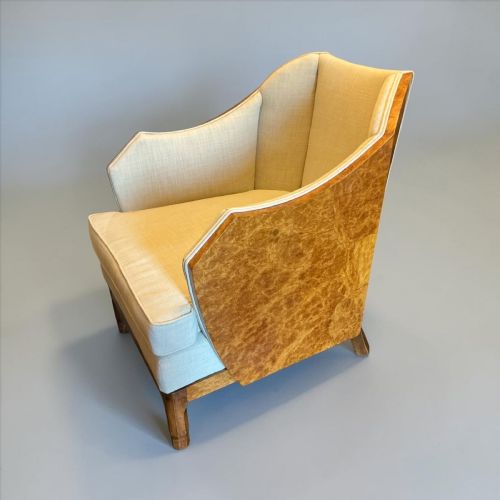
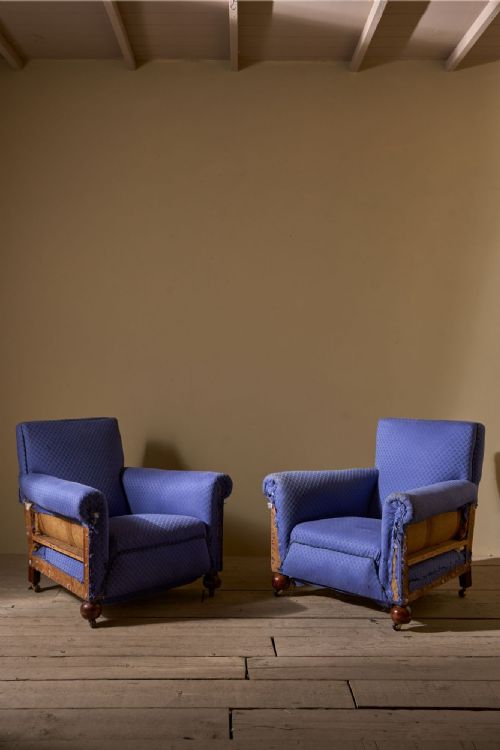
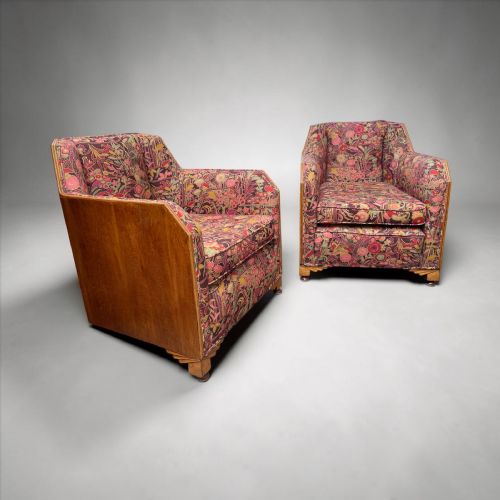
Art deco club armchairs combine generous proportions with streamlined geometry, typically emerging from the 1930s alongside French, Swedish, and English variants. Buyers searching this phrase look for deep, supportive seating built for relaxed lounging rather than formal posture.
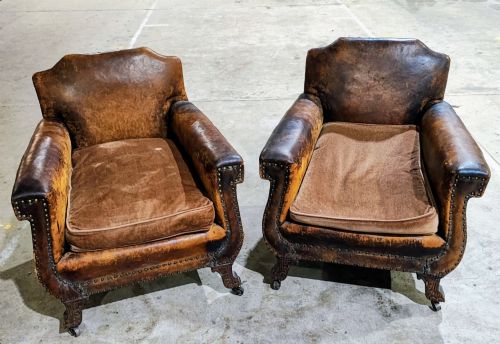
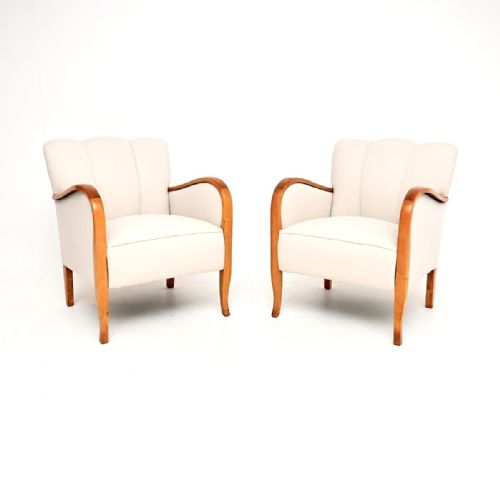
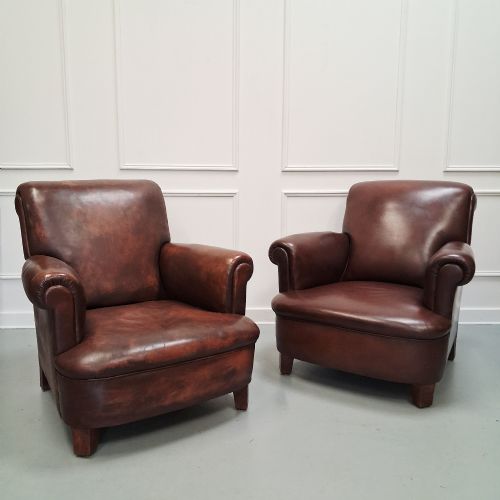
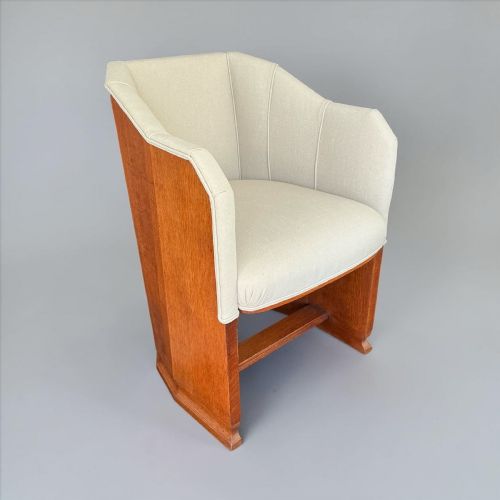
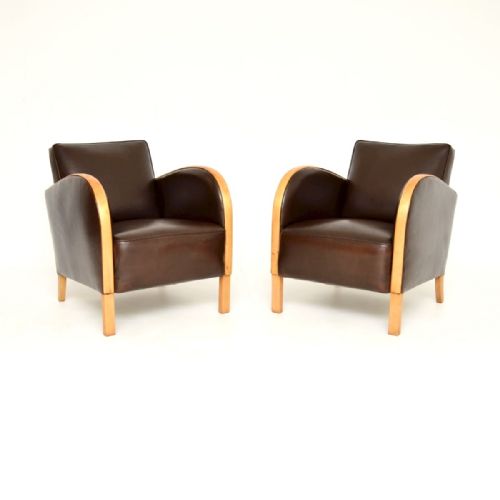
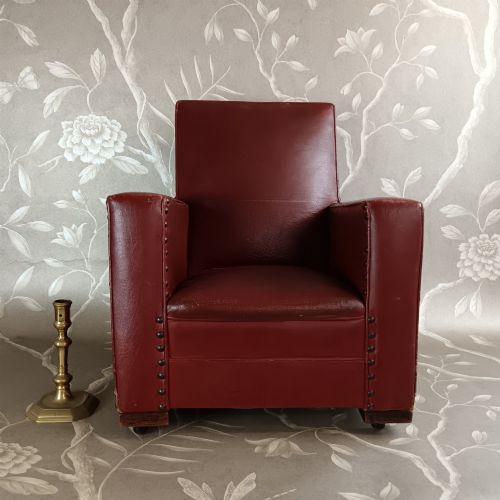
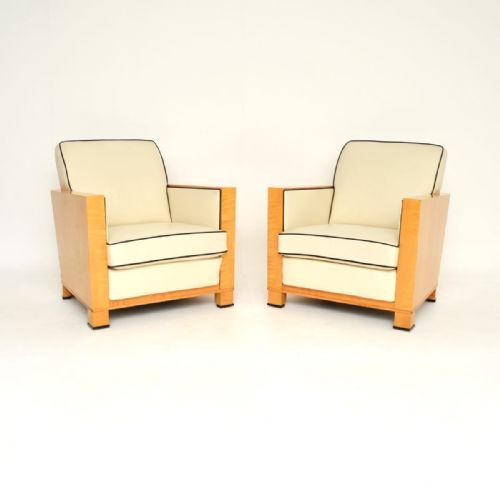
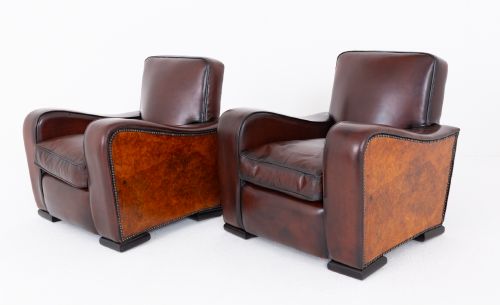
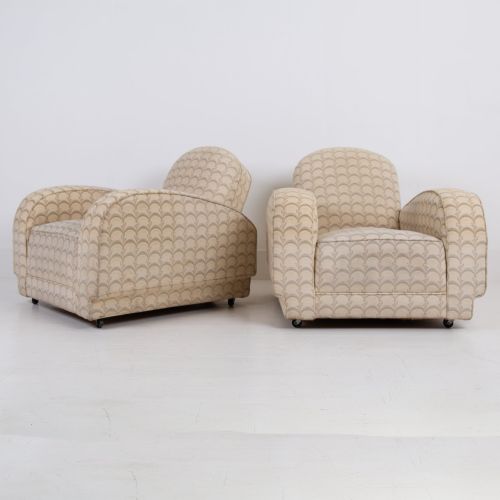
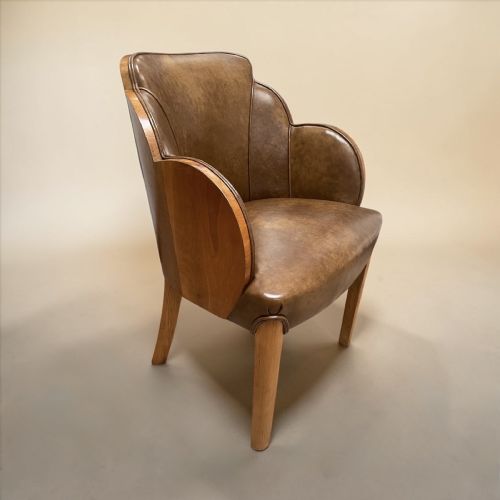
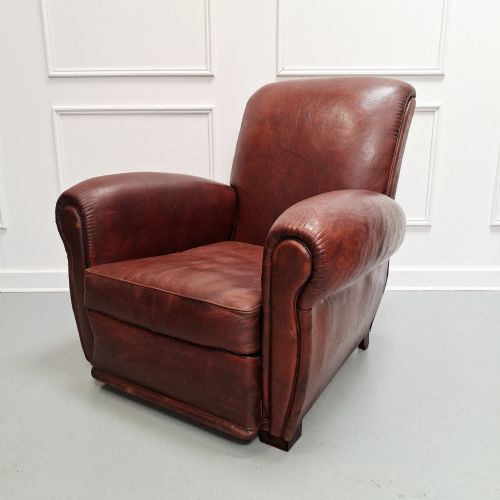
The most common examples on this page are matched pairs upholstered in leather, often featuring rounded barrel backs or cloud silhouettes. Alongside standard armchairs, occasional chairs, lounge suites, and desk chairs appear in various wood and fabric combinations.
How they were made
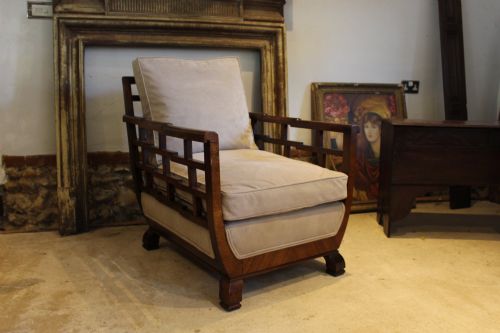
Frames are constructed from timber such as walnut, oak, beech, and satin birch, providing sturdy structural foundations for upholstered bodies. Many pieces utilise rich wood veneers or exposed polished frames to contrast against the soft coverings.
Upholstery relies on leather, sheep's hide, calf suede, velvet, and various woven fabrics stretched over deep padding. Button-back tufting and tack detailing frequently finish the edges of French and English iterations.
Listings feature items spanning the 1900s through the 1940s, utilising leather, walnut, oak, satin birch, velvet, and metal across armchair and suite formats.
What varies in quality
The integrity of the internal wooden frame and the grade of the upholstery hide establish the primary division between standard and superior pieces. Selected cuts of satin birch or figured walnut show a higher degree of craftsmanship than plain timbers.
Original condition upholstery and period-appropriate materials hold distinct advantages over later replacements. Maker attribution, particularly pieces attributed to known workshops, elevates the standing of an armchair within its period.
Hille·Harry and Lou Epstein
The Art Deco Club Armchairs Glossary
- Art Deco
- A design style spanning the 1920s and 1930s characterised by sleek lines, geometric symmetry, and modern industrial materials. It replaced heavy Victorian ornamentation with streamlined elegance.
- Club Chair
- A deep, heavily upholstered armchair designed for comfort in studies, smoking rooms, or lounges. These seats traditionally feature low backs and broad arms.
- Satin Birch
- A pale, lustrous timber native to northern Europe, frequently utilised in Swedish furniture. Its grain has a natural sheen that catches ambient light.
- Fauteuil
- An open-framed upholstered armchair originating in France. The term often describes French period seating with exposed wooden arms.
- Cloud Suite
- A matched grouping of seating featuring rounded, bulbous upholstery contours resembling cumulus clouds. This design gained prominence during the 1930s.
Art Deco Club Armchairs: Frequently Asked Questions
How do I identify French art deco club armchairs?
French examples often favour softer leather finishes, button-backed upholstery, and relaxed tub or fauteuil proportions.
They frequently display distinct continental tailoring compared to heavier English or structured Swedish counterparts.
What is a cloud armchair?
Cloud armchairs feature bulbous, rounded upholstery rolls that form the back and arms in a continuous, soft sweep.
This specific silhouette became a signature of 1930s modernist design.
Are these chairs comfortable for daily use?
These seats are engineered for deep, relaxed lounging rather than upright desk work.
Their wide seats and supportive cushioning make them practical additions to modern living spaces.
How do I distinguish 1920s pieces from 1930s pieces?
Twenties variants often retain transitional Edwardian or heavy traditional influences in their frames and upholstery.
Thirties pieces lean further into streamlined geometric curves and smooth veneer surfaces.