



Art Deco Chrome Lighting
Art deco chrome lighting brings clean geometric lines and polished industrial brightness into modern spaces.
Art Deco Chrome Lighting
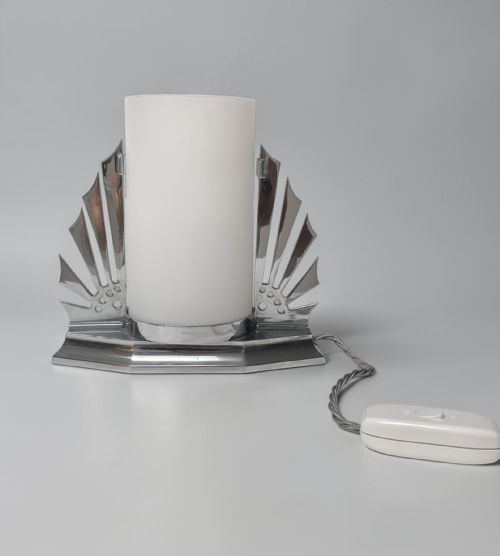
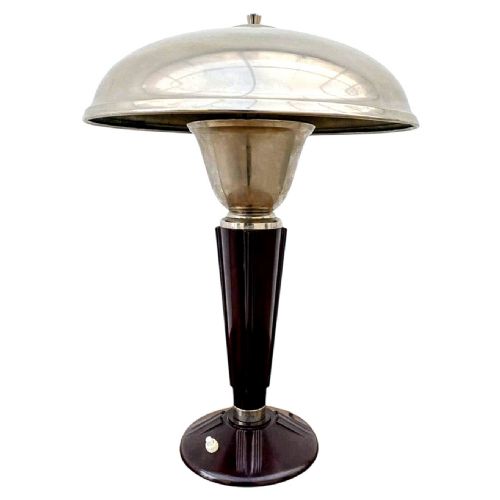
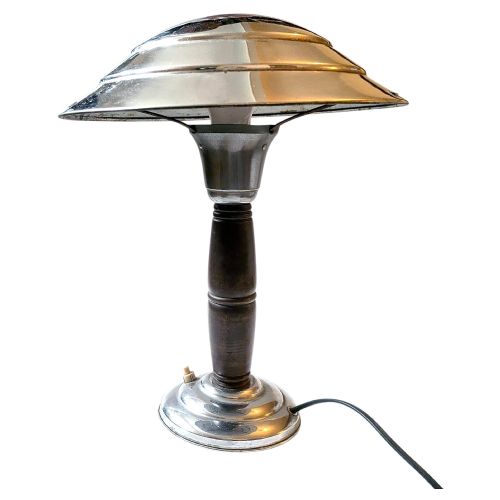
Art deco chrome lighting encompasses table lamps, desk lamps, floor standards, wall lights, and pendant ceiling fixtures rooted primarily in the 1920s, 1930s, and 1940s. These pieces reflect a period of industrial progression where metalwork met functional household illumination.
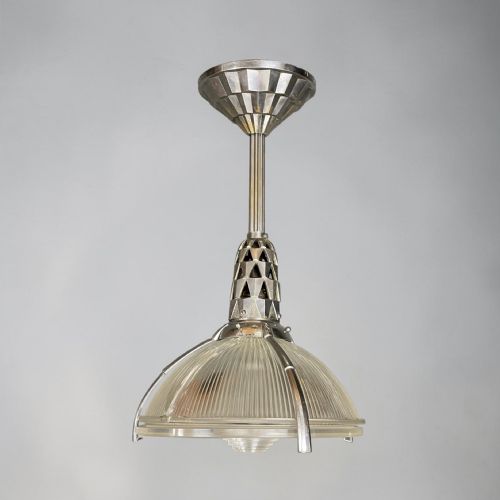
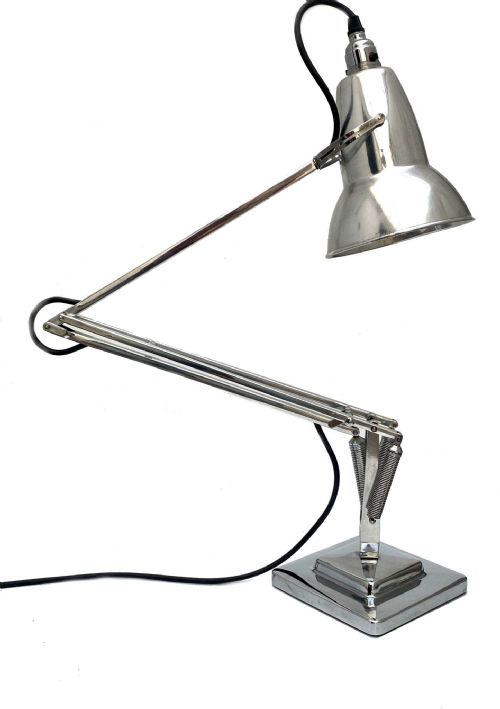
Table lamps and desk lights dominate the selection, often featuring adjustable arms or sculptural figures standing on spherical bases. Wall lights and hanging ceiling fixtures utilise geometric glass shades paired directly with metallic frames.
The aesthetic bridges domestic comfort with machine age styling, drawing on French and international design vocabularies from the interwar decades. Pieces range from simple tubular sconces to elaborate cut glass bag chandeliers and specialised banker lamps.
Assessing quality in period fixtures
Quality rests upon the weight of the metal and the precision of the mechanical joints found in adjustable desk and floor lamps. Solid construction in the chassis separates substantial studio pieces from lighter commercial alternatives.
The integration between the glass shades and the metal galleries dictates the visual harmony of each piece. Moulded pressed glass and thick opaline panels with distinct geometric patterns demonstrate superior craftsmanship compared to plain glass alternatives.
Several table lamps feature athletic figures balancing balls, bringing a surprising athletic energy to interwar desk lighting.
Eileen Grey·Émile-Jacques Ruhlmann·Herbert Terry·Pirouette
The Art Deco Chrome Lighting Glossary
- Bakelite
- An early form of synthetic plastic used for electrical insulation, switches, and decorative accents on period lighting. It offers a dense, tactile contrast to polished chrome surfaces.
- Torchiere
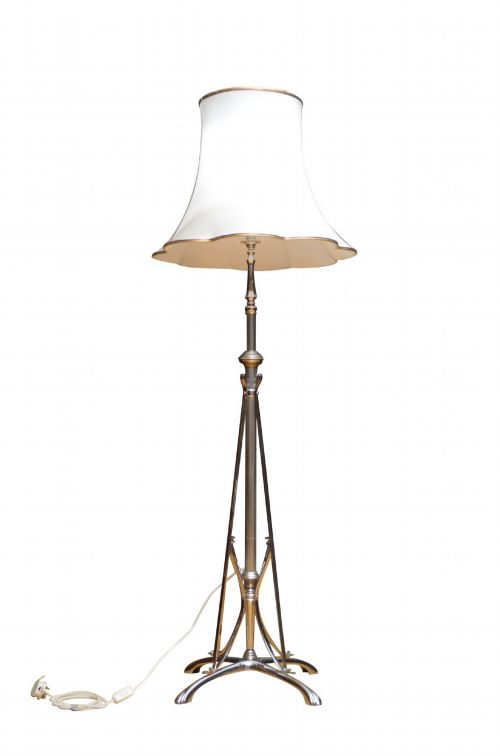
- A tall floor lamp designed to direct light upwards toward the ceiling for ambient illumination. These fixtures frequently utilise heavy metal bases and wide glass or metal bowls.
- Opaline
- A type of semi-translucent milk glass that diffuses light softly across a room. It appears frequently in pendant and ceiling light configurations from the interwar period.
- Machine Age
- A design style celebrating industrial progress, machinery, and mass production during the 1920s and 1930s. It prioritises functional geometry, tubular steel, and unadorned chrome.
- Sconce
- A wall-mounted lighting fixture designed to hold bulbs against vertical surfaces. These often appear in matching pairs or sets of three with glass and chrome elements.
Art Deco Chrome Lighting: Frequently Asked Questions
How do I install vintage ceiling lights?
Vintage ceiling pendants and flush mounts require standard electrical wiring compatible with modern mains voltage. Most pieces arrive ready for ceiling mounting, though professional installation by a qualified electrician is recommended to ensure secure suspension.
Ensure the mounting canopy matches your ceiling junction box. Many period lights utilise standard brass lamp holders that accept modern LED or traditional incandescent bulbs.
Were these desk lamps adjustable?
Many desk lamps from this era incorporate articulated arms, weighted bases, or swiveling shades designed for directional task lighting. Mechanisms range from internal spring balances to simple pivot joints.
Checking the movement of these joints reveals how the lamp was engineered to function on a working surface. The inclusion of heavy bases prevents tipping when the arm is fully extended.
How do I clean chrome and glass?
Polished chrome requires gentle cleaning with a soft microfiber cloth to avoid scratching the metallic plating. Avoid abrasive chemical cleaners that can strip the vintage finish.
Glass shades can be removed and washed in warm soapy water, provided they are dried completely before reassembly. Bakelite components should be wiped clean with a dry or barely damp cloth.
What rooms suit machine age lighting?
These metallic fixtures suit home offices, studies, living rooms, and hallways where task lighting and geometric form are valued. Table and desk lamps fit well on sideboards and writing desks.
Wall lights and matching sconces work effectively when paired on either side of mirrors or fireplaces. Pendant lights provide focused downward illumination over dining tables and kitchen islands.