



1930s Lighting Fixtures
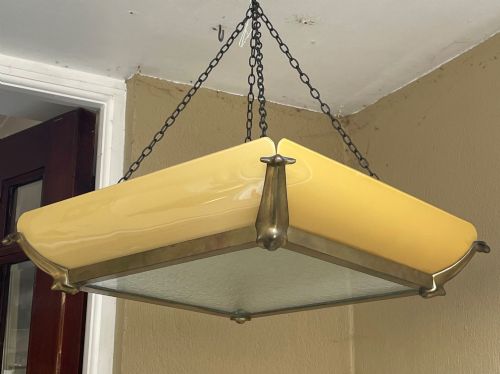
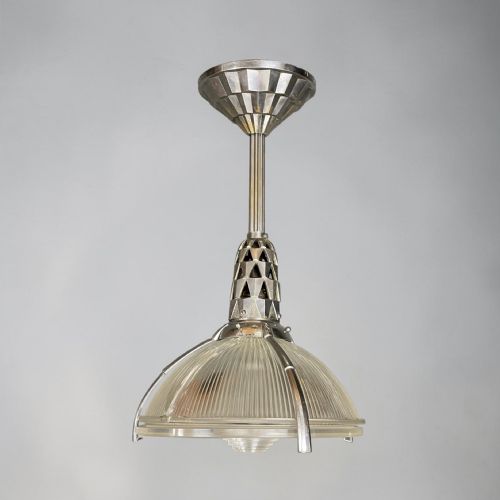
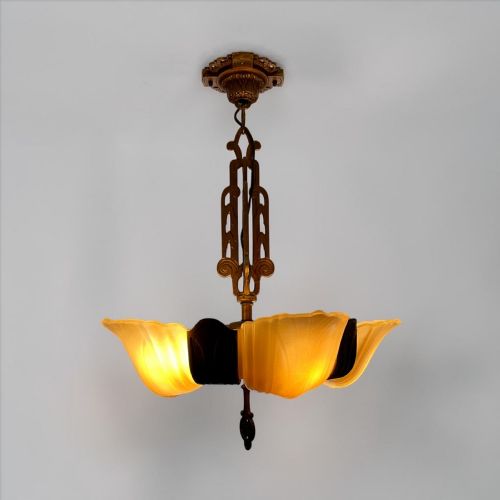
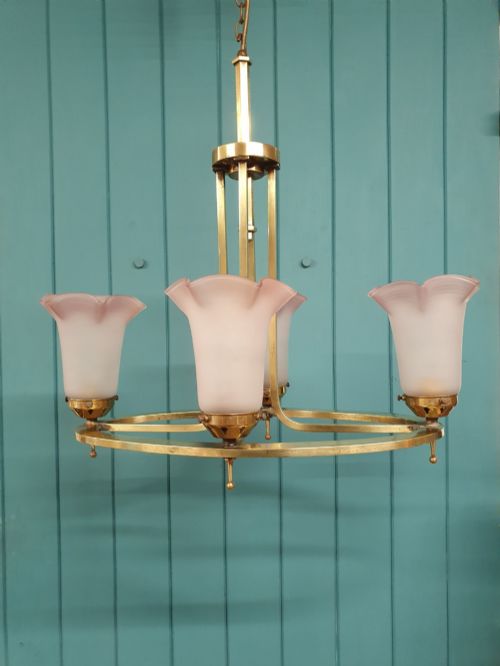
These 1930s lighting fixtures bring geometric clarity and warm glass to a room, offering the distinct character demanded by period interiors.
1930s Lighting Fixtures
When searching for 1930s lighting fixtures, collectors encounter a diverse range of ceiling lights, wall sconces, and chandeliers rooted primarily in the Art Deco style. These pieces span flush ceiling fittings, hanging pendants, and multi-arm chandeliers designed to illuminate domestic spaces with architectural flair.
The selection frequently includes French and American variants, alongside regional interpretations such as Dutch Revival or Highland Lodge designs. Wall lights and matching pairs of sconces appear alongside large lanterns and table lamps, providing versatile options for period rooms.
Materials and Construction
Makers utilised a combination of metals such as chrome, brass, copper, steel, and occasionally deer antler to form the structural frames and backplates. These metals were shaped into sleek tubular forms, stepped brackets, and decorative lanterns.
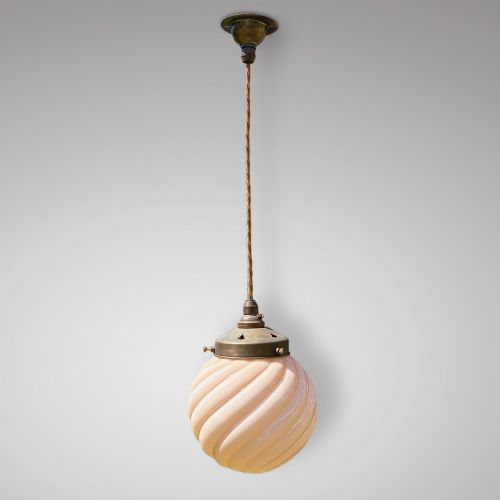
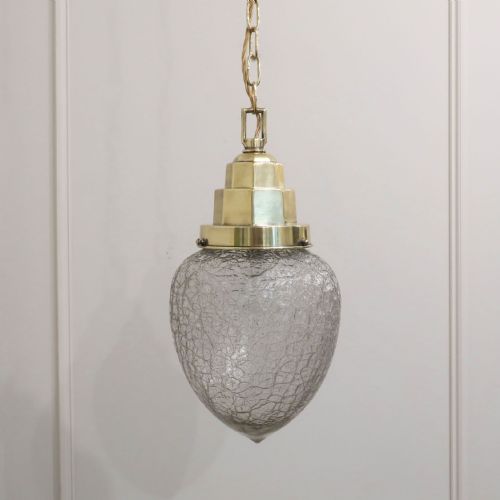
Glass played a central role, appearing as frosted, opalescent, opaline, crackle, pressed satin, and cut crystal. Specialised techniques produced slip shades and moulded glass shades that diffused light evenly across the room.
Red and roe deer antlers make a surprising appearance in the lighting lineup, proving that even the most geometric decade enjoyed a woodland lodge moment.
Distinctions in Quality
Quality rests in the weight of the metalwork and the clarity of the moulded or pressed glass components. Finer examples display crisp geometric casting in the brass or chrome frames and substantial glass shades with distinct tactile patterns.
Designer attribution and originality of components separate standard production pieces from exceptional works. Signed pieces or matching sets maintain greater architectural coherence and historical integrity.
Émile-Jacques Ruhlmann·Lalique·Jean Gauthier·Karl Palda
The 1930s Lighting Fixtures Glossary
- Slip Shade
- A moulded pane of glass that fits directly into a metal frame to form a ceiling light bowl. These shades define many American fixtures of the period.
- Opaline Glass
- A milky, semi-translucent glass that softens bulb glare. It appears frequently in pendants and ball-shaped shades from the era.
- Sconce
- A wall-mounted lighting fixture designed to hold bulbs or candles. Pairs of these fixtures are common in hallway and living room arrangements.
- Chandelier
- A branched decorative ceiling light holding multiple bulbs. These range from crystal bag styles to multi-arm brass and glass assemblies.
- Art Deco
- A design style characterised by sleek geometric shapes, stylised motifs, and streamlined forms. It dominates the lighting fixtures of this decade.
1930s Lighting Fixtures: Frequently Asked Questions
What styles define these lighting fixtures?
Art Deco predominates the selection, bringing symmetrical lines and geometric styling to shades and frames. Other stylistic influences include French Empire, Dutch Revival, and Highland Lodge variants.
These varied styles allow the fixtures to complement both urban apartments and rustic country interiors with equal historical consistency.
How do pendant lights differ from chandeliers?
Pendant lights hang from a single suspension cord, chain, or rod, typically featuring one dominant shade such as an opaline globe or slip shade. Chandeliers utilise multiple arms or branched frames to hold several bulbs simultaneously.
Pendants suit smaller spaces or specific task areas, while chandeliers provide ambient lighting for larger rooms.
Where were wall sconces typically placed?
Wall sconces were installed in pairs or sets along hallways, flanking fireplaces, or framing mirrors in principal rooms. Their design ensured balanced lateral illumination at eye level.
Matching pairs maintain architectural symmetry within a room scheme.
What glass types are most common?
Frosted glass, opaline glass, and pressed satin glass appear frequently across the inventory. These materials were chosen for their ability to diffuse electric light softly without harsh glares.
More decorative pieces utilise cut crystal or crackle glass to catch and refract light.
Are matching pairs readily available?
Matching pairs of wall lights and sconces do appear in the selection, offering uniform hardware for symmetrical interior spaces. These sets ensure consistent metal finishes and glass types across a single wall.
Collectors prize matched sets for their completeness in domestic restoration projects.