
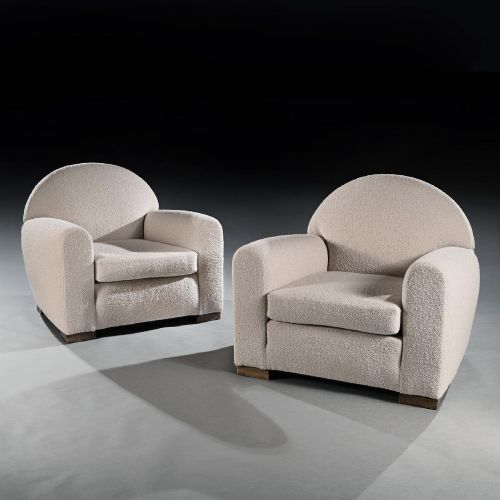
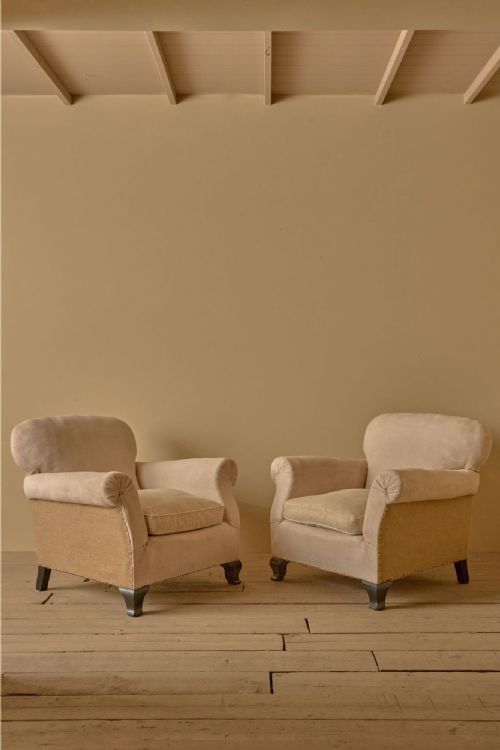
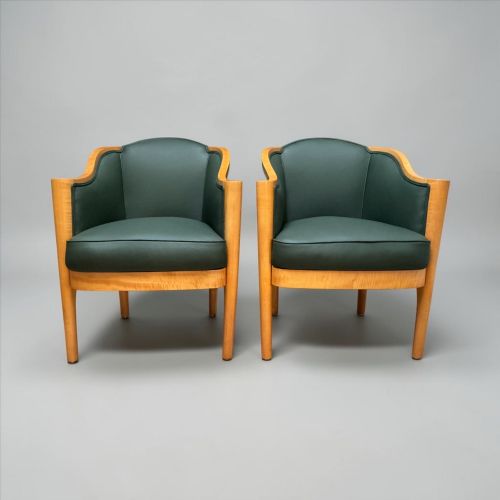
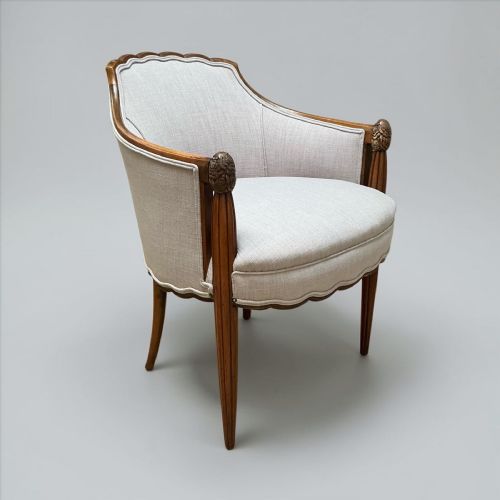
Art Deco Chairs
Art deco chairs bring distinct period geometry and rich timbers to an interior, spanning plush leather club seats to sleek dining sets.
Art Deco Chairs
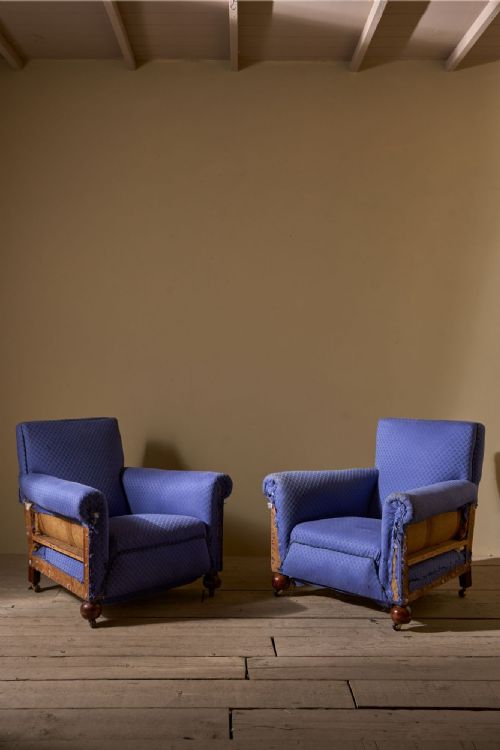
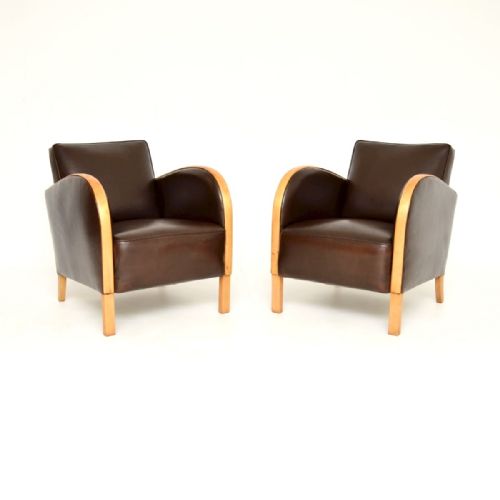
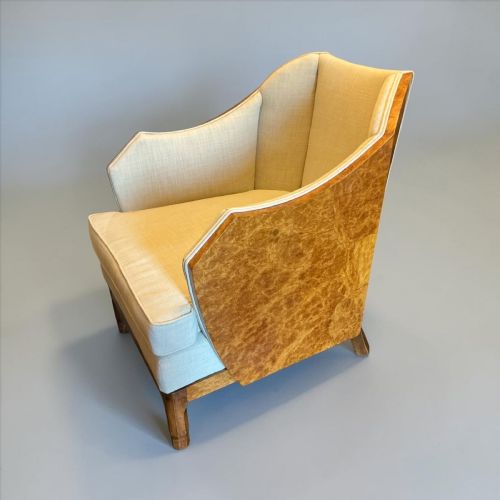
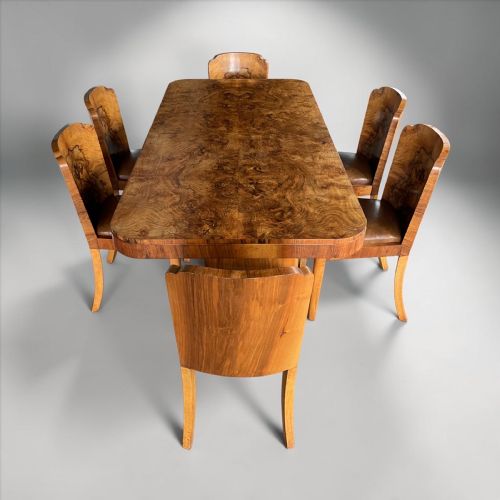
Art deco chairs encompass a broad spectrum of seating forms designed primarily during the 1930s, alongside related pieces from the 1920s and 1940s. Buyers encountering this selection will frequently find substantial lounge armchairs, club seats, and matching dining suites.
The aesthetic bridges domestic comfort with streamlined modernist principles, drawing on French, Swedish, and British interpretations. Pieces range from singular occasional and bedroom chairs to expansive lounge suites and complete dining sets.
Origins vary significantly across European workshops, yielding robust oak frames from English makers alongside sophisticated satin birch and walnut creations from continental designers. This diversity ensures that forms adapt readily to both formal dining rooms and relaxed sitting spaces.
Materials and construction
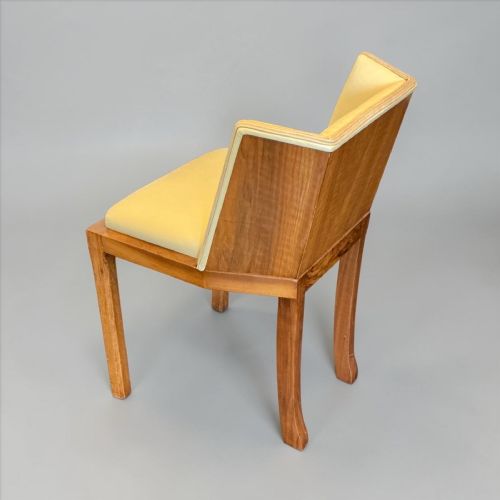
Construction relies heavily on robust timbers such as walnut, oak, mahogany, and exotic veneers like satin birch, burr walnut, and maple. Frames are built for durability, often utilising solid wood bases to support substantial upholstered forms.
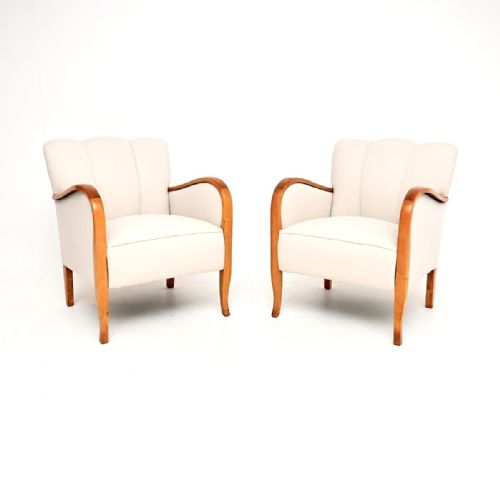
Upholstery materials define the tactile quality of these seats, combining supple leather, calf suede, and wool with traditional fabric and velvet. Padding frequently creates rounded, cloud-like profiles that emphasise comfort alongside strict geometric lines.
Elephant arm chairs appear alongside standard club seats, proving that twentieth-century designers enjoyed monumental scale.
Assessing craftsmanship
Quality rests upon the integrity of the timber framing and the precision of the veneer work, where figured grains are matched symmetrically across visible surfaces. Superior examples demonstrate rigorous joinery that maintains structural firmness over decades of use.
The standard of upholstery and the preservation of original leather or specialised fabric heavily influence the execution. Expert stitching, button-back detailing, and correct webbing elevate a piece from standard utilitarian seating to fine cabinetmaking.
Maurice Adams·Hille·Harry and Lou Epstein·Bath Cabinet Makers·Ebenezer Gomme
The Art Deco Chairs Glossary
- Club chair
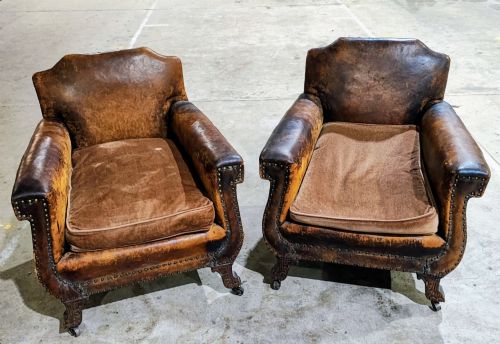
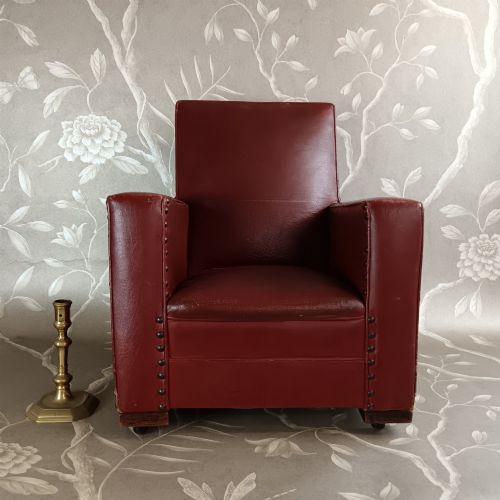
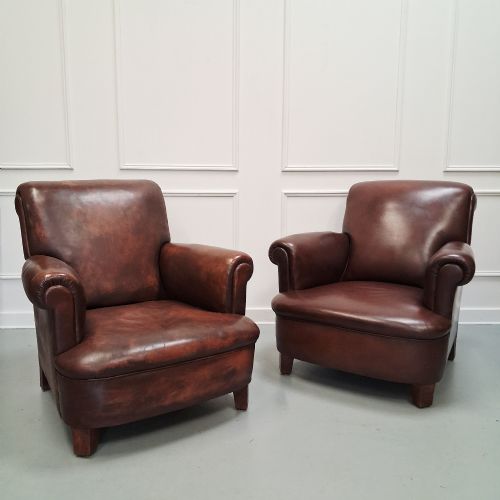
- A deep, heavily upholstered armchair designed for relaxation and traditionally finished in durable leather. These seats often feature low backs and generous armrests.
- Klismos
- An ancient Greek chair form reinterpreted during the twentieth century with sweeping curved legs and a concave backrest. The silhouette offers an elegant profile suited to dining spaces.
- Cloud back
- An upholstered seating design characterised by bulbous, rounded segments resembling cumulus clouds. This style became a hallmark of luxurious lounge furniture.
- Satin birch
- A pale, lustrous timber imported from northern Europe and frequently utilised for Scandinavian furnishings. Its reflective grain highlights smooth geometric curves.
- Carver chair
- An armchair designed with open sides to accommodate dining table configurations. These pieces usually match a larger set of side chairs.
Art Deco Chairs: Frequently Asked Questions
How do I identify a club chair?
Club chairs are distinguished by their deep seats, low profiles, and heavy leather upholstery designed for maximum lounging comfort. They prioritize solid proportions and minimal exposed woodwork.
These pieces typically date from the 1930s and function well as standalone statement items in a living room or study.
Where were most dining suites made?
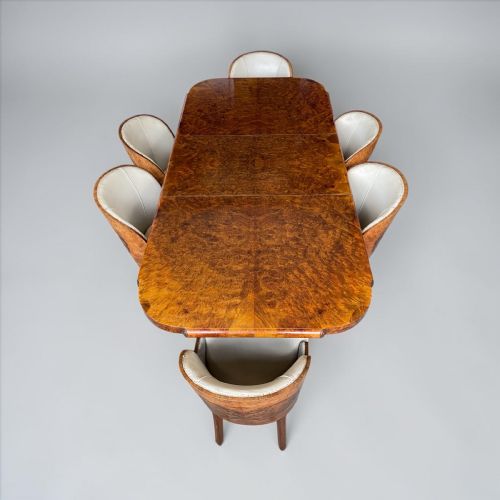
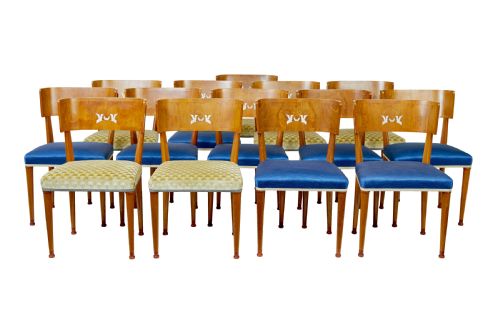
Dining suites from this period originate from various European centres, including specialised British workshops and Scandinavian design houses. Oak and walnut remain common in English sets, while maple and birch appear frequently in northern designs.
Matching tables and chairs often share distinctive veneer patterns and geometric bases.
How do I care for leather upholstery?
Preserving vintage leather requires regular conditioning to maintain flexibility and prevent cracking over time. Keeping pieces away from direct heat sources protects the natural hide.
Gentle cleaning with appropriate soft cloths ensures the original patina remains intact.