
Art Deco Blue Jewellery
Art deco blue jewellery brings together geometric forms and striking cool tones in rings, bracelets, and pendants.
Art Deco Blue Jewellery
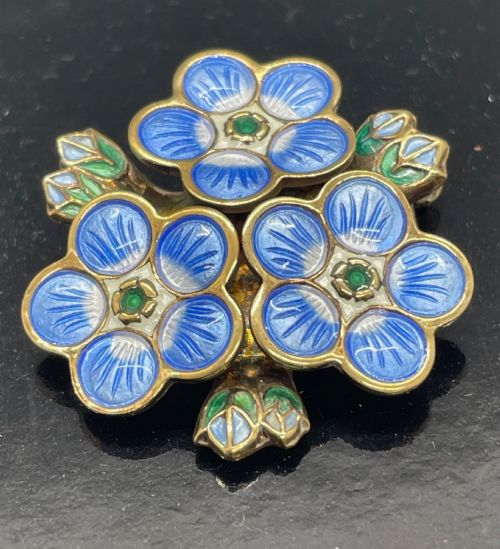
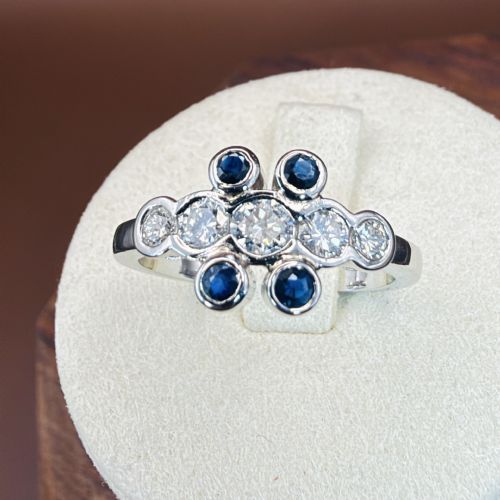
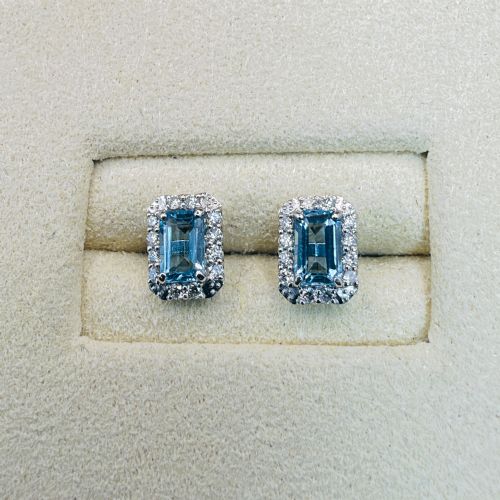
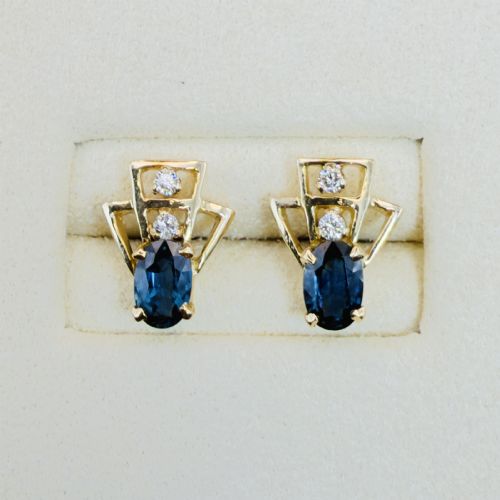
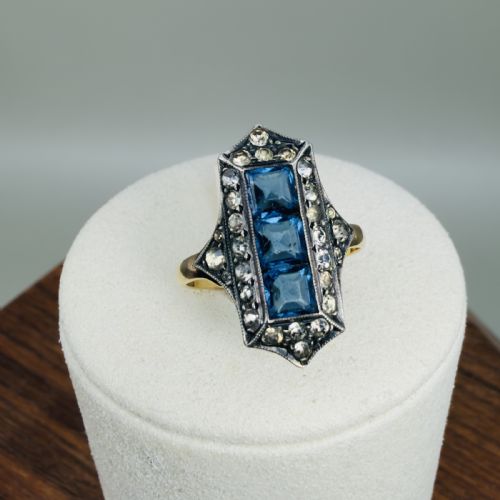
Art deco blue jewellery encompasses rings, bracelets, brooches, earrings, and necklaces that utilise striking blue stones and enamel set against contrasting precious metals. These pieces draw from styles such as Art Deco, Art Deco Revival, Egyptian Revival, and Edwardian designs.
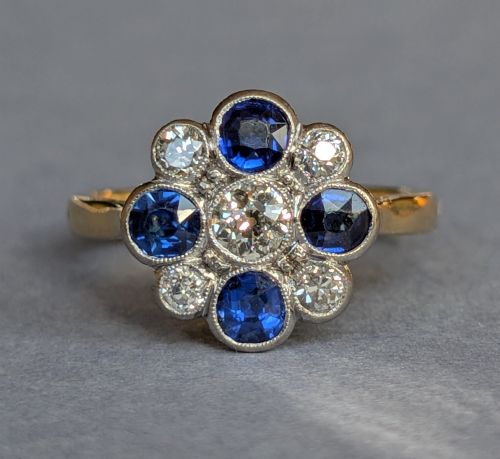
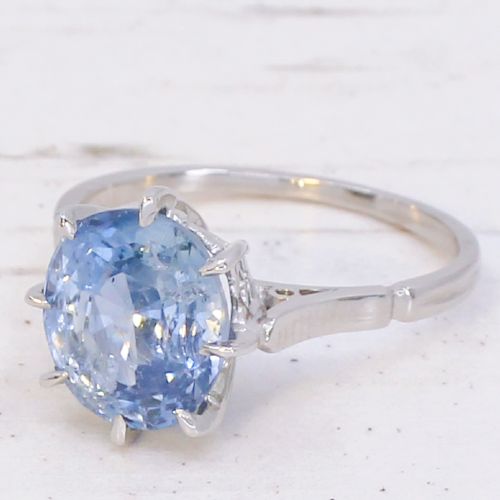
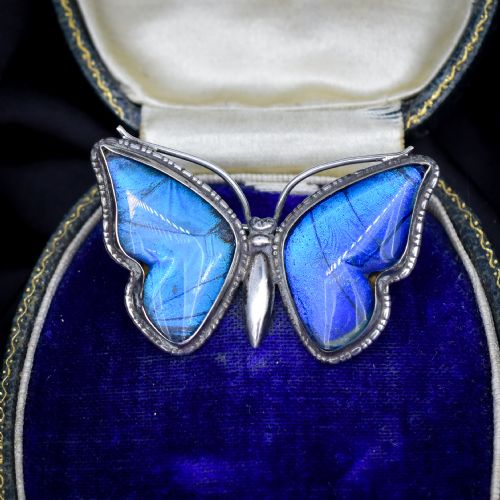
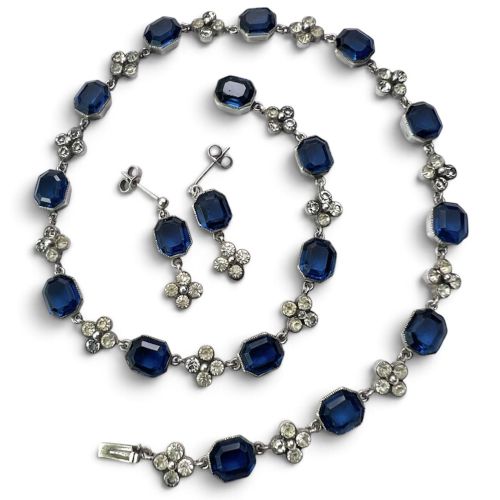
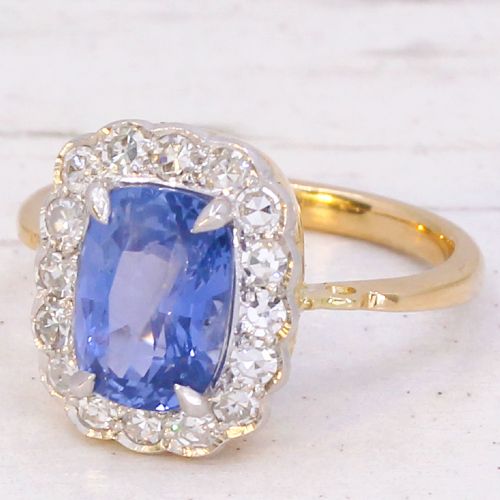
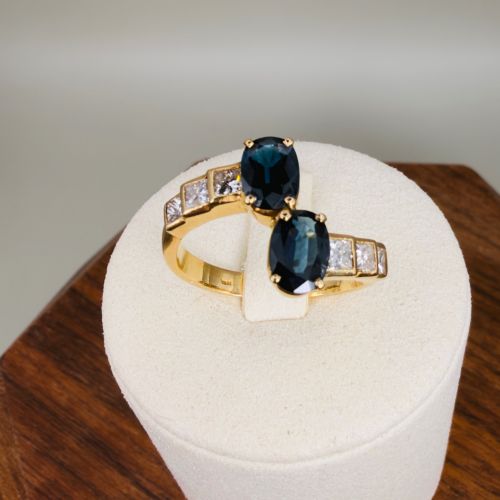
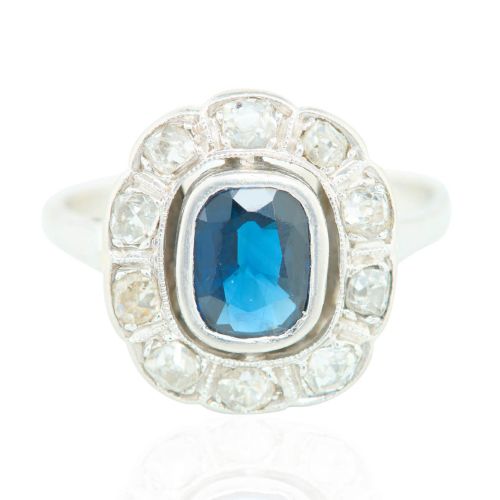
Buyers will most frequently encounter cluster rings and pendant necklaces featuring sapphires, aquamarines, and enamel work originating from the 1920s and 1930s. The selection also includes silver butterfly wing pieces, paste sets, and stamped precious metals spanning periods up to the nineteen-sixties.
How they were made
Goldsmiths and silversmiths constructed these items using platinum, 18ct gold, 18ct white gold, silver, and silver gilt, mounting stones in precise geometric arrangements. Platinum and white gold provided strong, bright foundations for diamond and sapphire clusters.
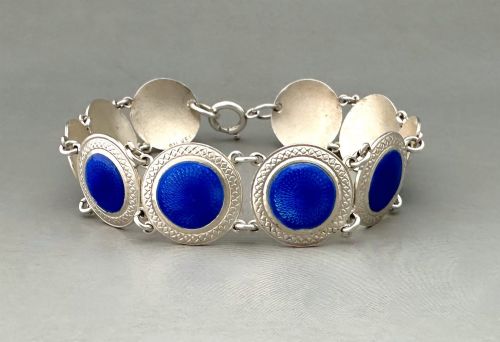
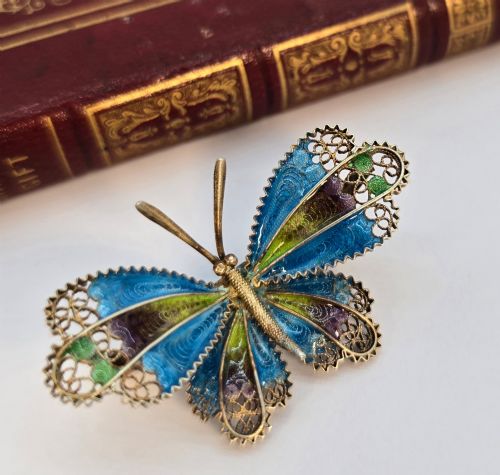
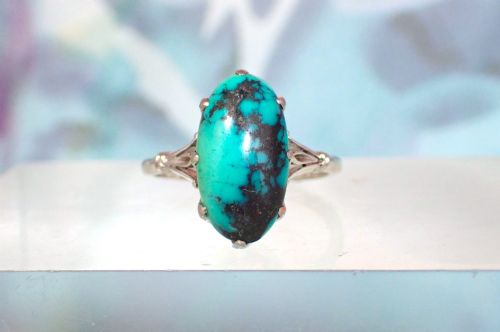
Craftsmen applied vitreous enamel and set specialised materials like butterfly wings, turquoise, blue spinels, and blue zircons into filigree or solid metal frames. Techniques included calibre cutting stones to fit tightly within channel settings and building intricate brickwork patterns.
Tiny iridescent butterfly wings preserved under glass let wearers carry a flash of tropical blue through every gloomy winter afternoon.
What varies in quality
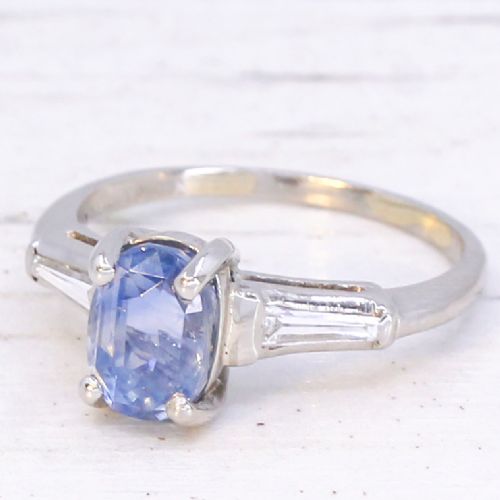
The precision of stone setting and the origin or clarity of the central gems define the upper tier of these pieces. Unheated Ceylon or Kashmir sapphires and substantial aquamarines set in platinum command greater distinction than smaller paste stones.
The complexity of the metalwork, such as detailed filigree, platinum openwork, and signed maker elements, separates standard production items from exceptional workshop examples.
R Lalique·Jakob Bengel
The Art Deco Blue Jewellery Glossary
- Calibre cut
- Stones shaped specifically to fit tightly together in a geometric channel without visible metal claws between them. This technique creates continuous lines of colour in rings and bracelets.
- Navette
- A boat-shaped gemstone or setting that is pointed at both ends and elongated across the finger. This silhouette was popular for rings and pendants.
- Paste
- Hand-cut lead glass used as a gemstone substitute to achieve bright colour and light reflection. It allowed makers to construct elaborate multi-stone clusters.
- Silver gilt
- Silver that has been coated with a thin layer of gold through chemical or electrochemical processes. This gives the base metal a warm golden appearance.
- Cluster ring
- A ring design featuring a central stone encircled by a border of smaller accent stones, typically diamonds around a sapphire. This arrangement maximises visual impact on the hand.
Art Deco Blue Jewellery: Frequently Asked Questions
How do I care for art deco blue jewellery?
Store each piece separately in a lined box to prevent softer materials like enamel or butterfly wings from scratching against harder diamonds and sapphires.
Clean silver and gold settings gently with a soft brush and warm soapy water, avoiding harsh ultrasonic cleaners that might damage treated gems or enamel.
What periods do these pieces come from?
The majority of pieces date from the 1920s and 1930s during the height of the Art Deco movement, characterised by clean geometric lines and platinum settings.
Later items extend through the 1940s, 1950s, and 1960s, reflecting the enduring influence of these designs and later revival periods.
How can I tell sapphires from paste?
Genuine sapphires display natural inclusions under magnification and feel noticeably cooler to the touch than glass substitutes.
Paste stones often show tiny air bubbles within the material and feature softer facet edges due to being moulded rather than cut.
What metals were commonly used?
Platinum and 18ct white gold were favoured during the 1920s to provide a bright, neutral backdrop that enhanced blue stones and diamonds.
Yellow 18ct gold, standard silver, and silver gilt also appear frequently, particularly in bracelets, brooches, and pieces utilising enamel or butterfly wings.