
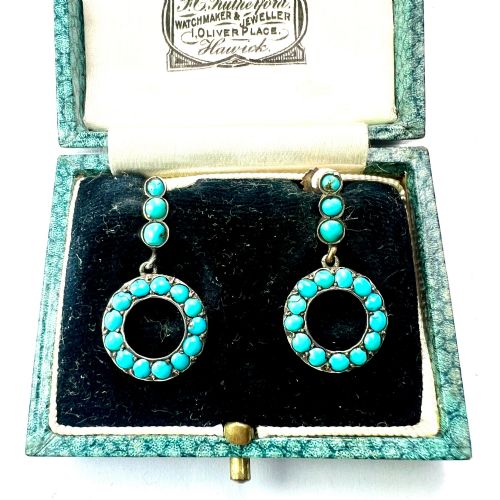


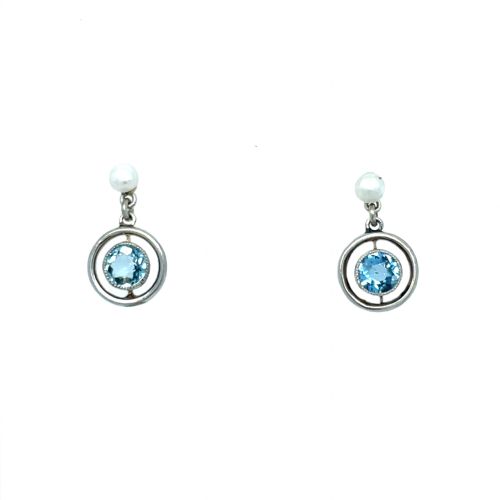


Blue Drop Earrings
Blue drop earrings swing with every turn of the head, bringing together historical periods from the Victorian era to the mid-twentieth century.
Blue Drop Earrings
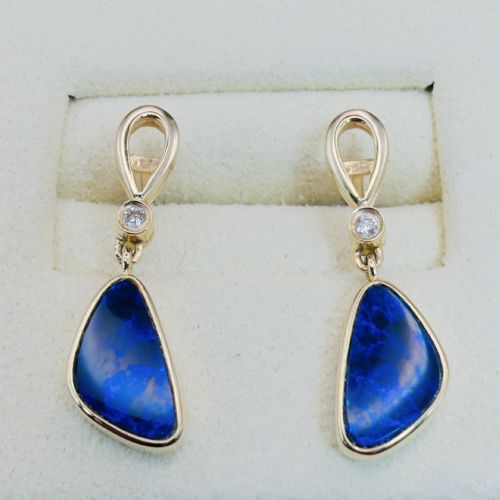
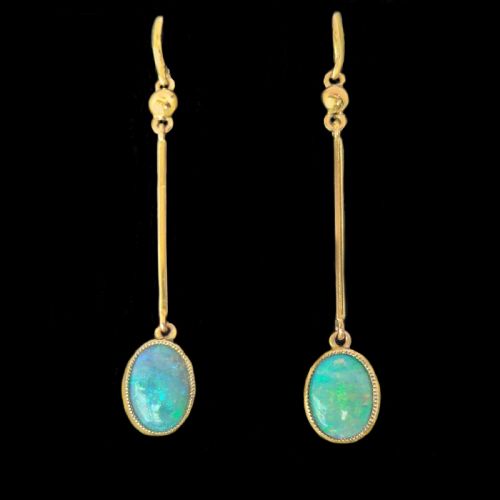
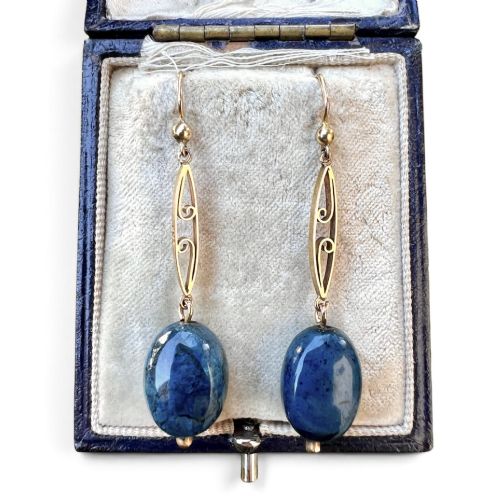
When you search for blue drop earrings, you encounter items suspended from the earlobe that showcase blue stones set in precious metals. The listings show forms ranging from simple dangly studs to elaborate cluster drops.
The pieces span multiple eras, including Victorian, Edwardian, Art Deco, and mid-century designs. Aquamarine, sapphire, topaz, and zircon provide the blue colour across these periods.
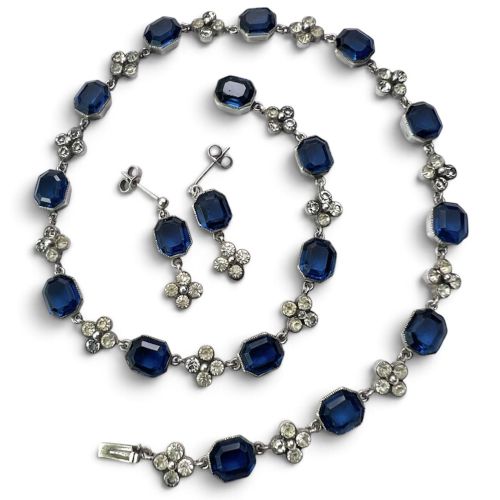
Earrings and matching jewellery sets form the primary object types on this page. Gold and silver predominate as the mountings for these swinging stones.
Materials and construction
Goldsmiths utilised yellow gold, white gold, and rose gold in nine-carat and eighteen-carat purities, alongside platinum and silver. These metals were shaped into settings that secure faceted or cabochon blue stones.
Diamonds, pearls, paste, and marcasite frequently accompany the central blue stones to add contrast and sparkle. Techniques include cluster work, prong settings, and dangling hinge connections that allow the drops to move freely.
Some Victorian pairs are designed to dangle so vigorously they practically dance every time you nod.
Assessing quality
Quality rests upon the depth of colour in the primary blue stones and the precision of their cut. Heavier metal weight and fine supportive work around diamonds or pearls elevate a piece above simpler designs.
The harmony between the metalwork style and the era of manufacture defines the character of each pair. Retaining original screwbacks, hooks, and matching settings preserves the integrity of older items.
The Blue Drop Earrings Glossary
- Drop earring
- An earring that hangs below the earlobe rather than sitting directly against it. These pieces incorporate a dangling element that moves with the wearer.
- Cabochon
- A gemstone shaped and polished with a smooth convex surface rather than faceted. This cut appears frequently on stones like opal and turquoise.
- Paste
- Hand-cut glass used historically to imitate gemstones. In older jewellery, paste sits in fine metal mounts alongside genuine stones.
- Screwback
- A type of earring closure featuring a threaded post and a small nut that tightens against the earlobe. This mechanism was common before modern clip-on or piercing fasteners became standard.
- Cluster
- An arrangement of smaller stones gathered tightly around a central stone. This technique maximises the visual impact of the main gem.
Blue Drop Earrings: Frequently Asked Questions
How do I date blue drop earrings?
Dating relies on the cut of the stones, the type of metal, and the overall style. Art Deco pieces display geometric lines, while Edwardian examples often feature delicate platinum work.
Settings and fastening types also provide clues. Screwback mechanisms and specific gold purities align with distinct historical decades.
What metals are used in these earrings?
The listings show items created in nine-carat and eighteen-carat gold, alongside silver, platinum, and palladium. White gold and yellow gold both appear frequently across the mid-century selections.
Precious metals are chosen to secure stones safely while complementing the blue hues of aquamarine, sapphire, and topaz.
Which blue stones appear most often?
Aquamarine and sapphire dominate the selections, ranging from pale ice-blue aquamarines to deep blue sapphires. Blue topaz, zircon, turquoise, opal, and paste also provide the colour.
These stones appear alone or paired with diamonds and pearls in cluster and drop configurations.
How should I care for antique earrings?
Clean vintage pieces gently with a soft cloth and avoid harsh chemical dips that can damage softer stones like opal or turquoise. Professional inspection of the settings ensures prongs remain secure.
Store earrings individually to prevent metal and stones from scratching one another during storage.