



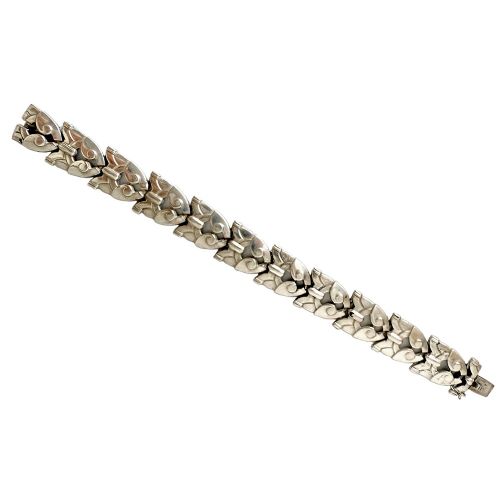


Art Deco Silver Bracelet
An art deco silver bracelet brings sharp geometric lines and vibrant colour straight to the wrist.
Art Deco Silver Bracelet
An art deco silver bracelet is a wrist ornament defined by the bold geometric motifs and sleek lines characteristic of the interwar period. These pieces frequently span the 1920s and 1930s, featuring linked panels or flexible settings designed to sit flat against the skin.
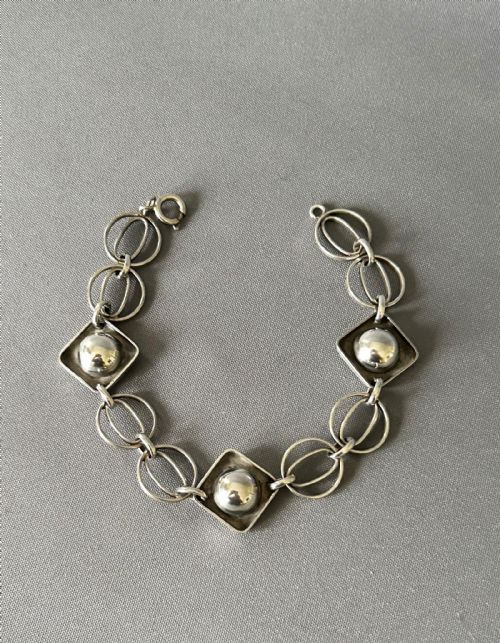
The variations found here range from clean stamped solid silver links to intricate filigree frameworks. Collectors encounter both simple metalwork and elaborate panel designs incorporating contrasting stones and coloured glass.
Origins stretch across Britain, Europe, and further afield, encompassing German workshops, Italian silversmiths, and Chinese export pieces. Each region brought its own technical mastery to the geometric vocabulary of the era.
Materials and construction
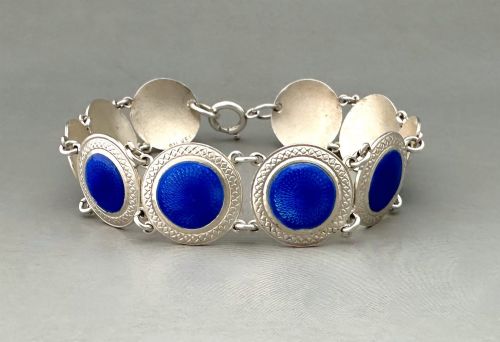
Makers utilised sterling silver and solid silver as the primary structural foundation for these jewels, often pairing the metal with vitreous enamel or guilloche enamel to introduce vivid bands of colour. Pierced filigree settings demonstrate delicate wirework soldered into complex patterns.
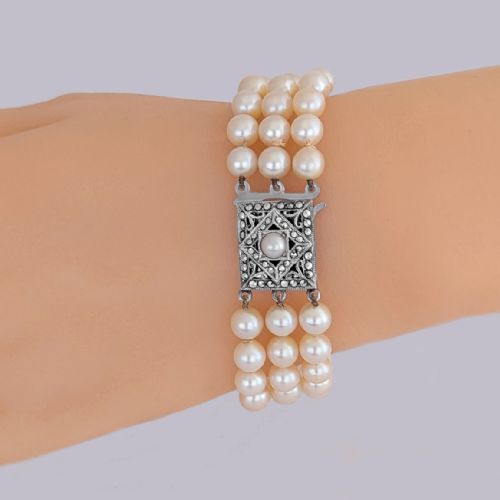
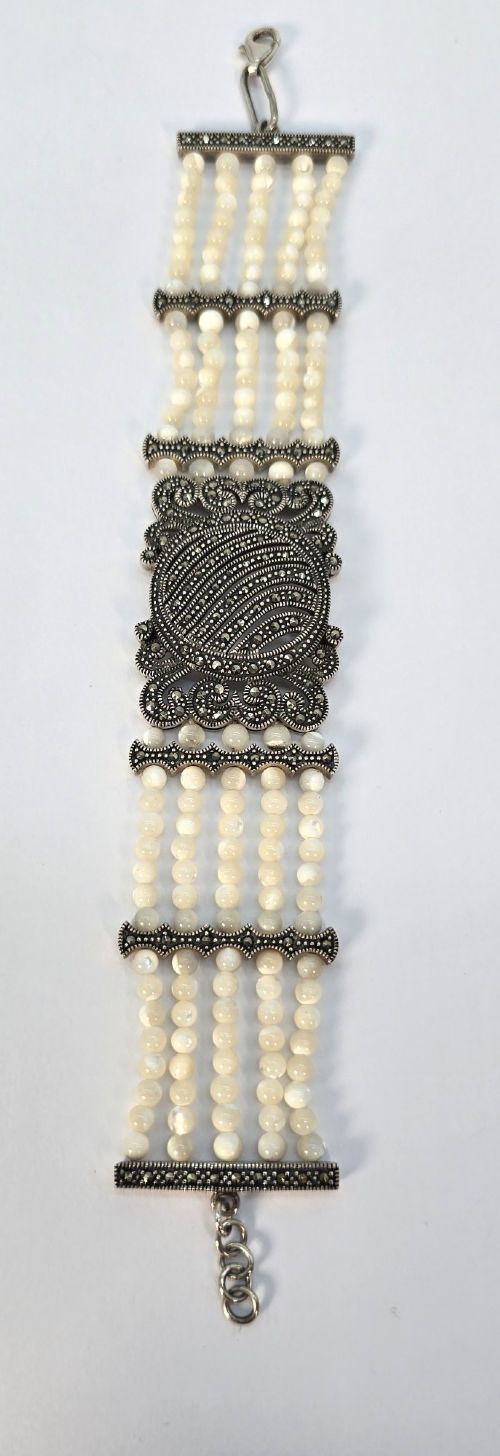
Surface embellishment relied heavily on sparkling marcasite stones, paste crystals, and natural gems including chalcedony, black onyx, amethyst, citrine, and agate. These materials were bezel-set or flush-set into geometric frames to catch the light during evening wear.
Art Deco Silver Bracelet Retail Price Guide 2026
Typical asking prices for art deco silver bracelet among the pieces listed under this phrase on Sellingantiques today, from the lower quarter to the upper quarter. They describe what is for sale here now, not the wider market.
Listings feature silver combined with chalcedony, black onyx, amethyst, citrine, and agate across the geometric styles of the period.
Assessing quality and execution
The hierarchy of these bracelets rests on the precision of the metalwork and the complexity of the stone setting. Pieces featuring hand-applied guilloche enamel or carefully matched natural chalcedony and amethyst stones sit firmly above simpler stamped designs.
Articulation and finishing dictate the desirability of the piece. Superior examples exhibit smooth movement across every link, secure safety chains, and crisp geometric stamping that remains sharp under close inspection.
Knoll and Pregizer·Topazio·Ciro
The Art Deco Silver Bracelet Glossary
- Filigree
- Delicate jewellery ornamentation made from fine twisted threads of silver soldered together in openwork patterns. This technique creates a lace-like appearance while keeping the structure lightweight.
- Guilloche enamel
- Decorative enamel applied over engine-turned metal engraving which produces repetitive underlying patterns visible through translucent coloured glass. It requires immense skill to achieve an even finish.
- Marcasite
- Small faceted crystals of iron pyrite set closely into silver to provide a dark, metallic sparkle resembling cut steel. They were a favourite substitute for diamonds in period evening jewellery.
- Paste
- Hand-cut and polished lead glass used to imitate precious gemstones in antique jewellery. High-grade paste stones possess convincing brilliance and are individually foiled or set into secure bezels.
- Chalcedony
- A microcrystalline variety of quartz prized for its waxy lustre and semi-translucent appearance in jewellery panels. It appears in smooth cabochon cuts within period silver settings.
Art Deco Silver Bracelet: Frequently Asked Questions
How do I care for an enamel silver bracelet?
Enamel and silver require gentle cleaning with a soft cloth to avoid scratching the vitreous surface or delicate filigree work. Keep these pieces away from harsh chemicals and ultrasonic cleaners.
Store each bracelet flat in a lined box to prevent the links from tangling or striking other items. Removing the jewellery before swimming or applying cosmetics protects the metal and stones from dulling.
Are these bracelets suitable for daily wear?
Most period pieces were constructed for evening or occasional wear rather than rugged everyday tasks. The delicate silver filigree and prong-set pastes demand a mindful approach to daily activities.
Checking the clasp and safety chain regularly ensures the bracelet remains secure on the wrist. Selecting sturdier solid silver link designs provides greater resilience for frequent use.
How can I tell a 1920s piece from a later reproduction?
Original pieces display period construction techniques, including hand-cut stones, traditional clasp styles, and patination appropriate for their age. Maker marks and silver hallmarks offer further clues to the precise decade of manufacture.
Later reinterpretations often utilise modern casting methods or contemporary synthetic stones that lack the subtle irregularities of vintage work. Examining the back of the piece reveals the true nature of the assembly.