






1930s Silver Bracelet
A 1930s silver bracelet brings sharp geometric lines and vibrant colour to the wrist, offering wearable Art Deco design.
1930s Silver Bracelet
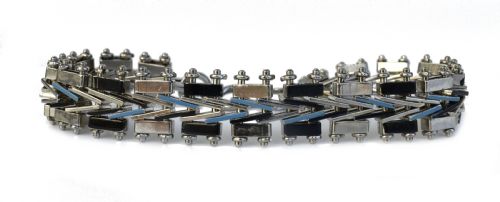
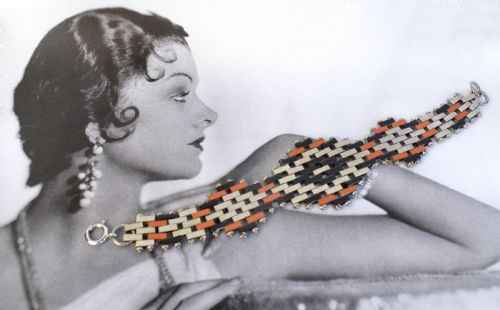
A 1930s silver bracelet represents the streamlined geometric tastes of the interwar period, frequently appearing in Art Deco designs across this selection. These pieces take the form of linked panels, bangles, and occasionally integrated wristwatches.
The materials seen here extend beyond plain silver to include chrome, enamel, glass, marcasite, and chalcedony. Many of these items originate from European workshops, including German and Austrian makers, alongside Danish designs.
How they were made
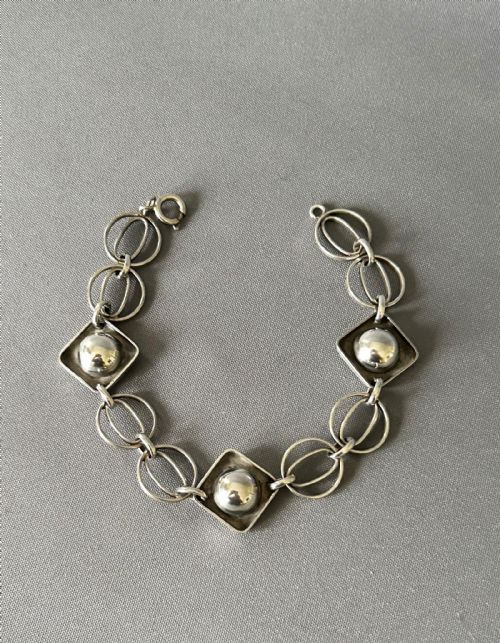
Makers constructed these bracelets using silver, chromium, and nickel as metal foundations, often shaping them into articulated links or solid bangle forms. Stamped metalwork and geometric panel construction defined the primary structure of the jewellery.
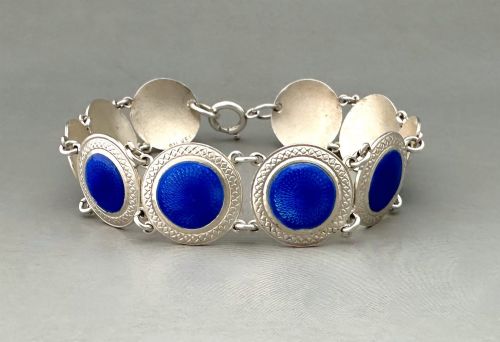
Colour entered the design through vitreous and guilloche enamel applied to metal surfaces, complemented by set stones such as paste, chalcedony, and diamonds.
Listings feature silver, enamel, chrome, glass, and platinum, spanning the 1920s and 1930s periods.
What varies in quality
Quality separates standard production items from masterworks through the precision of the metal links and the complexity of the enamel work. Finer examples display crisp geometric stamping and securely set stones.
Attribution to specific known workshops elevates the standing of a piece, as seen in signed industrial designs from the period.
Jakob Bengel·Asprey·Bulova
The 1930s Silver Bracelet Glossary
- Art Deco
- A design style characterised by sleek geometric shapes, streamlined forms, and vibrant colour contrasts. It dominated decorative arts through the 1920s and 1930s.
- Guilloche enamel
- A decorative technique where a precise pattern is engraved beneath transparent enamel. This creates shifting light effects across the coloured surface.
- Marcasite
- Small faceted pyrite stones set into silver mountings to resemble diamonds. These stones provide a dark metallic sparkle.
- Paste
- Cut and polished glass used as a substitute for gemstones. It allows for bright colour and sparkle in vintage jewellery.
1930s Silver Bracelet: Frequently Asked Questions
Are these bracelets comfortable for daily wear?
Linked panel designs and flexible bands offer a comfortable fit on the wrist, moving easily with the arm. Solid bangles provide a rigid structure that suits specific wrist sizes.
Most items are designed for everyday use, though delicate enamel and set stones require care to prevent impact damage.
What materials were used besides silver?
Makers frequently incorporated chromium, nickel, and base metals alongside solid silver to achieve industrial finishes. Coloured glass, chalcedony, and paste stones added variety to the metallic structures.
Enamel served as the primary method for introducing bright colour blocks into the geometric designs.
How should I clean my vintage bracelet?
Gentle wiping with a soft, dry cloth preserves the polished metal and protects set stones from moisture. Avoid harsh chemical dips, particularly on enamelled surfaces.
Enamel and marcasite settings require careful handling to maintain the integrity of the original construction.