




1930s Art Deco Bracelet
A 1930s art deco bracelet brings together geometric lines and striking metalwork, offering a distinct period aesthetic that defines twentieth-century design.
1930s Art Deco Bracelet
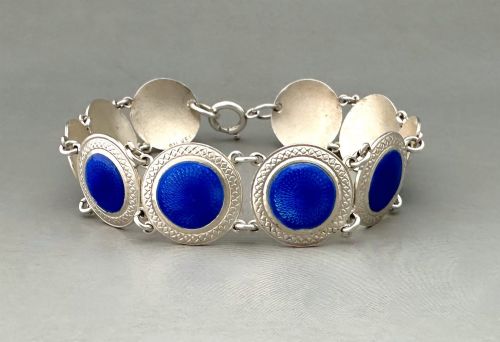
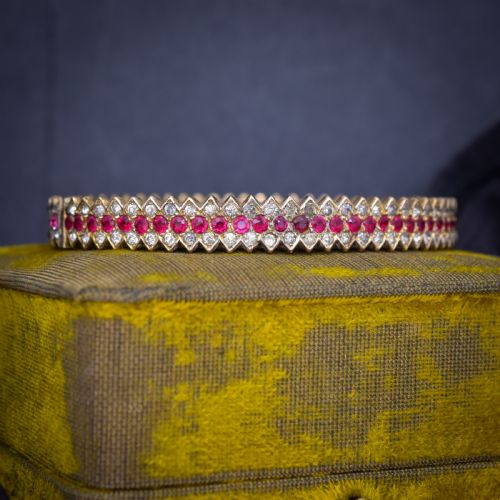
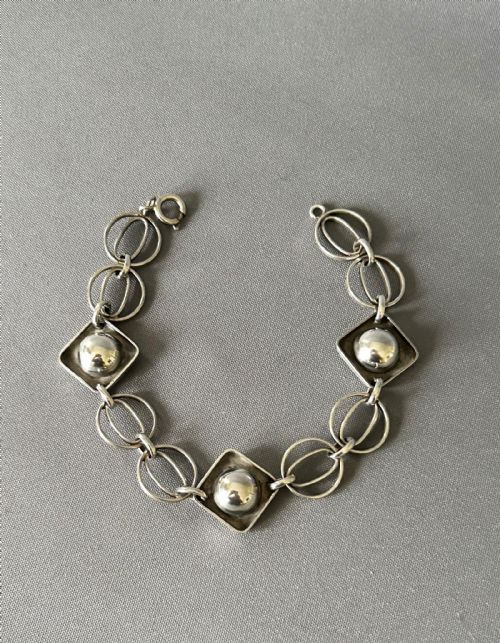
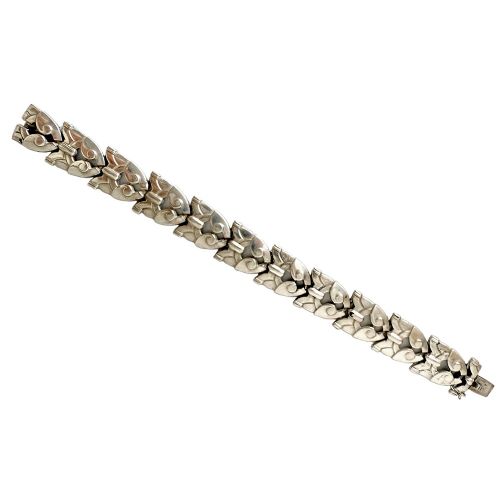
A 1930s art deco bracelet captures the geometric rigour and streamlined forms associated with the period, often appearing in forms such as panel links, bangles, and articulated designs. You will encounter pieces ranging from silver and enamel creations to platinum mountings set with diamonds and sapphires.
Makers and workshops from Austria, Germany, France, and Portugal produced varied iterations of the 1930s art deco bracelet, incorporating industrial metals alongside precious stones. Alongside standard wristwear, cocktail watches and charm bracelets frequently emerge within this design vocabulary.
Materials and construction
Silversmiths and jewellers utilised precious metals like platinum, 18ct gold, and silver alongside industrial alternatives such as chrome and chromium. These structural elements frequently support colourful applications of enamel, glass, paste, and gemstones.
Construction techniques rely on articulated panel links, brickwork patterns, and mesh bands to achieve flexibility on the wrist. Gemstones are typically set in precise geometric arrangements, aligning with the dominant style of the decades spanning the 1920s to the 1940s.
The listings show materials spanning precious platinum and diamonds alongside industrial chrome, Bakelite, and glass.
Distinctions in quality
The standard of a 1930s art deco bracelet rests on the precision of its metalwork and the integration of its components, whether dealing with hand-finished platinum and diamond clusters or machine-age chromium and enamel linkages. Superior execution shows in the seamless articulation of links and the secure flush-setting of stones.
Makers known for distinct industrial or fine jewellery styling achieve greater recognition through marked signatures and complex geometric assemblies. Simpler paste and chrome variations rely entirely on the crispness of the moulding and the preservation of the enamel work.
Jakob Bengel·Bucherer·Asprey·Bulova
The 1930s Art Deco Bracelet Glossary
- Art Deco
- A design style dominant between the wars, characterised by stylised motifs, geometric symmetry, and streamlined forms.
- Guilloche enamel
- A decorative technique where a precise geometric pattern is engraved beneath a translucent layer of coloured enamel.
- Paste
- Hand-cut glass used as an affordable substitute for gemstones, popular in period costume jewellery.
- Tank bracelet
- A robust, articulated bracelet design influenced by the tracks of military tanks popular during the interwar period.
- Platinum
- A dense, durable precious metal frequently utilised in high-end jewellery mountings for its strength and bright white lustre.
1930s Art Deco Bracelet: Frequently Asked Questions
How do I identify a 1930s art deco bracelet?
Look for geometric motifs, structured panel links, and characteristic materials such as platinum, chrome, or guilloche enamel. These visual traits distinguish the aesthetic of the period from other decades.
Examination of the clasp, hallmarks, and construction methods will further clarify the manufacturing era and geographic origin.
What materials were used in these bracelets?
Materials range from precious metals like platinum, gold, and silver to industrial substances including chrome and Bakelite. Gemstones such as diamonds, sapphires, emeralds, and rubies are frequently paired with enamel or glass.
Industrial pieces often utilise chromium and paste, while fine jewellery incorporates high-carat gold and certified diamonds.
Are cocktail watches considered bracelets?
Yes, cocktail watches from this era double as decorative wristwear, featuring concealed watch faces integrated into mesh bands or gemstone-set panels. They served both a functional timekeeping purpose and an evening jewellery role.
These pieces combine watchmaking movements with intricate platinum, gold, or diamond bracelet mountings.
How should I care for vintage enamel and chrome?
Avoid harsh chemical cleaners and ultrasonic baths, which can damage delicate enamel surfaces and vintage paste stones. Gentle wiping with a soft, dry cloth is recommended to preserve the metal finish.
Store each piece separately in a lined box to prevent scratching between harder gemstones and softer materials like silver or enamel.