



Vintage Line Bracelet
A vintage line bracelet offers a continuous ribbon of precious stones around the wrist, combining flexible comfort with the unmistakable sparkle of past decades.
Vintage Line Bracelet
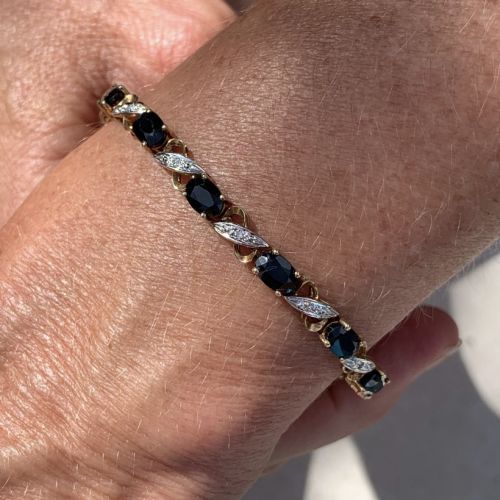
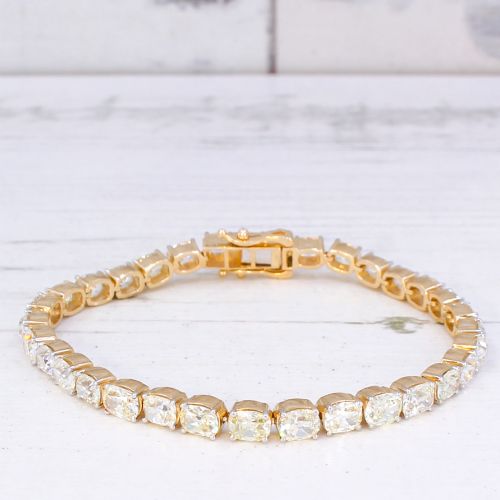
A vintage line bracelet consists of a continuous, articulated chain of closely set gemstones, most frequently diamonds paired with sapphires, emeralds or rubies. These pieces span from the late nineteenth century through the mid-twentieth century, encompassing periods such as Victorian, Edwardian, Art Deco and Mid-Century.
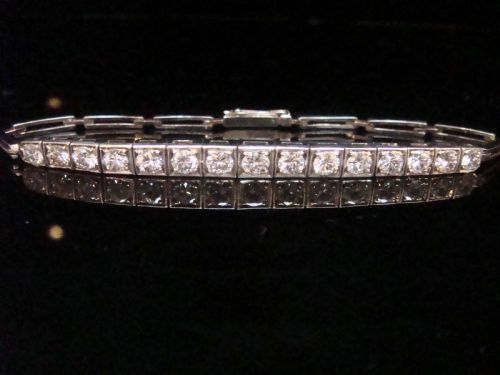
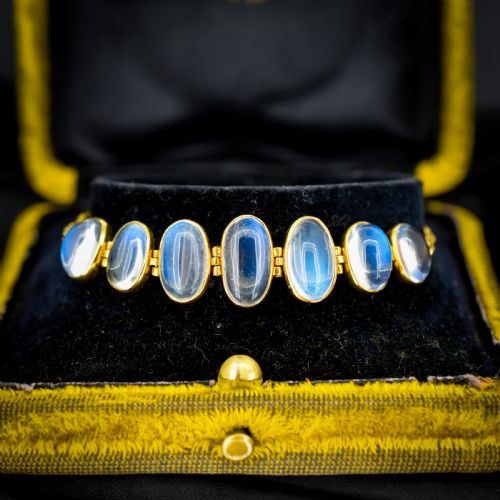
The most common examples on this page are Art Deco platinum and diamond pieces alongside Edwardian designs, though gold settings and alternative stones like moonstone, turquoise and paste also appear frequently.
Buyers choose a vintage line bracelet for its fluid movement against the skin and the architectural precision of early twentieth-century metalwork, which differs noticeably from modern mass-produced equivalents.
How they were made
Goldsmiths and platinumsmiths utilised durable precious metals to construct individual articulated links, allowing the jewellery to drape smoothly around the wrist without kinking. Platinum gained popularity during the Edwardian and Art Deco eras for its strength, enabling delicate millegrain edges and intricate openwork bezels that securely held old mine cut or brilliant cut diamonds.
Stones were traditionally hand-set using collet, bezel or channel techniques, where small sections of metal were pushed over the girdle of each gemstone. This method required considerable skill to ensure uniform alignment across dozens of tiny stones while maintaining the flexibility of the overall chain.
Listings span from the 19th century through the mid-20th century, incorporating platinum, yellow gold, white gold, silver, diamonds, sapphires, emeralds and pearls.
What varies in quality
The overall quality of a vintage line bracelet rests on the uniformity of the gemstones and the structural integrity of the articulating hinges between each link. Superior pieces display matching colour, cut and clarity across every stone, whereas lower tiers show noticeable variations in tone or stone replacement over time.
The weight and gauge of the precious metal foundation also dictate quality, as heavier platinum and gold settings resist stretching and wear at the pivot points better than thin, lightweight mountings.
The Vintage Line Bracelet Glossary
- Art Deco
- A design style spanning the 1920s and 1930s characterised by geometric symmetry, clean lines and frequent use of platinum paired with diamonds.
- Collet
- A metal collar or band that surrounds a gemstone to hold it securely in place within its setting.
- Millegrain
- A decorative technique featuring a row of tiny raised metal beads along the edges of a setting, common in Edwardian and Art Deco jewellery.
- Old mine cut
- An early diamond cut featuring a near-square cushion shape, a high crown, a small table and a large open culet, typical of nineteenth and early twentieth-century pieces.
- Paste
- Hand-cut and polished lead glass used historically as a brilliant substitute for genuine gemstones in fine antique jewellery.
Vintage Line Bracelet: Frequently Asked Questions
What is a vintage line bracelet?
A vintage line bracelet is a flexible wrist ornament featuring an unbroken sequence of gemstones linked together. These pieces date from historical periods including the Victorian and Art Deco eras.
They are designed to wrap the wrist in continuous sparkle while remaining supple enough for daily wear.
How do I wear a line bracelet?
These bracelets work well worn alone as a subtle statement or stacked alongside other fine jewellery pieces. Their flexible construction allows them to move comfortably with the wrist.
Secure clasps and safety chains, where fitted, provide added security during regular use.
How do I date a vintage bracelet?
Dating relies on identifying the metal types, gemstone cuts and manufacturing styles characteristic of specific eras. For instance, platinum openwork points to the 1920s, while yellow gold and moonstones often indicate Victorian origins.
Examining the linkage and setting techniques helps narrow down the period of manufacture.
Are these bracelets made of real diamonds?
The listings include pieces set with genuine diamonds alongside platinum, white gold and yellow gold. Some historical items also incorporate paste or coloured gems like sapphires, emeralds and rubies.
Material specifications are recorded for each individual piece based on its historical composition.